

30 July 2025
Dengie and Local School Support Essex Wildlife Trust
Our local school, St Leonard’s Church of England Primary School in Southminster, Essex have made a collage of pollinators from old Dengie feed bags to support Essex Wildlife Trust’s Nature Neighbours campaign. We plan to display the collage on our trade stand at upcoming events including Burghley and Blenheim Horse Trials and Your Horse Live to promote the Nature Neighbours campaign.
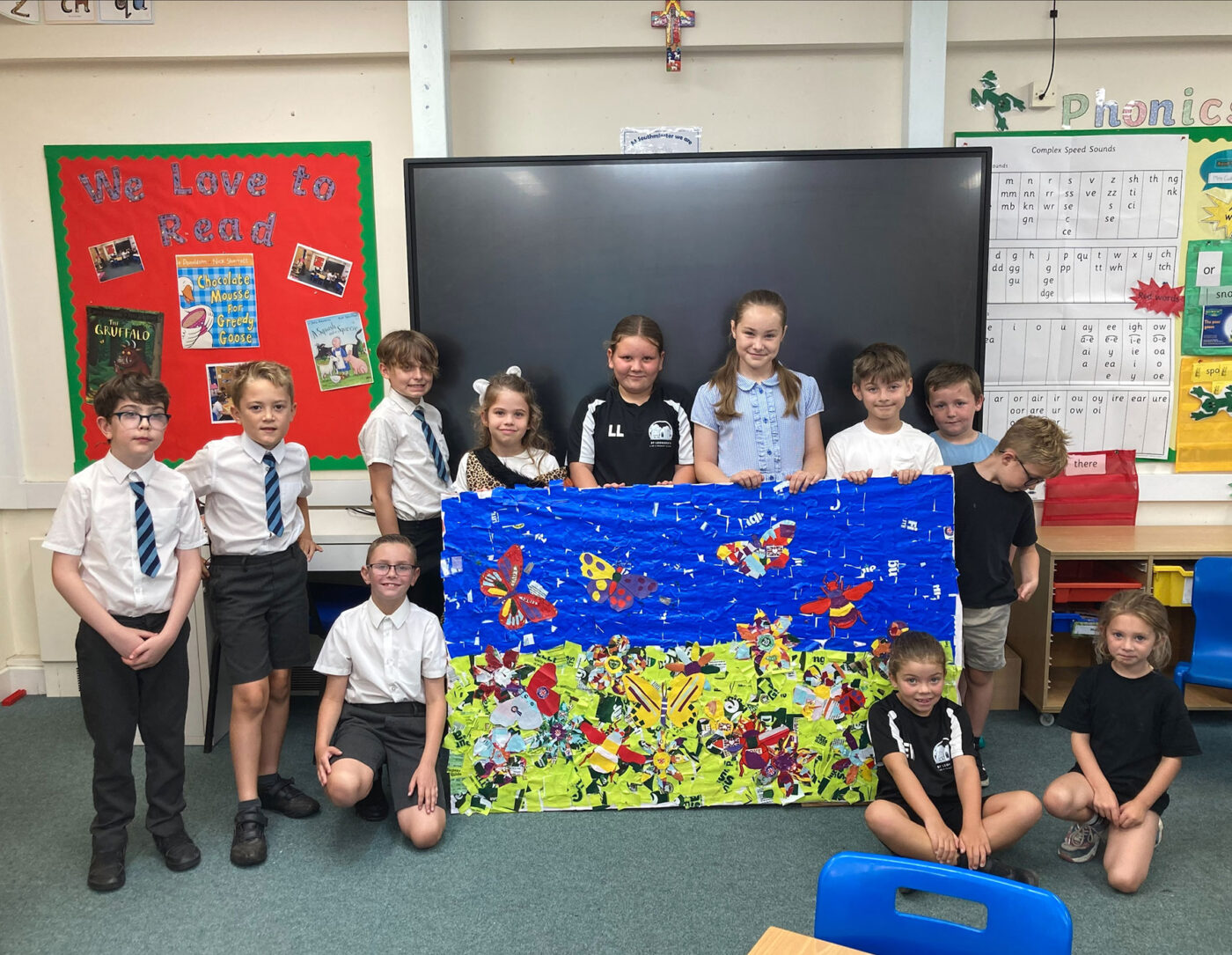
“Bursting with bees, butterflies and other invaluable pollinators, this wonderful artwork is exactly how we want our own green spaces to look” explains Gemma Cosson, Campaigns Officer at Essex Wildlife Trust. We can all make a difference to wildlife, no matter the size of your garden, and that’s exactly what our Nature Neighbours campaign encourages”.
The aim of Essex Wildlife Trust’s Nature Neighbours campaign is to encourage people to invite wildlife including pollinators, toads and hedgehogs into their gardens or green spaces by following easy DIY guides and then plotting their actions on virtual maps. We are supporting the campaign as there is more we can do at our stable yards and in our gardens or outside space, however small.
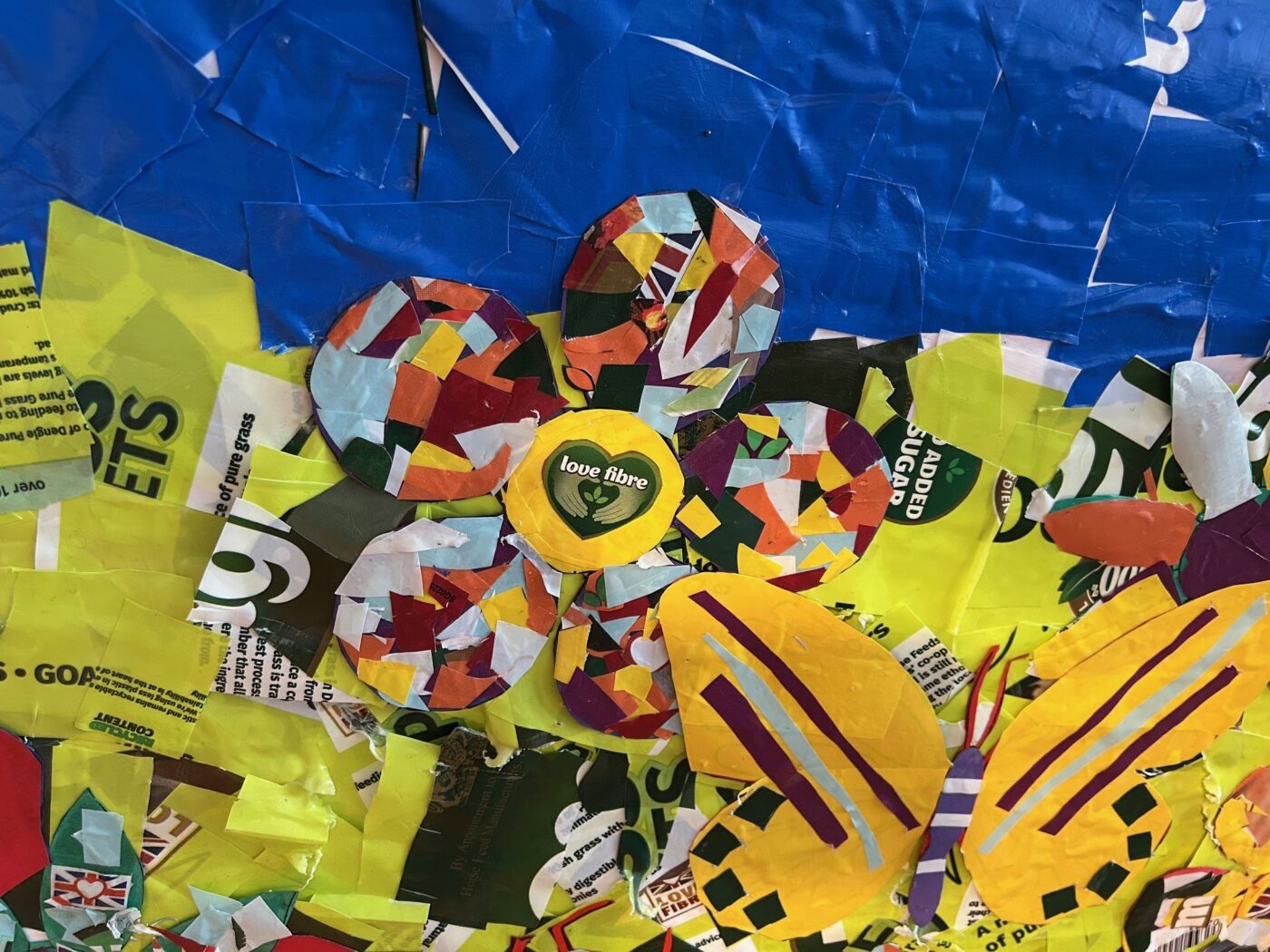
Bees, butterflies, beetles, ants and many other bugs are busy pollinating flowers but also our food crops. Without them, our ability to produce food, both for horses and humans, would be significantly impacted. Over the last year, the very wet weather has badly impacted numbers of pollinators and so it is vital we try to give them extra support in the coming months.
Although a spring and summer flowering plant, the alfalfa which we grow for our horse feed produces abundant floral nectar which is excellent forage for bees and other pollinators. The Lattice Heath Moth is particularly partial to alfalfa and can be seen in great numbers around our fields.
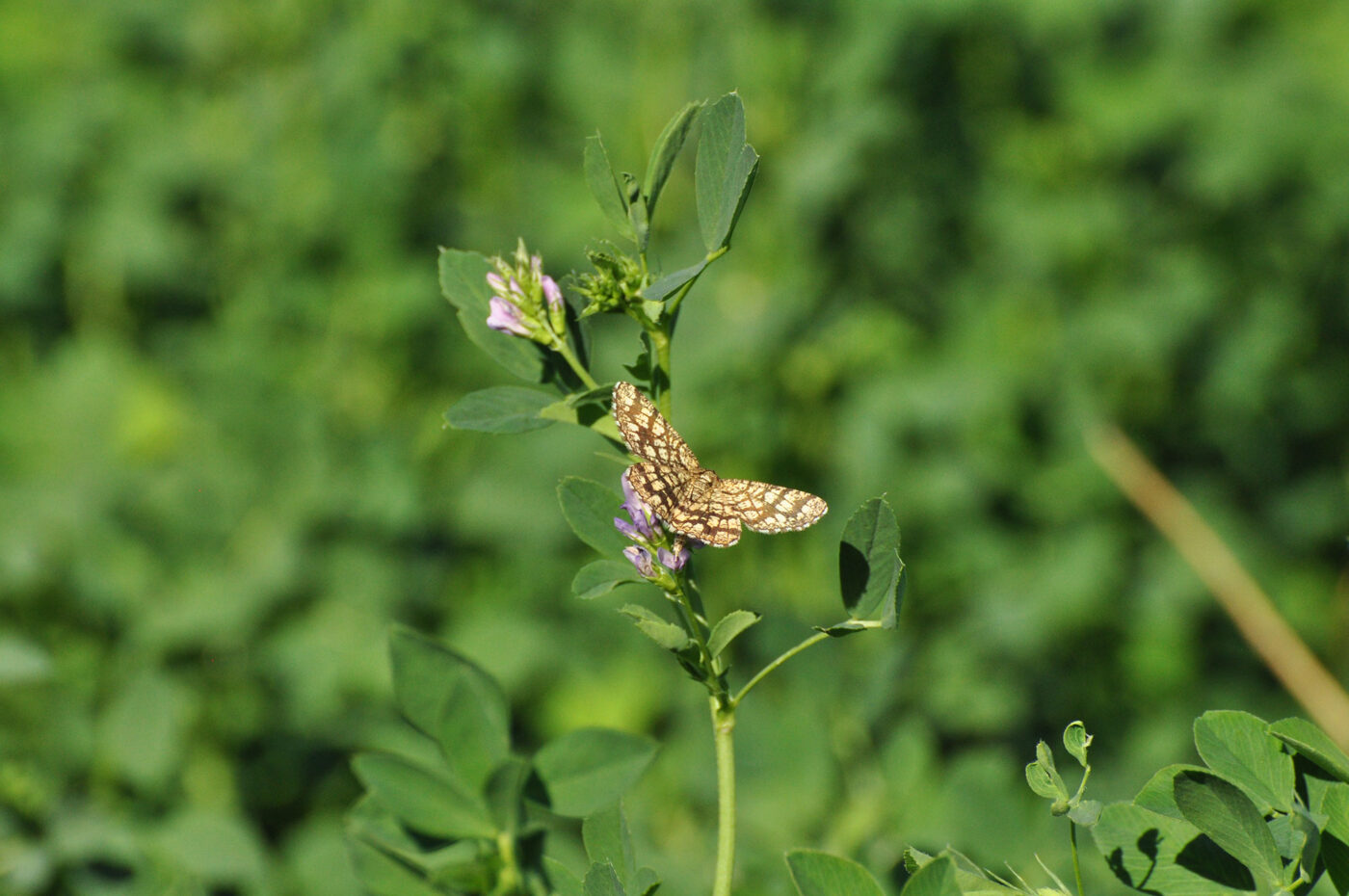
As we leave the alfalfa in the ground over winter, it also provides excellent winter ground cover for birds and insects. Alfalfa is recognised worldwide as being a great habitat for an enormous diversity of insect species and buying feeds that include alfalfa is another way you can help support biodiversity; scientists have observed over 1000 species of insects living or feeding in alfalfa fields.
More information on the Nature Neighbours campaign can be found on the Essex Wildlife Trust’s website.