

Feeding Goats
In the UK, goats are kept for a number of purposes including dairy and fibre production as well as much loved pets. Nutritional requirements will therefore vary considerably between individuals according to their vocation, life stage and reproductive status. It is important to ensure the diet is appropriate for the goats needs as over as well as under feeding can be to detrimental health.
The goat’s digestive system
Goats are a ruminant meaning that they have four compartments that make up their ‘stomach’ – the reticulum, rumen, omasum and abomasum. The reticulum and rumen are home to a large dynamic population of bacteria that are responsible for the fermentation of carbohydrates to produce volatile fatty acids or VFAs that the body uses as an energy source.
Fibre is fermented relatively slowly with highly lignified or ‘woody’ feeds such as straw taking several days to break down. In contrast, sugars and starch are fermented rapidly producing a very acidic environment, which can result in the death of certain beneficial fibre digesting bacteria. As a result the goat may experience loss of appetite and diarrhoea and in severe cases death may occur. A high fibre diet is therefore generally accepted as a healthier option for feeding goats to reduce the likelihood of digestive disturbance.
Benefits of alfalfa for goats
Alfalfa is a legume, which means that it can fix nitrogen from the atmosphere that is then converted to protein in the plant. Alfalfa is therefore a naturally excellent source of good quality protein and is particularly useful for breeding stock and dairy goats where protein requirements are greatest.
The deep root system of the alfalfa plant allows it to accumulate minerals from the soil, which are then incorporated into the plant. Alfalfa is a source of highly bioavailable calcium compared to inorganic sources such as limestone.
Alfalfa is also a natural buffer to acidity within the digestive tract, which is thought to be due to the levels of protein and certain minerals it contains. Feeding cereals creates a more acidic environment in the digestive tract and if cereals have to be included in the ration, an alfalfa based feed alongside the ‘concentrate’ ration may be beneficial to help buffer acidity in the digestive tract.
Alfalfa is a more digestible source of fibre compared to other sources such as straw. Therefore alfalfa based feeds can go a long way to help meet the energy requirements of many goats. For production or breeding goats Dengie Alfa-A Original is generally more suitable, whereas for those that are pets the Hi-Fi range of products may be more appropriate. As goats are naturally browsers rather than grazers, offering alfalfa alongside grass forages provides a choice of forages for the goat to choose between thereby allowing a more natural feeding behaviour.
Dengie products for goats

Hi-Fi Original and Hi-Fi Lite are the ideal low calorie fibre feeds for goats who hold condition easily, or as a hay-replacer when good quality hay or grazing is short. The combination of high temperature dried alfalfa and quality straw provides clean, consistent forage with a similar nutritional value to hay.

Hi-Fi Senior combines high temperature dried grasses and alfalfa and is ideal for goats with poor dentition or fussy feeders. Hi-Fi Senior can also be used to totally replace forage and both the grasses and alfalfa in Hi-Fi Senior have been high temperature dried. Hi-Fi Senior has a nutritional quality comparable to top quality hay.
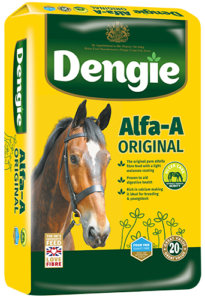
Alfa-A Original combines high temperature dried alfalfa with a light molasses coating. Alfa-A Original is particularly useful for young growing animals, pregnant and lactating does and show animals.

Alfa-Beet Mash combines alfalfa and unmolassed sugar beet. Dengie Alfa-Beet provides a highly digestible source of fibre and if it is fed soaked to a mash is great for fussy feeders. Alfa-Beet has a 2-hour cold soak or 15 minute hot soak time.

Alfalfa Pellets are pure pelleted alfalfa with nothing else added. Alfalfa Pellets are useful for reducing waste when feeding outdoors and also for animals with limited fibre appetites.
Suggested rations for goats



Expert advice at your fingertips
If you’re looking for advice on the best feed, speak to one of our highly experienced nutritionists on our feedline, or for a more in-depth plan, fill out our Feed Advice Form