

Quick Links
Enrichment for Horses: Happy, Healthy Horses
Wild Horses vs Domestic Horses
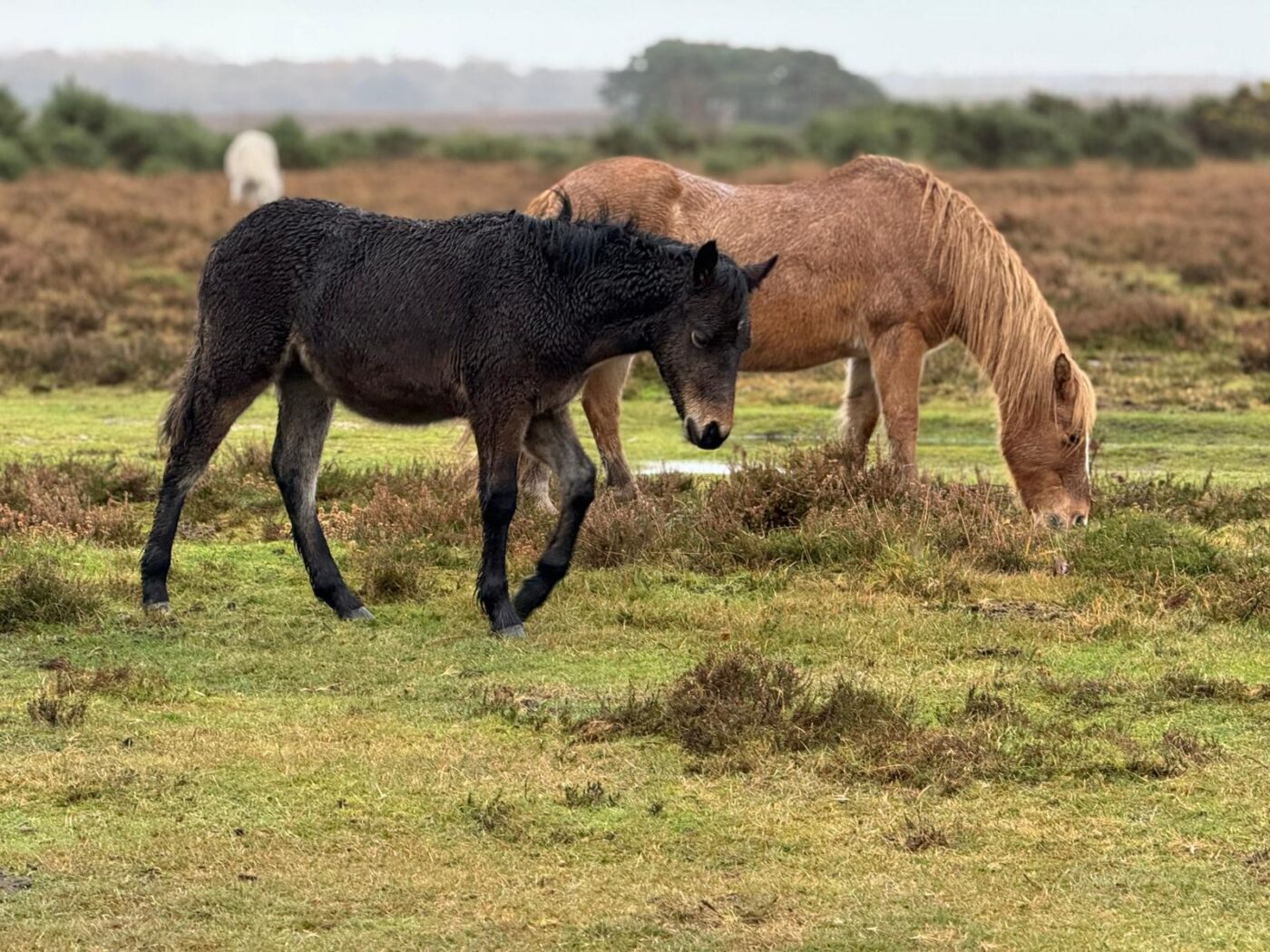
Horses in the wild evolved to eat for long periods and have both a psychological and physiological need to chew. Horses would typically spend around 16-18 hours per day eating, in order to obtain enough nutrition from the poor-quality grasses usually available. As a result, horses would naturally consume a variety of plant species, as well as browsing on coarser vegetation. Grazing itself would not have been a static activity either; it is likely that a horse would travel many miles each day to select grazing areas and move away from areas of defecation.
Nowadays, horses often have limited access to grazing and may be stabled for long periods. Bucket feeds and haynets are usually given as meals two or three times a day, which is in stark contrast to the eating habits of the horse in the wild. Considering the horse’s natural feeding behaviours as part of their management is vital for promoting both good health and good welfare, so should not be overlooked.
What is a Healthy Horse?
As the horse has evolved to trickle feed, the horse’s stomach has a fairly rigid structure and so cannot stretch to accommodate a large meal. This contrasts with a carnivore such as a lion, who makes one kill, eats as much as possible and then doesn’t eat for a couple of days. The horse is designed to function best on an almost continuous trickle of feed through the digestive system – hence the reason to feed little and often.
Another reason for this is that, unlike humans, the horse’s production of saliva is not a reflex response; food must be present in the mouth, and they must be physically chewing in order to stimulate saliva production. Saliva plays an important role in digestion; it mixes with the feed in the mouth to soften the food and acts as a lubricant to aid swallowing, as well as containing bicarbonates that buffer acidity within the digestive tract.
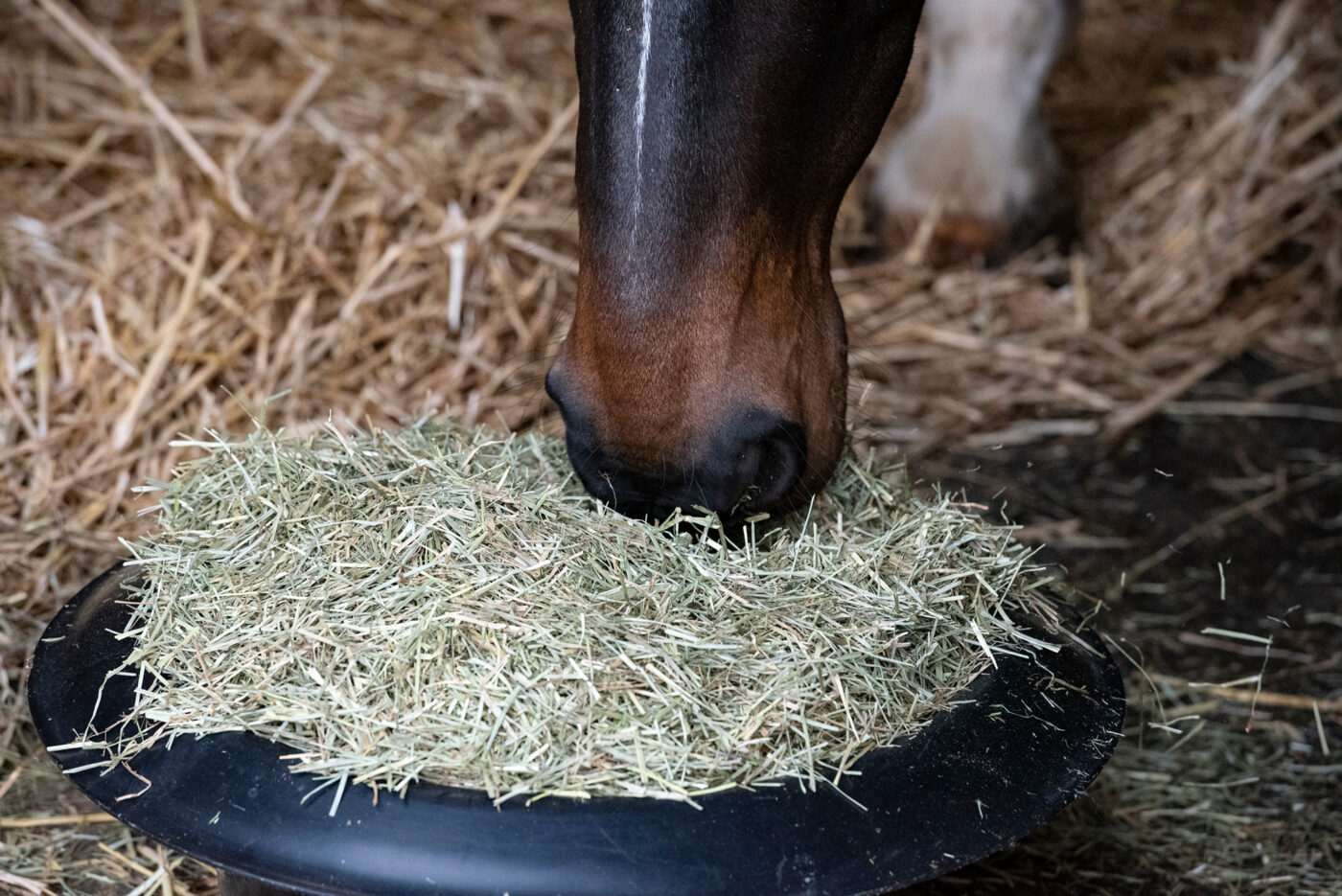
It is often quoted that horses produce around 10-12 litres of saliva per day, but in practice this is likely to be highly variable according to how ‘dry’ the feedstuff is and how much chewing is required. The activity of the masseter muscle, the horse’s big cheek muscle, has been linked to saliva production, and the more active it is, the more saliva is produced. Researchers have shown that eating hay, haylage and chopped fibre is associated with more intense masseter muscle activity in contrast to eating cereals (Vervuert et al., 2013). Providing high levels of long-stemmed or chopped fibre in the horse’s diet is therefore going to increase the amount of saliva produced, which will increase the acid buffering in the stomach, helping to reduce the risk of problems such as Equine Gastric Ulcer Syndrome.
What is a Happy Horse?
Beyond physical health, the horse’s psychological well-being is also an important part of their welfare. It is now recognised that good animal welfare should include the presence of positive experiences rather than solely the absence of negative ones (Boissy et al., 2007), and this was also highlighted by Dr Janne Winther Christensen at the 2024 European Workshop on Equine Nutrition. Stabling horses for long periods can significantly impact on their ability to perform natural behaviours, so taking steps to provide positive experiences for them in the form of environmental enrichment and foraging opportunities may help to bridge this gap.
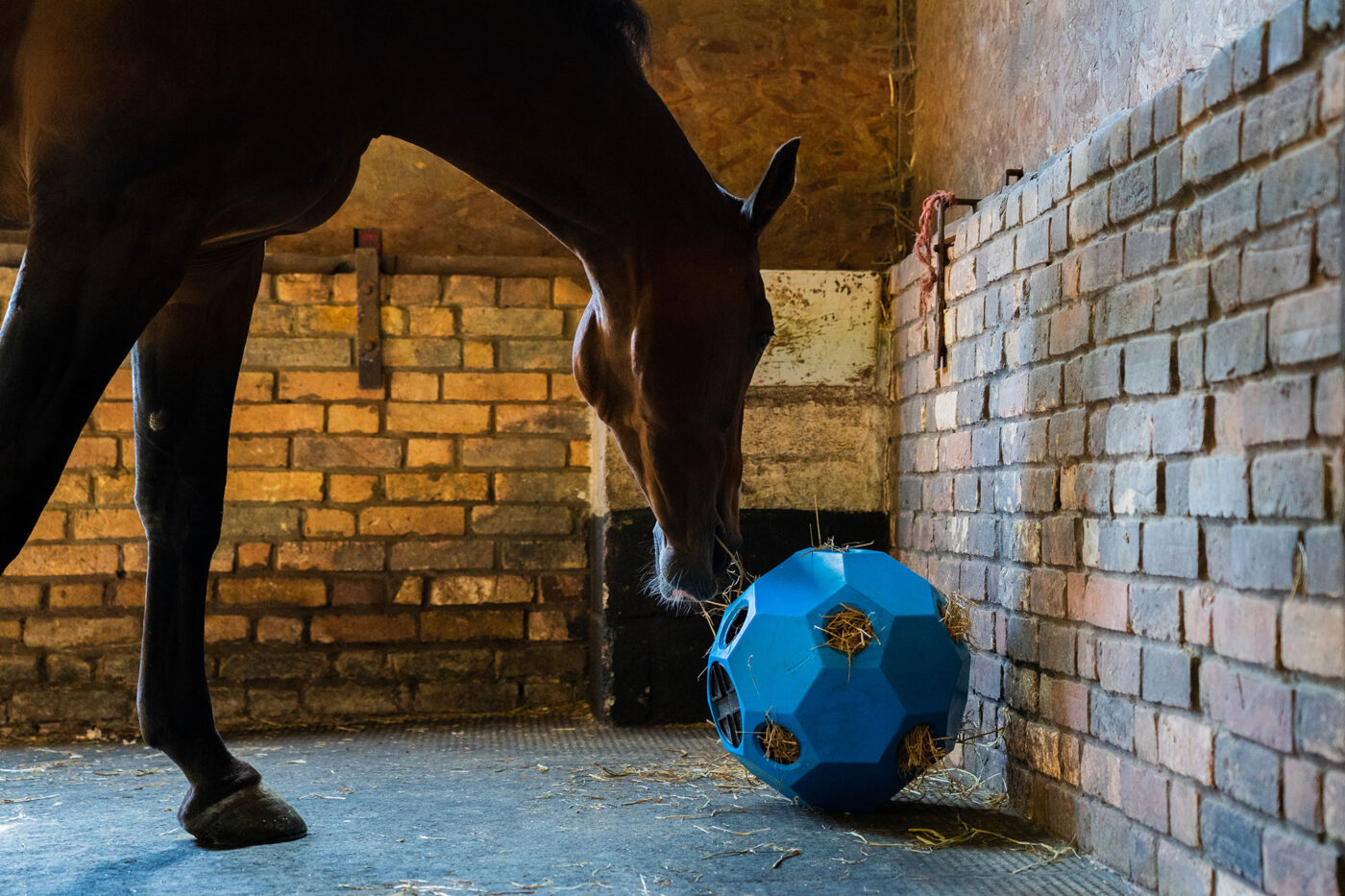
A recent study found that various types of environmental enrichment for stabled horses, including a mirror, hay ball and activity ball, significantly increased foraging behaviour, whilst reducing frustration behaviours like stamping or pawing (Brauns et al., 2025). Other forms of enrichment that can also be beneficial to health include providing a selection of forage options. Research suggests that multiple fibre types encourage horses to forage and display more natural grazing and browsing behaviours (Thorne et al., 2005). A study conducted by Goodwin and colleagues (2002) showed that horses with the greatest variety of forage types available spent the least time foraging in their straw bed. This suggests that horses will forage in their straw bed more when they have fewer types of forage available, as they are satisfying their natural behaviour to seek out different feed materials.
Interestingly, a similar effect was seen in a study on feral ponies living alongside cattle in a national park with a very diverse landscape. The researchers found that the horses consumed a much greater range of plants throughout the year compared to the cattle, including shrubs, herbs and trees, as well as grasses (Thomassen et al., 2023). These results further indicate that the selection of multiple fibre types is a key component of a horse’s natural eating behaviour.
Whilst such a diverse grazing environment may be impractical on most yards, there are other ways to provide a selection of forage types for the horse to mimic their natural eating behaviours. A simple option is to offer a combination of different long-stemmed conserved forages such as hay, haylage and straw. In addition, separate buckets of chopped fibres can provide further choice or an alternative if other forage types aren’t available. Stable toys such as treat balls can also be used to provide pelleted fibres at a slower intake than they would be consumed in the bucket, further helping to extend eating times and offer a further source of enrichment.
Top Tips for Supporting Happy, Healthy Horses
- Feed a low starch, high fibre diet
- Ensure a minimum daily forage provision that equates to at least 1.5% of your horse’s bodyweight (on a dry matter basis)
- Feed little and often – divide your horse’s forage and feeds between as many small meals as possible, especially for those stabled for longer periods
- Introduce forms of environmental enrichment, like stable toys or forage balls
- Provide a combination of different fibre sources in a buffet style so your horse can alternate between them
- Offering additional buckets of chopped fibre can also provide variety and act as a further source of enrichment
- Any new forages or chopped fibres should always be introduced gradually to the ration over a couple of weeks
References
- Brauns et al., (2025). Physiological and Behavioral Responses of Stabled Horses (Equus caballus) to Three Types of Environmental Enrichment. Animals, 15(19), p.2779.
- Boissy et al., (2007). Assessment of positive emotions in animals to improve their welfare. Physiology & Behavior, 92(3), pp.375-397.
- Thorne et al., (2005) Foraging enrichment for individually housed horses: Practicality and effects on behaviour. Applied Animal Behaviour Science, 94(1-2), pp.149-164.
- Thomassen et al., (2023) Contrasting seasonal patterns in diet and dung‐associated invertebrates of feral cattle and horses in a rewilding area. Molecular Ecology, 32(8), pp.2071-2091.
- Goodwin et al., (2002) Foraging enrichment for stabled horses: effects on behaviour and selection. Equine Veterinary Journal, 34(7), pp. 686-691
- Vervuert et al., (2013) Electromyographic evaluation of masseter muscle activity in horses fed (i) different types of roughage and (ii) maize after different hay allocations. Journal of Animal Physiology and Animal Nutrition, 97(3), pp.515-521