

Hedgerow Haynets for Horses
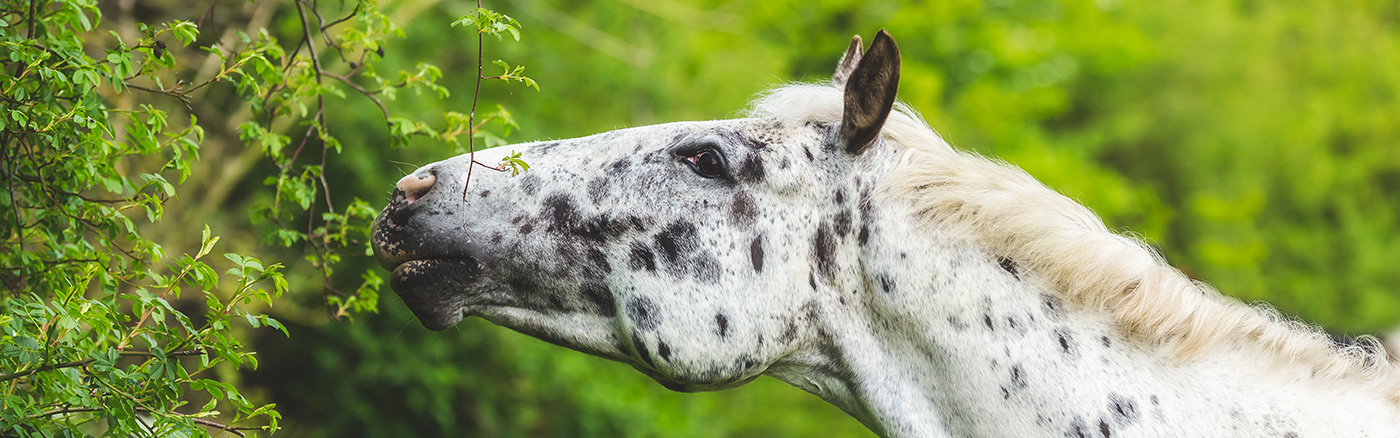
Many horses like a munch on the hedgerow bordering their paddock and will try to snatch a sneaky bit of cow parsley from the verge when out for a more leisurely hack. Replicating this diversity for the stabled horse has become a popular trend in the form of a hedgerow haynet, where hedgerow plants for horses are mixed with or fed alongside the normal forage ration. Bringing the outside inside has advantages of encouraging foraging behaviour, environmental enrichment and offering diversity in the diet.
Are there any plants I should avoid feeding horses?
Yes as not every plant, shrub or weed in the UK is safe for your horse or pony to eat, so it is very important to identify the correct hedgerow plants for horses and know that you are feeding your horse safely. The British Horse Society and the RSPCA have some useful pictorial guides to common poisonous plants.
What plants are safe for horses that I can use in my Hedgerow Haynet?
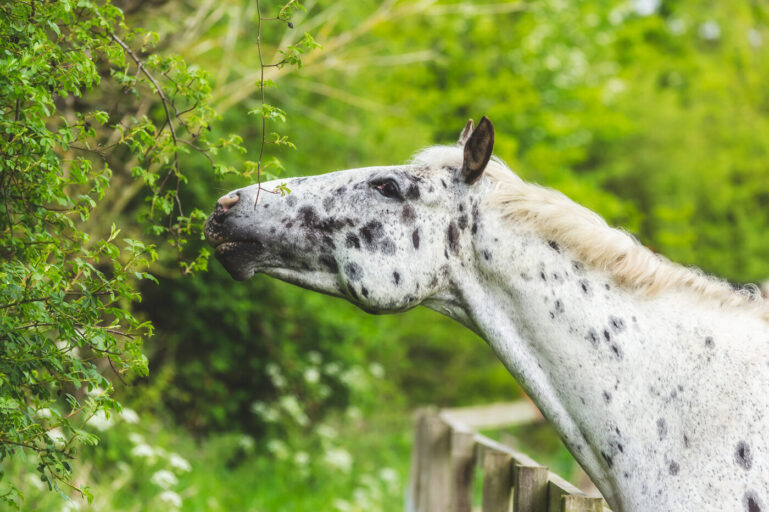
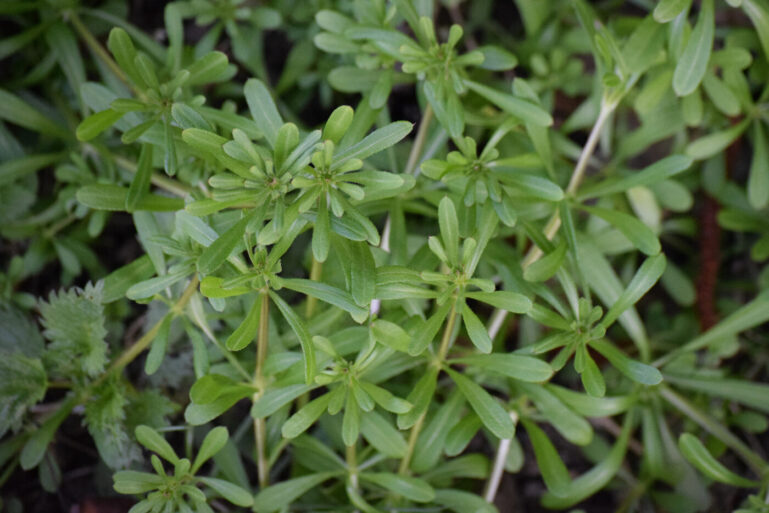
Whilst not an exhaustive list, horses may enjoy a variety of items including cow parsley, cleavers (sticky weed), hawthorn, hazel, blackberry, rosehips, thistles, nettles, dandelion and willow. Softer, non-prickly items are easier for us to handle especially if trying to put them in the haynet, whilst woodier plants like hawthorn, hazel and willow may be easiest for feeding from the floor unless they are young growth. If you grow your own at home, common herbs like peppermint, rosemary and thyme leaves can also be a tasty addition to the ration. Hedgerow herbs for horses are a popular addition!
How much should I feed my horse?
Hedgerow plants for horses should be considered as a supplement to the forage ration and so should be fed in relatively small quantities e.g. a handful of each or less than 500g combined for a horse. This recommendation is to avoid sudden dietary change which increases the risk of digestive disturbance and to reduce significant fluctuation in nutritional intake. These materials will vary in nutritional value throughout the year and are being fed fresh whereas forages are conserved for use in winter and so are more stable in the levels of nutrients they are contributing to the ration. Mixing the hedgerow items through the usual forage encourages the horse to “forage” or sort through the different materials looking for those that are tastiest. This can extend eating time which is particularly useful for those on limited rations. Read more about How much should I feed my horse?
Will hedgerow items make a nutritional contribution to my horse’s diet?
In situations when horses need to be stabled or turned out on ‘no-grass’ areas to limit their calorie intake, it can sometimes become a challenge to keep them entertained without being able to supply ad lib forage. Providing diversity in the form of a hedgerow hay net can be a great solution. However from conversations with horse owners, it’s become clear that many are feeding these plants, sometimes at high levels, assuming that they offer no calorie or sugar contribution to the diet when that’s simply not the case.
The table below shows how much 1kg of each of these plants will provide of various nutrients per day. We can see that the levels really vary between different plants. Of particular note is the fact that the DE (digestible energy, or calorie content) and WSC (water soluble carbohydrates including the sugar and fructan) contents of poplar are very similar to levels found in an average hay. Whilst the other plants contain lower levels of DE and WSC, they definitely still cannot be classed as being calorie or sugar free. It’s important to remember though that these results should just be considered as a guide, as they only represent a snapshot in time and levels may vary depending on lots of different factors.
| Nutrient* | Sticky Weed | Cow Parsley | Hazel | Hawthorn | Willow | Ash | Poplar | Average Hay |
|---|---|---|---|---|---|---|---|---|
| Digestible Energy (DE) (MJ) | 1.47 | 2 | 2.31 | 3.79 | 3.95 | 4.99 | 8.15 | 6.5 - 10 |
| Dry Matter (g) | 135 | 186 | 216 | 332 | 380 | 451 | 828 | 840 - 920 |
| Crude Protein (g) | 15 | 28 | 49 | 38 | 52 | 56 | 115 | 40 - 130 |
| Oil (g) | 5 | 8 | 8 | 14 | 16 | 24 | 38 | 8 - 28 |
| NDF (g) | 43 | 75 | 75 | 133 | 182 | 178 | 434 | 420 - 600 |
| ADF (g) | 42 | 55 | 49 | 107 | 147 | 146 | 266 | 250 - 370 |
| Starch (g) | 16 | 13 | 17 | 35 | 14 | 21 | 4 - 28 | |
| WSC (g) | 28 | 25 | 10 | 14 | 26 | 28 | 72 | 75 - 100 |
*Analysis reported on an as fed basis
Can hedgerow haynets be given to laminitis prone horses?
One group of horses that we are always concerned about feeding extra treats to is those that are laminitis prone. It is very important not to assume that weeds or hedgerow items are any lower in sugar than grass or hay is. It is also important to appreciate that adding extra hedgerow items will provide more calories to the total diet too. Limiting these items to a treat only means that your horse doesn’t have to miss out completely.
What can I use as a basis to my hedgerow haynet?
For good do-ers and those with insulin dysregulation, straw is a great source of forage that can mixed with the usual hay or haylage ration to encourage foraging behaviour without supplying too many additional calories or too much extra sugar. Whilst there has been some debate about the suitability of straw, more recent studies are showing it is a useful feed material for good doers if used correctly. Click here for more advice on feeding straw to horses.
Top tips for making a hedgerow haynet for your horse
- Make sure you are not feeding anything which is toxic to horses. The British Horse Society and RSPCA have useful guidelines on their websites to help with identification of poisonous plants.
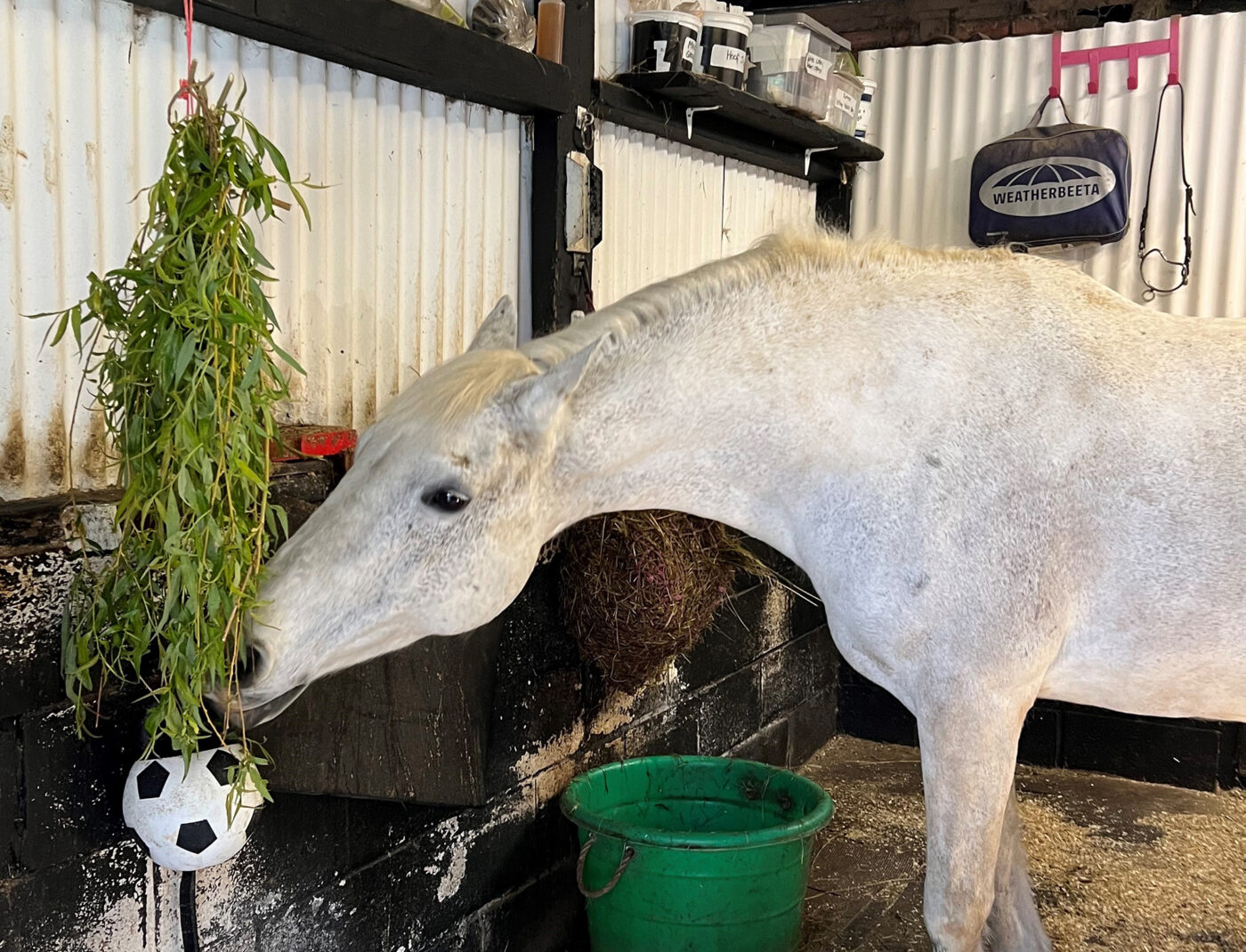
- Get inventive – place the hedgerow items around the paddock if your horse doesn’t have a hedge to help themselves to, or in the stable either mix through the usual forage ration or leave in separate nets or buckets to encourage foraging behaviour
- Use in moderation – feed in small amounts(e.g., a couple of handfuls or 500g maximum of each plant type) and introduce new feed materials gradually
- Don’t assume that hedgerow items are low in sugar, they may not be. Use as a treat only or not at all if you are concerned about laminitis
- If your horse is overweight, consider whether using straw to replace a portion of their hay or haylage ration may be a better choice to slow down their eating time and keep them busy for longer. More information on feeding straw can be found here.
- Being novel, it may take a while for your horse to be interested in extra items in the haynet. Don’t worry if they take to sorting out and rejecting items you have picked and mixed in – this will still have kept them occupied and slowed the rate of consumption of the rest of their forage ration
- If you are competing under rules, picking weeds and herbs could increase the risk of NOPS contamination and is best avoided. Click here for further information about prohibited substances.
Click here for further feeding advice or if you would like our nutrition team to review your horse or pony’s current ration.