

Fussy Feeders
When a horse loses interest in their feed it can be very frustrating. There are a number of reasons why a horse may lose their appetite, but there are also a variety of options you can try to resolve the problem.

Possible reasons for reduced appetite in horses
Firstly, you should ensure there are no underlying issues such as illness or dental problems. Signs of general discomfort or poor health can include a dull coat, nasal discharge, cloudy or watery eyes, depression, lethargy or changes to the droppings or urine. If you notice any of these signs, or anything else unusual, it is worth investigating further and consulting with your vet, as these could be associated with your horse’s change in appetite.
Another source of discomfort can be Equine Gastric Ulcer Syndrome (EGUS), as this can also suppress appetite and has been linked to stress. Again it is advisable to speak to your vet if you suspect your horse may have gastric ulcers.
You should also ensure your horse’s teeth are checked regularly to avoid any discomfort which may prevent them from eating or affect their ability to chew.
Other common factors that can result in a reduced appetite include:
- Increased workload or stress
- Your horse may simply not be hungry – if they are out grazing for long periods of time and are receiving sufficient forage then they may just be full.
- Medication or supplements added to the feed may put your horse off eating.
- If they have been on a much sweeter ration like a mix or a heavily molassed fibre, and you are switching to an unmolassed fibre feed, for example, it may take an adjustment period before they eat the new feeds with any relish.
- They also may not like the taste of a certain feed – if you feed more than one product or type of feed in the bucket, try separating out each feed into individual buckets to see which ones your horse prefers.
If you have recently introduced a new feed or supplement, bear in mind that it is not uncommon for horses to take 3-4 days or more to get used to the taste of new feeds (Van den Berg and Hinch, 2016), so it can be worth persevering even if they are a little unsure to start with.

Top tips for encouraging horses to eat
Once you have ruled out the above factors, there are several things you can try to help encourage your horse to eat their bucket feed:
- Add succulents to the feed – these include things like apple and carrots.
- Add flavours like mint, garlic or diluted apple juice or fruit cordial.
- Split the ration up in to several smaller meals to avoid over-facing them.
- Try adding some sugar beet pulp to dampen the feed.
- If you are switching from a sweeter feed, try mixing the new feed in with the old initially so that your horse can adjust to the taste.
- Try adding some warm water, especially during periods of cold weather.
- If your horse has a limited appetite, try feeding a balancer to ensure they receive all the essential nutrients in a small concentrated meal.
- Try giving medication in a separate bucket to your horse’s usual ration if they are fussy. Using a sweeter feed for this purpose, such as a mix or molassed product if appropriate, may help to get your horse eating up.
It may be the case that your horse prefers a particular feed, flavour or texture, so experiment with different feeds. However, sudden dietary change is not the best thing for the health of the digestive tract and could compound the problem, so introduce any new feeds gradually. For extra digestive support, use a digestive enhancing supplement that combines yeast and prebiotics for gut health and optimum digestion.
FAQ’s
In some instances, certain medications may have side effects that cause a reduced appetite. One example here is pergolide which is commonly used to control the clinical signs associated with pituitary pars intermedia dysfunction (PPID), otherwise known as Cushing’s disease. It is important to speak to your vet if you notice your horse’s appetite has been affected since being on any medication, but keeping the meals varied and interesting for them can sometimes help. However, since sudden and frequent changes to the horse’s diet are not advisable, adding different flavours to the feeds can be a good compromise. These can help to vary the taste of the feed, hopefully reducing the need to keep switching feed types and being left with uneaten and wasted products. Flavours can include mint, garlic, fenugreek, cinnamon, apple juice, peppermint oil, honey, fruit cordial or even different herbal teas, such as chamomile. These can be added to the normal feeds, and mixing in some warm water can help to enhance the aromas and entice your horse to eat up.
Fruits and vegetables are a great tool to tempt fussy feeders, as well as providing variety and enrichment to the diet. Safe choices for horses can include carrots, apples, bananas, parsnips, watermelon, cucumber, celery, turnips and swede. These can simply be chopped up and mixed in with the feed, or otherwise grated or blended to make it more challenging for your horse to selectively pick them out. If you are chopping them, it is important to always cut them lengthways rather than in circles or cubes, to reduce the risk of choke. Be cautious when introducing crunchier fruit and vegetables for horses with poor dentition as they may present problems with chewing.

Remember that fruits and vegetables are not calorie or sugar free, so should be used in moderation. However, carrots are around 80% water so the overall sugar content is quite low, making them a safe option as a treat in small quantities for horses needing a low sugar diet. For further information about the sugar levels in your horse’s favourite treats click here.
There are a variety of herbs which you can add to your horse’s feed to help with palatability, and some feeds may even have these included already. These can include:
- Cinnamon
- Thyme
- Mint
- Garlic
- Oregano
- Ginger
- Rosemary
- Fenugreek
If you compete in affiliated competition, it is important to be cautious about any herbs or flavours you are adding to your horse’s feed, as they may pose a NOPS (natural and other prohibited substances) risk, depending on the source. Click here for more information on NOPS.
In these situations, one of the most important things to check is whether there is a problem with your horse’s teeth or any other musculoskeletal issues that may be affecting their chewing or grazing behaviour. Other questions to consider include:
- Have you recently got a new supply of forage or opened a new bale?
- Have any other horses on the yard stopped eating the forage too?
- Does there appear to be any problems with the forage, like mould, dust or an abnormal smell?
- Has anything else in your horse’s management changed, such as a change in grazing?
- Have there been any potentially stressful events for your horse, like a moving yards, a change of companions, a change of carer, increased exercise or increased travel?
Once these have been ruled out, there are a number of strategies you can try to help encourage your horse to eat their forage. It can be worth trying different types of forage (e.g., changing from a hay to a haylage or vice versa), to see if your horse prefers one or the other. This can be a particularly useful option to try if your horse is new to you and you are unsure what type of forage they had in their previous home. If you have a hay steamer available, this can sometimes help to improve palatability as it can give the hay a sweeter smell. New forages should always be introduced gradually wherever possible, including a change onto a different batch or source of the same forage type.
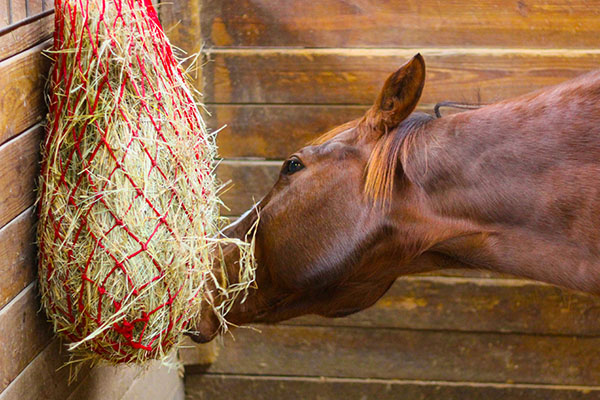
Using large holed haynets or feeding forage from the floor or in a bin can make the hay or haylage more easily accessible to your horse and there will be less ‘work’ involved to eat it, in comparison to a small holed haynet. A variety of forage types, including chopped and soaked fibre feeds, can also be used to encourage grazing and browsing behaviour as well as providing a source of enrichment. More information on forage replacement feeds can be found here.
It’s not unusual for horses to be unsure about eating soaked hay initially so it’s always advisable to increase soak time really gradually – starting with just 10 minutes or less and then building up the duration slowly. This not only allows them to get used to the different taste but also gives their gut time to adapt to the increased moisture intake. Feeding a combination of soaked hay and dry hay can also be helpful, with the proportions gradually being adjusted each day until the full ration is being soaked. Fresh water should be used for every soak, and soaked hay should be fed straight away rather than being left in the sun.
Something else to try and improve palatability of the soaked hay is to add different flavours to encourage your horse to eat it. These could be applied using a spray bottle to get more of an even coverage. Options here could include diluted fruit juice or cordial, or even herbal teas like peppermint or chamomile. If you have a steamer available, following up a soak period with a steam cycle can be beneficial to improve the forage’s hygienic quality as well as its palatability.
If your horse is really not keen on soaked hay, an alternative option to reduce the overall calorie contribution from the forage would be to include some straw in replacement of up to 50% of their hay provision. More information on feeding straw can be found here.
Horses often prefer the water from the field tank rather than fresh from the tap, and so if they don’t normally drink much out of the bucket while they are in the stable or away from home, try filling it with water from the tank in your field. In cold temperatures, it is not uncommon for water intake to decrease, and adding some warm water to the bucket to ensure it is not freezing can be helpful.
Another way to entice a fussy drinker to their water would be to add some flavour with a little cordial or food flavouring, such as those listed above. To encourage consumption of electrolytes, try adding apple juice to the water or sugar beet pulp juice to aid palatability. Alternatively, soaked fibre feeds like alfalfa pellets, grass pellets or sugar beet pulp can be made with extra water to further increase fluid intake. Chopped fibre feeds can also be mixed with water and electrolytes to be given after harder work or competition to aid rehydration and recovery.
Summary
- Ensure there are no underlying problems or discomfort which may be resulting in your horse’s reduced appetite.
- Get your horse’s teeth checked regularly to make sure poor dental health is not affecting their ability to chew.
- Keep meal sizes small and feed little and often to avoid over-facing your horse.
- Add different flavours or succulents to aid palatability.
- Make any dietary changes gradually to help avoid sudden changes in feed flavours or textures, as well as to reduce the risk of digestive upset.
- Monitor forage and water intake to ensure your horse is consuming sufficient quantities
References
- Ven den Berg and Hinch (2016) Effect of flavour change on food intake by horses. In: Proceedings of the 8th European Workshop on Equine Nutrition, Dijon, France, 16-18 June; pp. 84-8



Expert advice at your fingertips
If you’re looking for advice on the best feed, speak to one of our highly experienced nutritionists on our feedline, or for a more in-depth plan, fill out our Feed Advice Form