Introducing a New Horse to the Yard
A few weeks ago, we welcomed a new arrival to Team Dengie. Feed Advisor Lottie has a new horse on full loan – Lewis – although he is now affectionately known as Huey-Lewis! As many horse owners will know, bringing a new horse into your care can be both exciting and daunting. Read Lottie’s blog below to learn how she gradually introduced Huey-Lewis to his new home, ensuring a smooth and stress-free transition.
I began with lots of work on the ground – grooming and gradually introducing him to his new environment. I quickly discovered that Huey-Lewis is a big foodie and very receptive to positive reinforcement, so we spent several evenings doing in-hand work using clicker training to help build our bond. It was important to take things slowly, allowing him to explore at his own pace and being flexible with my expectations as he adapted.
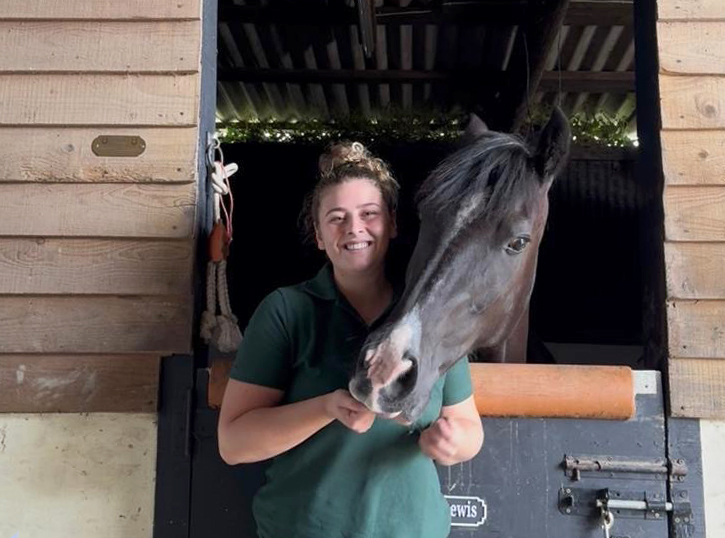
Moving to a new environment with different forage can be stressful for horses and ponies, especially when they’re adjusting to a new person. Introducing changes gradually, where possible, can help reduce stress and its impact on their gut health, alongside a high fibre diet and additional digestive aids.
After a few days of stabling for quarantine purposes, we slowly introduced turnout. The yard he’s now stabled at has larger paddocks and usually very good grazing. We made sure to introduce grazing gradually to allow his gut to adjust. In an ideal world, we would have also made a gradual change with his forage, but this wasn’t practical in our situation. Instead, we ensured he received the recommended dose of a digestive aid to aid the change in grazing and forage.
At this yard, horses are kept in herds, which was a new experience for Huey-Lewis, as he had only been with a few horses prior to this. I began by introducing him to a few of the other horses over gates, stable doors or with some sort of barrier between them. Once he seemed settled, I turned them out together. Most of the geldings are like giant Labradors, so it was lovely to watch them groom and play together.
I body condition scored and weighed Huey-Lewis during his first week with us so that I had an accurate weight to base his ration. He was a saint getting on and off the weighbridge, though he wasn’t too keen on standing still for too long!
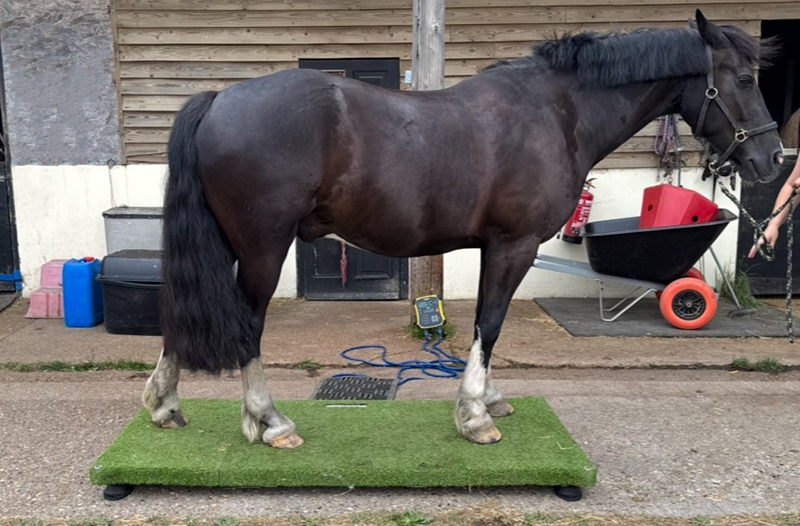
When assessing a new horse’s diet, it is important to consider their body condition as well as workload, age, any health issues, and the quality and availability of forage and grazing. As Huey-Lewis was moving to a yard with very good grazing and larger paddocks – and is a good doer – we decided to change his diet to a lower calorie fibre feed and a pelleted balancer. This would ensure that he receives all the nutrients he requires while supporting his gut health plus we can adjust the quantity of the chopped fibre according to his requirements. We also continued with the digestive aid so that it would provide some support for his gut in times of stress and change.
Electrolytes were introduced to his ration shortly after we began ridden work as we found that despite increasing his workload slowly and appropriately, he did sweat quite a bit, so it was important that we replenished the minerals lost through sweat.
When Huey-Lewis arrived his amazing owner brought some feed with her, so that we could gradually change his feed. Over the period of 10-14 days we changed his diet to the following by introducing his new feeds in small increments and reducing his old feed in the same small amounts.
Huey-Lewis’ new bucket feed (split between two feeds)
It is important to remember that energy requirements and workload may change, and feed may have to be altered slightly to be suitable, especially with a new horse.
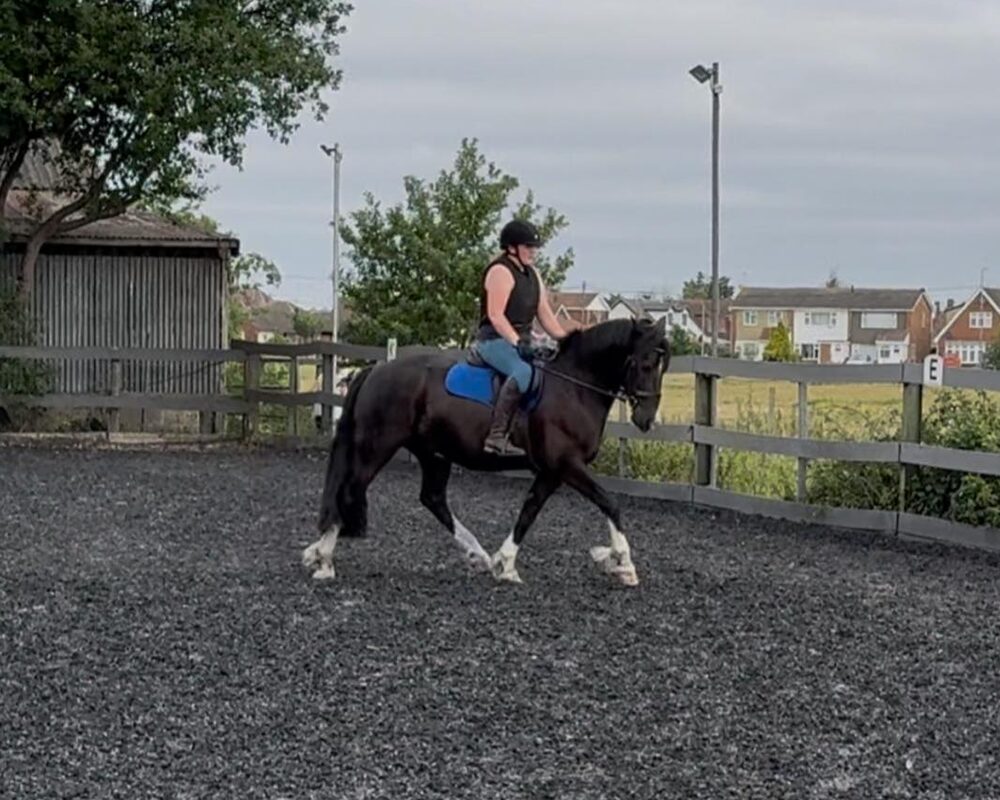
Since arriving, Huey-Lewis & I have been enjoying our time hacking, schooling, jumping and taking part in some online dressage. We are looking to get out and about this year to some arena hires, clinics and small competitions – once the weather cools down!