

Feeding the Good Doer and Overweight Horse
The number of horses and ponies that are overweight or obese in the UK is estimated to be between 40-60%. In the ‘leisure and pleasure’ horse population specifically, levels of obesity are likely to be higher but sports and performance horses can be good doers and require special weight management strategies to keep them at a healthy weight too. Just as for people, an overweight horse is more at risk of disease.
Obesity in horses and ponies can increase the risk of not only acute issues like laminitis but also chronic problems such as joint disease and respiratory problems. An insidious consequence of obesity is low-grade, chronic inflammation caused by pro-inflammatory cytokines (chemical messengers) being released from adipose tissue. A continuous inflammatory state increases oxidative stress which can result in damage to cells in the body and predisposes the horse to other inflammatory issues such as allergies, skin problems, behavioural issues and cardiovascular disease. Clearly being overweight or obese compromises a horse’s health and well-being so why is it such a common problem?
Horse owners often describe owning a good doer as stressful and studies have reported that horse owners feel they are doing battle when it comes to the challenge of avoiding laminitis (Furtado, 2021). Some of the most commonly identified contributing factors include:
- Owners find it hard to recognise obesity in horses
- Body condition/fat scoring (BCS or BFS) can be challenging – differentiating between fat and muscle, particularly on the horse’s neck can be difficult
- It is often perceived to be ‘normal’ for certain breeds and types of horse or pony to carry more fat
- Some livery yards don’t provide restricted pasture access or allow horse owners to bring in their own more suitable forage – or still charge for what they provide if an owner does purchase an alternative!
- Showing still rewards overweight and obese horses
- In wider culture, so-called fat shaming has become a contentious issue which can deter some professionals from trying to talk about obesity in horses with clients.
- Generally, society views animal starvation through neglect more harshly than obesity through neglect/lack of action.
- In the domestic environment it is becoming less likely that horses lose significant amounts of weight in the winter as they would typically do in their natural environment resulting in year-on-year weight gain
A more recent phenomenon though, has been the increase in owners reporting that they are trying to feed enough forage to avoid or reduce the risk of gastric ulcers but the consequence is that their horse gains too much weight. This was the most common reason cited by horse owners in a relatively recent survey of 650 horse owners who were concerned about ulcers (Dengie, 2021). Understandably, the increased coverage and understanding of risk factors associated with gastric ulcers means horse owners have become very focused on not restricting their horse’s access to forage for too long but, if horses are eating, they are consuming calories. We therefore need to find a balance between supplying sufficient forage to maintain digestive health without supplying too many calories.
Feeding advice for promoting weight loss in horses
Our approach is to consider a horse’s ration in three parts: grazing, forage and bucket feed.
To get more control over what a horse is consuming it is usually necessary to bring the horse off grass completely at first and then longer term, reduce access to grass at key times of grass growth. This cannot be assumed to follow any seasonal pattern anymore due to the changing climate and so vigilance is needed all year round!
There are many factors that affect the nutritional quality of grazing that are beyond our control and the weather is a great example. There are also individual differences in horse and ponies’ appetites with studies reporting that ponies can consume up to 5.6% of their bodyweight daily on a dry matter basis. For a 200kg pony, this equates to 11.2kg dry matter which equates to 56kg of fresh grass daily and many more calories than they need!
There are various methods to manage a horse’s grass intake and ultimately finding a method that is most practical for you and well tolerated by your horse will result in the greatest success. For those on livery yards, managing grass intake can be even more challenging if the yard limits how you can manage your horse. Sometimes there is such a thing as an unsuitable yard for your horse’s needs and whilst it is an upheaval, moving to a more accommodating yard is vital if you are to successfully avoid diseases such as laminitis.

Strip grazing involves significantly reducing the size of the horse’s grazing area by putting electric fencing across a strip of the field. As the grass is grazed, the fence is moved to gradually allow more grass access. Some people will also use a back fence and move that at the same time as the front fence to allow the grazed grass time to recover and to keep the total area available to the horse restricted.
How effective is strip grazing for weight management?
This depends on the size of the strip, how regularly the front of the strip is moved for fresh grass, and environmental factors affecting the growth of the grass in the strip. The grazing area should therefore be adjusted according to whether the horse continues to lose weight. Regular monitoring of bodyweight and fat scores will help to determine this.
Researchers Longland et al (2020) set out to compare three grazing practices on managing bodyweight. All ponies had grass access equating to 1.5% of their bodyweight on a dry matter (DM) basis daily over 28 days. One group had access to all 28 days’ worth of grazing at the start of the study. Another group were given 1.5% of their bodyweight on a dry matter basis daily by moving the front and back fence of a strip and the last group were given access to an extra 1.5% of their bodyweight on a dry matter basis by moving the front fence only. Bodyweight gains were significantly higher for those with free grass access compared to those who were strip grazed. Researchers concluded that strip grazing was an effective management practice for weight loss.

Track systems have gained popularity in the UK in recent years. A track system can mean different things to different people. For some, the track will be completely devoid of grass whilst other tracks may be grass-based. The track tends to be around the edge of a field with grazing in the centre for leaner horses or for other uses such as making hay. Resources like additional forage and water are placed in different locations in the track and additional environmental enrichment such as access to sections of hedgerow provided. One of the key benefits of a track system is that it encourages the horse to move more.
Like strip grazing, how successful a track system is for weight management depends on many factors including the size of the track, the amount of grass on the track, and any additional forage provided. Again, this method requires continued monitoring of the horse and adjustments where necessary. Some people with grass on their tracks may then combine a track with strip grazing at times that the grass is abundant.
A recent study has investigated how horse owners are using alternative grazing systems including track systems to manage their horse’s health and well-being. A summary of the research can be viewed here or for a long read the full report is here.
Another method of limiting grass intake is to try and reduce the amount of grass in the grazing area. Co-grazing with other livestock such as sheep, allowing leaner horses access to the grass first or even mowing and removing the clippings to reduce herbage a couple of weeks before, are all strategies for reducing the amount of grass available.
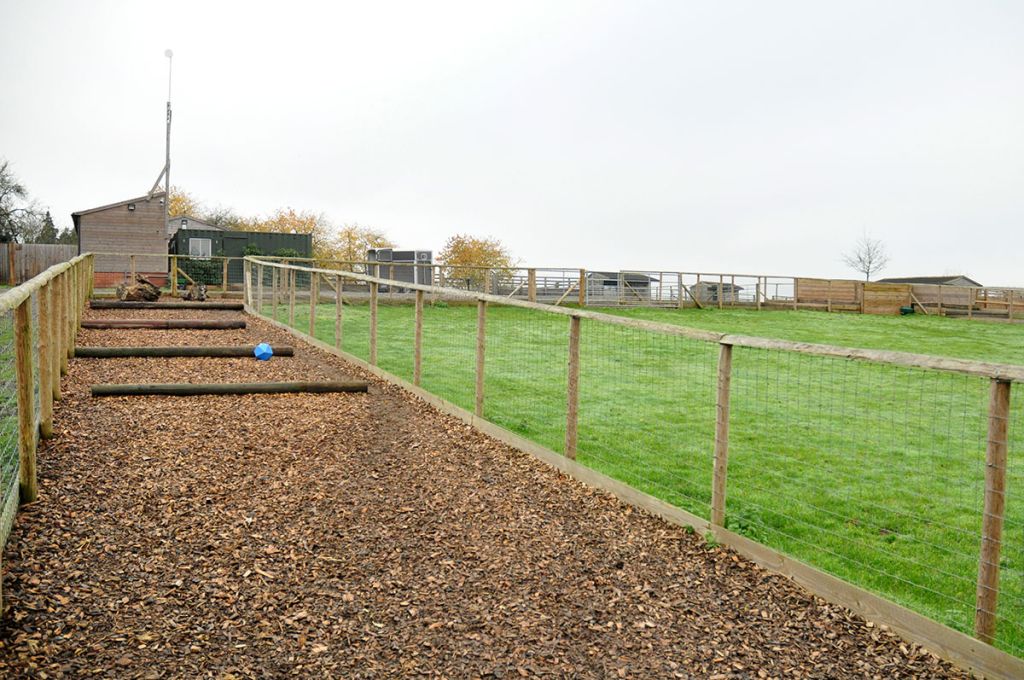
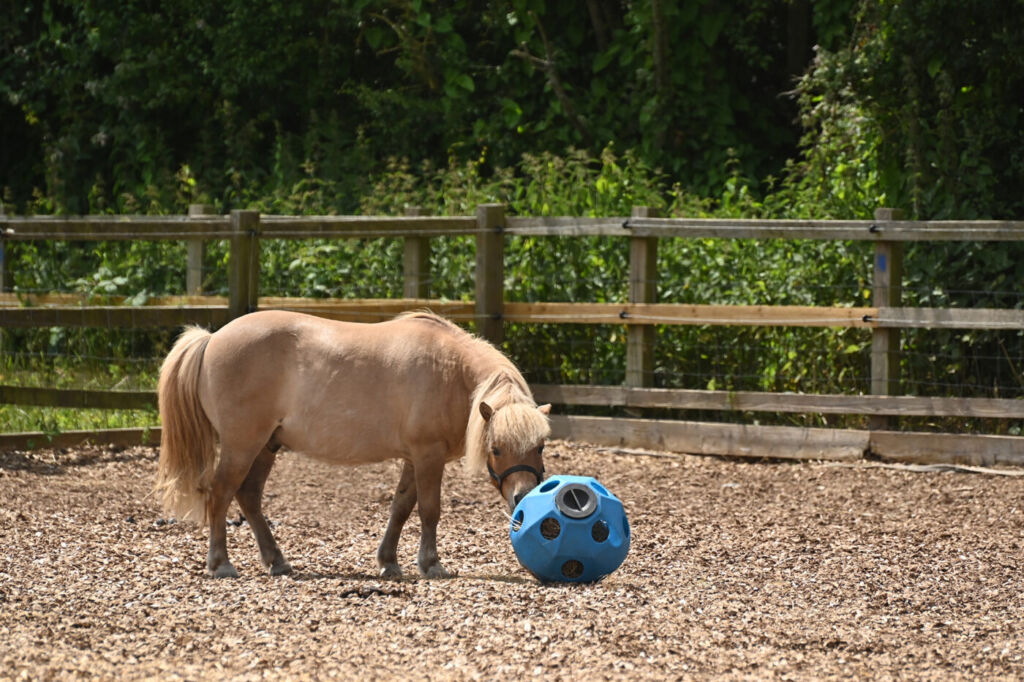
If you are going to get complete control over what your horse is eating, then a bare paddock is key. This completely removes grass from the equation which is advantageous as grass intake is so difficult to control and nutrient content varies so quickly. For some individuals such as those that are exceptionally prone to laminitis, a no-grass area may be a permanent fixture, whilst for others it may just be used tactically such as at times of the year when grass is most abundant. The base to the no-grass area can be sand, wood chip or rubber just as for an arena or menège. Do be aware that if the horse is eating forage from a sand base there is a risk of sand accumulating in the gut which may cause colic. As these areas tend to be limited in size, they do have a downside which is the horse isn’t moving around as much. However, if they are outside it may mean the horse can interact with other horses, see what’s going on and breathe cleaner air which is beneficial for those with respiratory issues such as RAO. Supplementary forage may be divided up into smaller meals or provided via enrichment slow feeder devices like forage balls and small holed haynets to help make it last longer.
If you can’t limit the area of grazing your horse has access to, grazing muzzles come into their own as the horse can still be turned out in their normal paddock. A grazing muzzle is fitted over the horse’s mouth and muzzle and has one or multiple holes to allow the horse to consume some grass but limits the amount of grass in each bite.
How effective are grazing muzzles for weight management
Research by Dengie’s Nutritionist Tracey Hammond found that the use of a grazing muzzle restricted intake by 75-85% in her study for her Masters Dissertation project ‘Using a grazing muzzle to control grass intake’. Later research published by Longland and colleagues in 2011 gave a similar result with a restriction of 75-88%. What was interesting about this second study was that those ponies grazing without a muzzle during the 3-hour grazing period consumed 0.8% of their bodyweight on a dry matter basis, which is over half the daily intake suggested for a dieting pony in such a short space of time. As horses are capable of compensatory eating behaviour when restricted by time, reducing time at grass alone is not a recommended method of grazing restriction for weight management.

If we restrict a horse’s access to pasture then alternative forage sources are needed and this is where the issue of providing enough, but not too much, to balance the risk of ulcers but avoid excessive weight gain comes in. Achieving consensus and a clear directive on the minimal dry matter intake for maintaining optimal digestive health has been confused by different studies over the years but the level that most nutritionists would work to and which is also cited by Rendle et al (2020) is 1.5% of bodyweight on a Dry Matter (DM) basis. This is for the long-term management of good doers and is why it is important to weigh your horse’s forage regularly and especially if you change supply or source.
The veterinary perspective may be to restrict intake more than this in an acute scenario to deal with significant obesity, hyperinsulinaemia and laminitis but this is often lost in interpretation and communication. If quantities are reduced below 1.5% under veterinary guidance, the aim should always be to return to 1.5% for the long-term health of the horse.
Soaking hay helps to reduce sugar content but doesn’t necessarily change the calorie content very much so consider having your forage analysed to know exactly what your horse is consuming. This is a service Dengie offers – for more information on the forage analysis services we offer click here. Forages that contain grass varieties such as Timothy tend to be lower in energy and sugar than varieties such as rye grass but analysis will clarify if this is the case for your forage.
As a general principle, it is better to feed more of a lower calorie forage rather than less of a higher nutritional value one if the aim is to promote good digestive health but avoid weight gain. This is why straw should not be dismissed as a forage source for good doers.
Straw often gets “bad press” in the context of gastric ulcers as one study by researchers in Denmark, found that a horse eating straw as the sole or predominant forage source was 4.5 times more likely to have gastric ulcers. What often gets lost when people read this research is the proportion of straw in the ration. In the UK, straw is rarely fed as the sole forage source to horses and so, recognising that straw can be very useful as a low-calorie forage source for good doers, a follow-up study has been published investigating the safety of feeding 50% wheat straw. The research found there was no increased risk of ulcers from using 50% straw to replace haylage in the ration (Jansson et al., 2021).
The rate of consumption of straw mixed with haylage was slower than when haylage was fed alone which resulted in a lower plasma insulin response. Straw has a much lower water-soluble carbohydrate (WSC) content than grass forages so a lower insulinemic response would be expected but, when the rate of intake was slowest in the evening, the researchers found no significant increase at all in insulin levels. This suggests that using low WSC forages and slowing the rate of intake are both important strategies in managing horses with insulin dysregulation (ID) or the potential to develop ID due to being overweight or obese.

The final element of the ration is the bucket feed which is really about balancing the ration for the good doer. Trace minerals are lacking in pasture and therefore forages in the UK so these need to be supplied by other means. In addition, vitamin E intakes will be much lower from conserved forages especially if straw is fed, compared to fresh pasture. The more we reduce access to fresh pasture or replace grass forages with straw, the fewer vitamins and minerals the horse will receive from the high-fibre parts of the ration.
Balancers and supplements both supply vitamins and minerals but even a balancer has been shown to result in an exaggerated insulinaemic response in those that are insulin dysregulated (Macon et al, 2022). In this study, the balancer was consumed in around 10 minutes so the key here would again be to prolong consumption times. This can be done using low-calorie chopped fibre feeds or low-sugar and starch mashes which can be made very dilute to reduce energy intake and slow the rate of consumption.
A summary of dietary advice for good doers
- Remove from pasture completely if significant weight loss is required
- Limit access to pasture at times of abundance
- Use low-calorie options to supply sufficient, but not too much forage
- Straw can safely make up half of the forage ration without increasing the risk of ulcers
- Balancers and supplements are low-calorie ways to provide a balanced diet – use a chopped fibre source to slow the rate of intake of balancers, especially for those with insulin dysregulation
Monitoring your horse’s body condition and weight
Measuring and assessing your horse regularly is important for spotting changes early so you can address any problems quickly. If you have made changes and still aren’t seeing any improvements after 2 to 3 weeks then you should review again and consider seeking help from a professional if there are no signs of improvement after a month. It is really important to ensure you have addressed any underlying causes as whatever changes you make to the diet, they are unlikely to have the desired effect if other contributing factors are still present.
Watch the below video to learn how to body fat score your horse or pony.
Exercise and fitness for overweight horses
There are two rationales for exercising horses if they are sound. The first is to use up energy that is consumed so it is ‘burnt’ rather than stored. The second is that studies suggest the act of exercising helps to improve insulin sensitivity. This is important in reducing the risk of insulin dysregulation and hyperinsulinaemia, both of which increase the risk of laminitis. In terms of energy utilised, it is often a surprise how much exercise is required to ‘work off’ the energy consumed from a relatively limited diet. A low-calorie hay would contain around 7.5MJ of Digestible Energy per Kg. (A mega joule (MJ) is a million joules). One section of hay weighs around 2kgs and so supplies approximately 15MJ which would supply enough energy for around 50 minutes of schooling in a 500kg horse working at a moderate level. This demonstrates why exercise is important but calorie-controlled rations are even more so!
References
- Dengie (2021) Unpublished data from a survey of horse owners whose horses had or were suspected to have gastric ulcers.
- Furtado, T et al (2021) Exploring horse owners’ understanding of obese body condition and weight management in UK leisure horses. Equine Veterinary Journal. 53 (4), 752-762.
- Jansson et al (2021) Straw as an Alternative to Grass Forage in Horses—Effects on Post-Prandial Metabolic Profile, Energy Intake, Behaviour and Gastric Ulceration. Animals.
- Longland et al (2011) The effect of wearing a grazing muzzle vs. not wearing a grazing muzzle on pasture dry matter intake by ponies Journal of Equine Veterinary Science. DOI:10.1016/j.jevs.2011.03.105
- Longland et al (2016) Effects of Grazing Muzzles on Intakes of Dry Matter and Water-Soluble Carbohydrates by Ponies Grazing Spring, Summer, and Autumn Swards, as well as Autumn Swards of Different Heights. Equine Veterinary Journal. https://doi.org/10.1016/j.jevs.2015.09.009
- Longland et al (2020) Strip-grazing: Reduces pony dry matter intakes and changes in bodyweight and morphometrics. Equine Veterinary Journal. https://doi.org/10.1111/evj.13416
- Macon et al (2022) Postprandial insulin responses to various feedstuffs differ in insulin dysregulated horses compared with non-insulin dysregulated controls. Equine Veterinary Journal. https://doi.org/10.1111/evj.13474
- Rendle et al (2020) Tackling obesity and related laminitis in equine patients. Veterinary Times Equine. 6 (1), 6-9.




Expert advice at your fingertips
If you’re looking for advice on the best feed, speak to one of our highly experienced nutritionists on our feedline, or for a more in-depth plan, fill out our Feed Advice Form