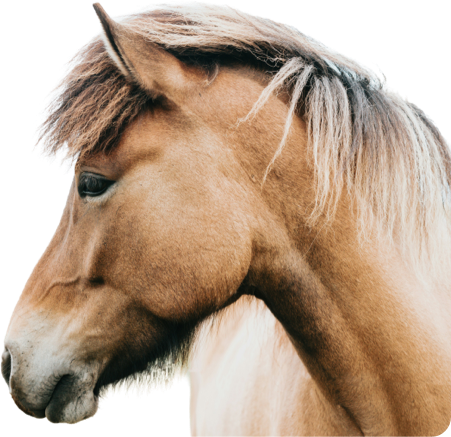


Feeding the Performance Horse
There is no doubt that training and competing place stress on the horse’s digestive system, and so the aim of those feeding and managing working horses should therefore be to find a balance between health and performance.
Good quality forage should form the majority of the performance horse’s ration, and using as much fibre as possible and keeping cereals in the bucket to a minimum will help to promote a healthy digestive system and reduce the risk of issues such as gastric ulcers and muscle problems. Nutritionists are one element of the team of people that can help you to maximise your horse’s potential, so make use of the advice and information that is available to you.
The increased chew time from adding a chopped fibre to the bucket feed has long been recognised but what is often over-looked is the fact that the amount of saliva produced when a horse chews is related to the amount of force the horse needs to apply (Vervuert et al., 2013). This means that more fibrous materials which require more chewing help to increase saliva production and therefore more natural buffering in the digestive tract, compared to softer feeds. Whilst mashes and pelleted fibres contribute fibre to the diet, they don’t require as much chewing and so do not generate as much saliva. This phenomenon is supported by a study in 2024 that found unmolassed sugar beet pulp resulted in a greater drop in pH (increase in acidity) in the horse’s mouth than other feed materials including alfalfa and haylage, which the authors suggest could be related to the fact it requires less chewing (Daniels et al., 2024). Whilst the level of acidity returned to normal within 15 minutes and so doesn’t represent a cause for concern in the context of dental health, it demonstrates the importance of chewing for saliva production which has benefits further along the digestive tract.
When it comes to choosing a suitable fibre feed to go in the bucket, the type used is important to consider. High quality fibres such as precision dried grass and alfalfa can be extremely beneficial for performance horses as they not only provide fibre but are also relatively digestible and so do not sit in the digestive tract for as long, compared to more indigestible forages such as straw. In contrast to grass forages, alfalfa is naturally low in sugar and starch, and with research indicating that it is an effective natural buffer to acidity in the digestive tract (Nadeau et al., 2000; Lybbert et al., 2007), it is the ideal fibre source for supporting gastric health. It also provides quality protein to help with building muscle and topline, and supplies plenty of slow-release energy for stamina.
Super-fit performance horses can have reduced appetites and in these situations, a pelleted fibre feed is a useful way of continuing with a high fibre ration in a more concentrated volume of feed. Whilst some chopped fibre is still important for encouraging chew time, it can be mixed with feeds like alfalfa pellets to reduce the volume of feed the horse needs to eat. These can be supplied either in the bucket or via treat balls, which also helps to keep them occupied if stabled for longer periods.
These fibre types can be fed in varying quantities depending on the horse’s calorie or energy needs and can simply be combined with a performance or competition balancer to provide a nutritionally balanced ration that is suitable for horses in higher levels of work.
Travel and Competition Stress and Recovery
It is important that horses eat during long journeys because a reduced feed and water intake for three or more hours could be detrimental – long periods without fibre can increase the risk of problems such as colic and gastric ulcers. To maintain gut function, horses should have access to good-quality forage throughout the journey and when staying away from home. Contrary to the common misconception, forage does not need to be withheld at any point, and horses can have access to their normal hay net as soon as they have cooled down and are back at their stable or lorry.
If a change of forage is necessary while the horse is travelling or away, it should ideally be introduced gradually in the weeks leading up to the journey or event. However, if taking your own supply of hay or haylage away with you is not possible, moving your horse onto a partial or complete forage replacer beforehand may be more a practical option. The distraction of being away from home can affect some horses’ appetites, so chopped grass products may be beneficial as they are typically very palatable and can make a valuable contribution to your horse’s total fibre intake.

Another point to be aware of when travelling or away from home is the potential impact of stress on your horse. Stress can increase the rate of passage of food through the digestive system, which can disrupt the natural population of bacteria in the gut that are essential for efficient digestion. Digestive enhancers that contains prebiotics and yeast can be used before, during and after travel to try to maintain the population of friendly bacteria and keep the gut healthy.
Water should be offered at least every four hours during prolonged road or air travel. Sweating increases a horse’s need for water, and a stressed horse that sweats profusely and refuses to take water during travel has a greater risk of colic. Horses eating dry forage will also need additional water. Some horses won’t drink water they are not used to, so it might be necessary to travel with a supply of water from home. This isn’t always possible because of the large quantities required, so an alternative approach is to accustom the horse to a flavouring in the water at home, like fruit juice, cordial or peppermint oil, and then continue to use it while away to mask the change of water. Electrolyte supplements can also be used to replace salts lost through sweat. The body doesn’t store electrolytes, so they should be given before, during and after travel to replace what is lost.
Water should also not be withheld after exercise and the horse should be encouraged to drink as much as possible. If adding electrolytes to water, plain water should also be made available because some horses might not drink the water with the electrolytes added, which could result in dehydration.
In addition, a soaked fibre feed is another good way of providing your horse with water, as they may be more inclined to consume wet feeds from a bucket. Soaked sugar beet pulp or grass or alfalfa pellets can be useful in this instance, and an electrolyte supplement can also be added.
If your horse doesn’t normally have a soaked feed as part of their ration, even their normal chopped fibre feed can be mixed in with some water and an electrolyte supplement to aid recovery. However, if you are introducing any new feeds, ensure you do so slowly over a couple of weeks prior to the event to avoid making sudden changes to the diet.
Prohibited Substances
When choosing hay, feed, and supplements for the competition horse, ensure you use a reputable, trusted supplier and ideally one that is a member of the BETA NOPS (British Equestrian Trade Association Natural and Other Prohibited Substances) scheme, as this demonstrates they are taking action to reduce the risk of contamination with substances that are prohibited in competition.
Many prohibited substances are of pharmaceutical origin and would include things like steroids or painkillers. However, there are also some that are naturally occurring in plants and these are often much harder to remove from feed ingredients and materials. It is an issue that manufacturers are very focussed on but it is also something every competition horse owner and rider also needs to be aware of as plants containing NOPS could appear in hay and other forage crops. It is good practice to keep records of the feeds and products you use and their batch details, as well as keeping a small sample from every bag so that it can be tested should the worst happen. More information on NOPS can be found here.
FAQ’s
Before making changes to your horse’s diet, it is important to firstly check the following:
- If your horse’s lack of energy is out of character, it is essential to establish if there is an underlying cause to the problem, such as ill health or pain and discomfort from ill-fitting tack.
- It is important to honestly assess whether your horse is capable and fit enough to do what is being asked of them and address this if necessary.
- Consider if your horse’s lack of energy could relate to behaviour rather than diet. Some horses are naturally laid-back characters and others become ‘bored’ with repetition. Feeding is unlikely to influence your horse’s behaviour in these situations, but sometimes rider training and a more varied exercise regime can be helpful.
Although a change of diet might not completely solve the problem, sometimes assessing and making some adjustments to your horse’s ration can be helpful. The two fundamental points to consider are whether your horse is receiving enough dietary energy and whether they are having a balanced diet with the correct levels of vitamins and minerals.

Energy and calories are essentially the same thing, so the easiest way to determine whether your horse has sufficient energy for the work they are doing is to assess their body condition score. Ideally your horse should be a 3 on the 5 point scale.
A horse that is above 3 on this scale is receiving excessive amounts of energy or calories and is carrying too much weight. Encouraging weight loss by decreasing overall energy intake and increasing exercise to improve fitness levels will ultimately help to improve your horse’s energy levels.
A horse that is well below 3 on this scale is receiving insufficient amounts of energy or calories in their ration. Increasing overall energy intake to promote weight gain and achievement of optimal body condition may help improve overall energy levels. It is important to note that very fit horses may maintain their weight and have an optimal body condition and health at just under a 3 on the condition scoring scale.
If your horse is in optimum body condition, this suggests they are receiving the correct amount of energy in the diet for the work being done. At this stage, looking at the type of energy supplied may also potentially influence behaviour. Fibre and oil provide slow release energy whereas sugars and starch provide quick release energy. For lazy horses where more sparkle is required, cereal grains are commonly fed as they provide lots of starch and therefore quick release energy. There is however, no certainty as to how the introduction of cereal grains will affect your horse’s behaviour; it may have no effect, or it may result in spooky, silly behaviour rather than helping them to be more forward-going. Research has found that horses fed a cereal-based concentrate mix were more reactive to new situations and equipment than those on a high fibre and oil diet (Bulmer et al., 2015). They were less consistent in their behaviour and had higher heart rates compared with horses fed the fibre-based feed.
If feeding cereal grains does provide the desired increase in energy levels then research has suggested that time of feeding is important. Within two hours of eating a starchy feed, the horse’s blood glucose levels rise, followed by a rise in insulin to store glucose. If the horse is exercising whilst the body is also trying to store glucose, this could potentially affect performance due to low blood glucose levels. Cereal-based feeds should therefore not be given within 3-4 hours prior to exercise. Feeding fibre does not have this effect and can be fed prior to exercise.
As too much starch can contribute to problems such as colic and gastric ulcers, it is important that cereals are used in moderation. For horses that haven’t previously been fed cereals they should be introduced gradually, literally a handful at a time to give the digestive system time to adjust to the new feed. Oats tend to be the cereal most commonly used to try and give horses more energy, although all cereals provide quick release energy and so may have the desired effect. Feeding cereals to an overweight horse would not be beneficial as it is likely to encourage further weight gain which will compound the problem of lethargy further.
If your horse runs out of steam towards the end of a ride or in later classes then the feeding strategy should focus on improving stamina. Research has shown that feeding additional oil may be of benefit for this purpose which is why relatively high levels of oil are fed to endurance horses (Treiber et al., 2008). If your horse lacks stamina then the oil content of the ration can be increased by introducing high oil feeds such as Dengie Alfa-A Oil, but bear in mind that high oil feeds are high in calories so are not an appropriate choice for horses who are prone to carrying too much weight. Horses will need to be trained on a high oil ration for two to three weeks before improvements to their stamina may be seen as it takes the horse time to adapt to higher levels of fat in the ration.

Vitamins and minerals are integral components of energy metabolism and a shortfall of these in the diet can result in poor performance. If you are feeding the recommended quantities of a compound feed that is intended for the level and type of work your horse is doing alongside sufficient forage, the diet should be well-balanced. Using straights with a balancer or supplement at the recommended levels should also provide a balanced ration.
One thing that many horse owners are concerned about if their horse is lethargic is anaemia. This can be diagnosed with a blood test carried out by a veterinarian. Unlike humans, anaemia in horses is rarely due to low levels of iron in the diet as grass and forage are naturally abundant sources. If your horse’s anaemia isn’t caused by blood loss, an unbalanced diet with insufficient levels of copper in the diet could be the culprit. Copper is important as it is involved in haemoglobin synthesis and the mobilisation of iron stores. Haemoglobin is the pigment that carries oxygen within the body to the tissues where it releases it for aerobic respiration to occur which ultimately produces energy. Copper is typically low in UK pasture and forage, but feeding correct levels of an appropriate nutritionally-balanced feed or balancer should be sufficient to meet these shortfalls.
For horses working hard enough to sweat, it is also important to include an electrolyte supplement in their diets. Electrolytes are minerals that are found in fluids in the body and their concentration in fluids found both in and around cells affects the horse’s neuromuscular function. Electrolytes are also found in sweat and horses in prolonged work such as endurance can lose considerable amounts. Electrolyte losses and dehydration are linked to fatigue and ultimately compromise performance, so electrolyte supplements should be used before, during and after a busy work period or routinely every day if the horse is in hard work or sweats profusely.
The first step when managing the fizzy or excitable horse is to ensure that they aren’t in pain when being ridden. Ill-fitting tack, tooth abscesses and back or limb injuries are all examples of why some horses may become more difficult to ride. A thorough examination of the horse and the tack should be carried out by experienced professionals to ensure that pain isn’t the cause of the problem. Excitement generated by being in a different environment, such as away at a show or out somewhere new can also be the cause of many problems.
Stabling for long periods is also a common reason for a horse to exhibit fizzy behaviour, so this could be a contributing factor for the competition horse who is frequently staying away from home. If it is not possible to implement management changes to try and help, the next step is to ensure the diet is based on slow-release energy sources, such as those high in fibre and oil, rather than quick-release energy sources like sugar and starch.
Energy Supply
Providing more energy than your horse needs can result in over-exuberant behaviour and weight gain, regardless of the origin of the energy. It is important not to assume automatically that an increase in workload means the energy or calorie level of the ration needs to be increased, especially if your horse is otherwise looking and performing well. As a general rule, increase your horse’s workload first, then continue to monitor its body weight and performance to determine if a higher energy ration is necessary. It is also important to remember that grass growth during the spring and summer will make more of a contribution to your horse’s ration and therefore their overall energy intake.
For the fizzy competition horse, the ration should be based on slow-release energy sources rather than those based on quick-release energy sources. Sources of quick-release energy are starch and sugar, which are rapidly broken down in the horse’s digestive system, releasing energy quickly. The main source of starch in horses’ diets tends to be cereal grains. Starch is rapidly broken down to glucose, which passes from the digestive system into the bloodstream. The resulting peak in blood glucose is thought to be why fizzy behaviour follows, so keeping starch intake to a minimum is essential.

Sources of slow-release energy are those based on fibre and oil, which are broken down slowly in the horse’s digestive system so you don’t get the associated large peak in blood glucose, as you would with starch and sugar. Many people under-estimate just how much energy good-quality fibre can contribute to the ration. For example, alfalfa naturally has a similar energy or calorie level as a cool mix, but without the high levels of starch. Oil contains lots of energy or calories and is a useful way of increasing the horse’s energy intake as a safer alternative to cereals for horses prone to gastric ulcers or muscle problems. Oil provides slow-release energy, so it is ideal for fizzy horses that require additional energy for exercise or weight gain.
Sugar beep pulp can also be a useful ingredient for horses who can be excitable but need calories to maintain their weight and condition. Research has shown that feeding alfalfa and sugar beet pulp together increases the digestibility of the alfalfa so that the horse is able to obtain even more slow-release energy (calories) from it. Because alfalfa and sugar beet pulp both provide slow-release energy, Dengie Alfa-Beet, which combines both without any other additives or molasses, is another way of increasing the energy intake without using feeds that contain high levels of starch or sugar.
Simply adding a competition or a performance balancer alongside a fibre feed is a great option for the competition horse to provide slow-release energy and the nutrients they need without the fizz.
Maximising Digestion
Fizzy horses can also often be stressy or anxious individuals, and may be prone to loose droppings when travelling and competing. These horses also tend to lose weight easily. In these situations, a more comprehensive digestive supplement may be beneficial. Products that combine a prebiotic and yeast will help to maintain a healthy digestive system at times of stress. They can be used long-term but might also be effective when used for a few days before, during and after a period of stress.
Top Tips for Feeding the Competition Horse
- Ensure you are feeding enough of the right feed for the work the horse is doing.
- A good quality fibre diet is suitable to meet the needs of the performance horse and just needs to be fed alongside a performance or competition balancer.
- Add electrolytes for horses who sweat regularly, be that through travel, competition or harder work at home.
- For horses who have too much or too little energy, remember that feeding is not always the cause of the problem and it’s important to consider other management factors as well as their natural temperament.
- Monitor your horse’s weight and condition with regular body condition scoring to identify whether any changes to their diet are required.
- If you need to promote weight gain, feed little and often, gradually increasing the energy or calorie content of the ration.
- Consider the use of digestive supplements to maximise fibre digestion for horses who can be stressy or nervous.
- Choose feeds from companies who are members of the BETA NOPS scheme to reduce the likelihood of contamination with prohibited substances
References
- Bulmer et al., (2015) The effects of a high-starch or high-fibre diet on equine reactivity and handling behaviour. Applied Animal Behaviour Science, 165, pp.95-102.
- Daniels et al., (2024) Straight from the horse’s mouth: The effect of different feedstuffs on oral pH in horses and ponies. Journal of Equine Veterinary Science, 142, p.105181.
- Lybbert et al., (2007), Proceedings of Annual Convention of the AAEP, Orlando, Florida, 2007.
- Martin et al., (2023) Effect of high-starch or high-fibre diets on the energy metabolism and physical performance of horses during an 8-week training period. Frontiers in Physiology, 14,1213032
- Nadeau et al., (2000) Evaluation of diet as a cause of gastric ulcers in horses. American Journal of Veterinary Research 6(7), pp.784-90.
- Treiber et al., (2008) Dietary energy source affects glucose kinetics in trained Arabian geldings at rest and during endurance exercise. The Journal of nutrition, 138(5), pp.964-970.
- Vervuert et al., (2013) Electromyographic evaluation of masseter muscle activity in horses fed (i) different types of roughage and (ii) maize after different hay allocations. Journal of Animal Physiology and Animal Nutrition, 97(3), pp.515-521.



Expert advice at your fingertips
If you’re looking for advice on the best feed, speak to one of our highly experienced nutritionists on our feedline, or for a more in-depth plan, fill out our Feed Advice Form