

Essential Nutrition for Hoof Health
We’ve all heard the saying “no foot, no horse” and, if you’ve ever owned a horse with poor feet, you will know how frustrating it is not to be able to ride because they have thrown a shoe again.
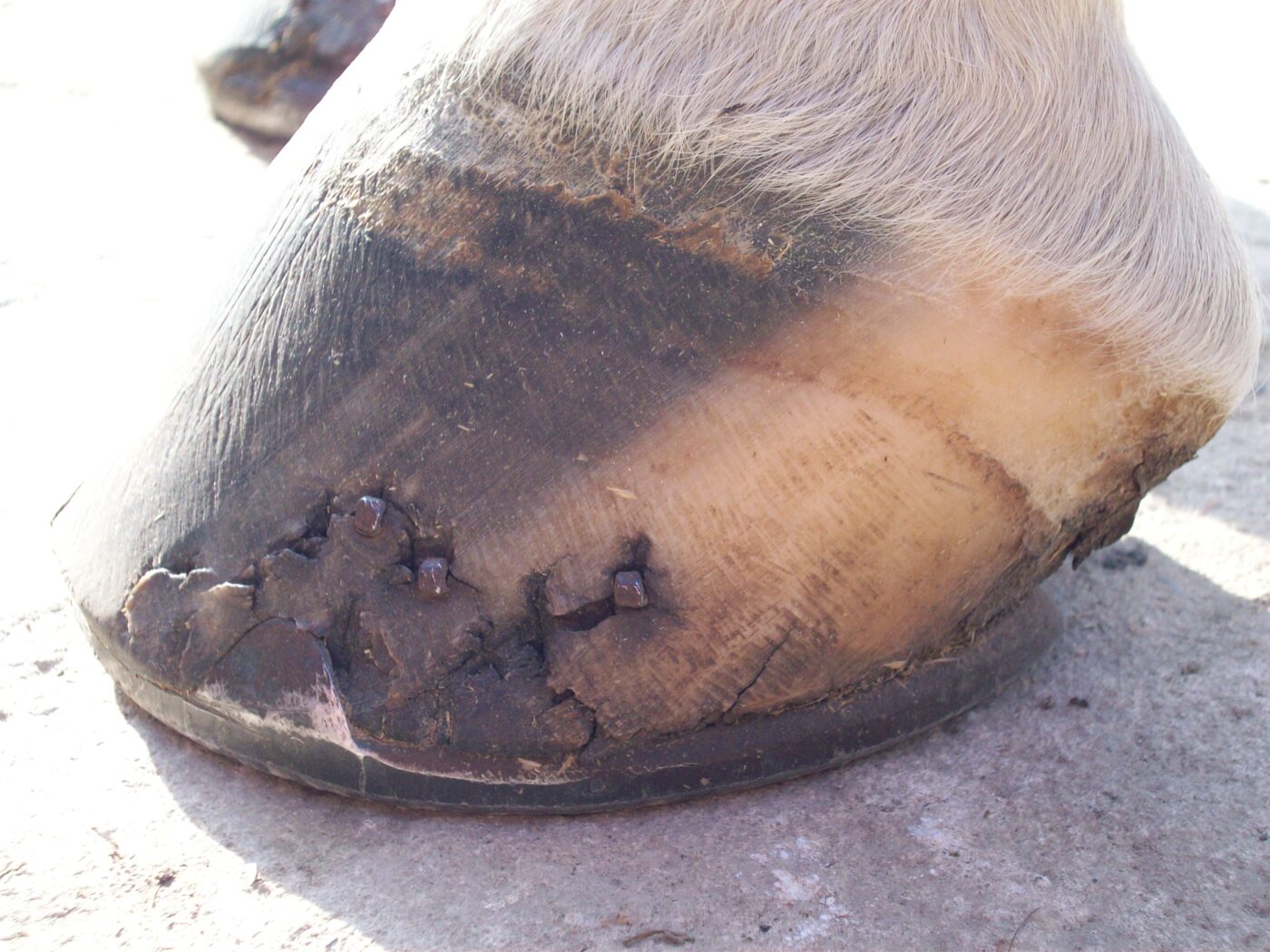
Poor hoof horn quality can present as cracked hooves, brittle feet, soles prone to bruising and abscesses, and general lameness. Just as there are many ways that poor hoof horn quality presents itself, there are also many reasons why a horse may have poor hoof horn quality.
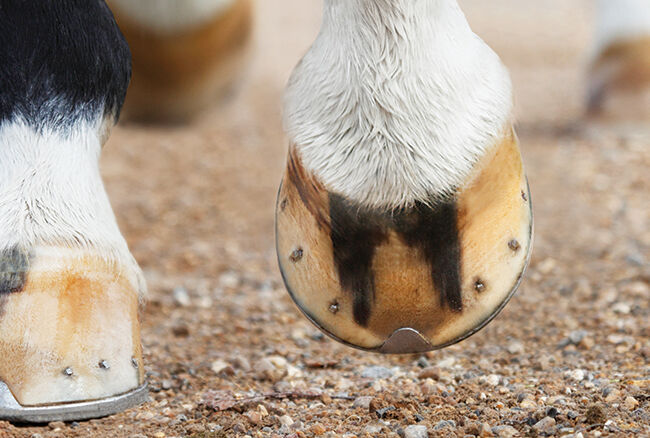
The horse’s hoof is a specialised structure which support’s the horse’s bodyweight, absorbs concussion and resists wear. The external hoof, or hoof capsule doesn’t have a blood supply and is made up primarily of a keratin-based tissue like horns and claws in other animals. This is why the horse doesn’t feel any pain when the farrier trims the hoof.
The external hoof capsule is made up of the hoof wall, the sole and the frog. The hoof wall grows throughout the life of the horse to account for wear and tear of the hoof that is in contact with the ground. The hoof wall grows down from the coronet band at the rate of 8-10mm per month which means that it takes 9-12 months for the new hoof to grow down to the bottom (Pollitt, 1990).
There are several factors that can influence the quality of horse hoof health including inherited factors like conformation, environmental factors that affect moisture levels in the hoof, management factors including farriery, and diet. When addressing issues with hoof horn quality it is therefore important to consider all these areas as targeting one in isolation might not be effective in making improvements to hoof growth and quality of equine hoof health.
Diet and hoof health
It is important to provide all horses with a balanced diet for their general health and wellbeing including hoof quality. Whilst supplying plenty of energy for the leisure horse, UK pasture and forage commonly lack the trace minerals copper, selenium and zinc and so these nutrients should be supplemented via the bucket feed. A balanced diet can be provided by feeding the recommended quantity of a feed fortified with vitamins and minerals appropriate for your horse’s bodyweight and workload. For those that hold weight well, a broad-spectrum vitamin and mineral supplement or balancer alongside a low-calorie fibre feed is an appropriate option.
If you have a horse with poor hoof quality, working with a nutritionist is key to understanding if your horse’s diet is truly balanced. As part of this evaluation testing the forage you use to see what mineral levels are present is also very valuable. Identifying any shortfalls would help to understand more about why your horse’s hoof quality is compromised. This is particularly valuable if the mineral levels in your soil are not typical of average UK levels.
Nutrients specific to hoof health in horses
Whilst a balanced diet is important to overall hoof health, there are certain nutrients that are known to be particularly important for promoting hoof horn growth and quality.
Beware the footy horse
Whilst poor hoof quality can affect your horse’s soundness, changes in the level of comfort on uneven or stoney terrain or being ‘footy’ can also be a sign of laminitis which requires urgent veterinary attention.
There are some myths online that certain feed ingredients such as alfalfa are linked to footyiness for which there is no scientific basis particularly as alfalfa is naturally low in sugar and starch. A footy horse is a sign of a chronic problem, not that one particular feed doesn’t suit them. Sub-clinical laminitis may be apparent as “footyness” which is most likely due to hormonal changes from chronic obesity or PPID and a low sugar and starch ration is advised as well as achieving a healthy weight.
Summary
- Patience is required to see the effects of any dietary change as it takes 9-12 months for the hoof wall to be replaced
- Diet is only one piece of the hoof quality puzzle, and conformation, environmental conditions and management are also important
- UK pasture and conserved forage does not supply all the required trace minerals for a balanced diet, so supplementation is required even for those that hold weight well
- Additional nutrients like biotin can confer extra benefits to support hoof quality
- Working with a nutritionist and having your forage tested will help to identify whether your horse’s diet is truly balanced and whether dietary changes will to help improve your horse’s hoof quality
- Footyness can also be an indication of laminitis and must be taken seriously by seeking veterinary attention
References
-
- Buffa, E.A., van den Berg, S.S., Verstraete, F.J.M. and Swart, N.G.N. (1992) Effect of a dietary biotin supplement on equine hoof horn growth rate and hardness. Equine vet. J. 24, 472-474.
- Coenen, M. and Spitzlei. (1997) The composition of equine hoof horn with regard to its quality (hardness) and nutrient supply of horses. Proc, 15th Equine Nutr. Physiol. Symp. pp 209-212.
- Josseck, H., Zenker, W. and Geyer. H. (1995) Hoof horn abnormalities in Lipizzaner horses and the effect of dietary biotin on macroscopic aspects of hoof horn quality. Equine vet. J. 27, 175-182.
- Kempson, S.A. (1987) Scanning electron microscope observations of hoof horn from horses with brittle feet. Vet Rec. 120, 568-570.
- NRC (2007) Nutrient Requirement of Horses. 6th ed., National Academies Press, Washington DC
- Pollitt, C.C. (1990) An autographic study of equine hoof growth. Equine vet. J. 22 (5), 366-368.


Expert advice at your fingertips
If you’re looking for advice on the best feed, speak to one of our highly experienced nutritionists on our feedline, or for a more in-depth plan, fill out our Feed Advice Form