

Feeding the Broodmare
In the past more attention has been given to feeding youngstock than the broodmare, especially if the foals are destined for the sales ring. As studies have shown how detrimental this approach can be both for the mare and her offspring, attitudes to the nutrition of broodmares have changed.
A correctly balanced diet is important for any horse but particularly so in the case of the broodmare, whose body will undergo significant stresses and changes during pregnancy and lactation. As nutrients like vitamins and minerals play a key role in immune function as well as being essential for all-round health and well-being, ensuring the broodmare receives a balanced diet is vital. It is interesting to note that including good levels of quality protein in the diet with a higher proportion of essential amino acids such as lysine can influence ovarian activity (Van Niekerk and Van Niekerk, 1997). Alfalfa is naturally rich in lysine compared to other forages, supplying about 1.8 times more than an average hay, and so a feed such as Dengie Alfa-A Original is a great addition to the broodmare’s diet.
Nutrition is also thought to have an impact on the seasonality of the mare’s reproductive cycle, with an increased energy (calorie) intake potentially influencing the time at which ovarian activity naturally resumes after the winter. Similar to light treatment simulating increased sunlight hours, a rising plane of nutrition can mimic the increased availability of spring grass. However, an elevated calorie intake should only be implemented for mares who can afford to put on weight without becoming overweight or obese. This includes those who have lost weight over the winter or are leaner having just finished a competitive career.
For good doers or those who are overweight, there is no benefit to increasing the calorie intake or gaining too much weight prior to covering, and doing so may actually be detrimental. Although there is limited research on the impact of obesity on fertility in horses, this effect is well-recognised in other species including humans. Obesity is associated with a wide range of health problems and has been shown to be damaging to the unborn foal. Steps should therefore be taken to ensure the mare is at a healthy bodyweight prior to covering.
An underweight mare can also experience problems and it has been shown that mares in poor condition may have a reduced number of yearly cycles and reduced conception rates compared to those in good condition (Morley and Murray, 2014). A relatively simple way of assessing energy or calorie balance in the broodmare is through body condition scoring. A condition score of 4 or 5 on the 5 point scale indicates an over-supply of energy and adjustments should be made to the diet. A moderate body condition score of around 3 out of 5 would be considered healthy for the broodmare prior to covering.
Correct nutrition is key to producing a sound, healthy foal and so needs to be maintained throughout pregnancy. During the third trimester in particular, the foetus accumulates mineral stores in its liver to help support growth after birth. If the foetus doesn’t accumulate sufficient stores due to an inadequate supply to the mare, growth problems may occur. The mare’s nutrient intake can also contribute towards the foal’s skeletal development before they are born. For example, Pearce (1998) found that copper supplementation of broodmares during pregnancy reduced the severity of epiphysitis in their foals, even up to 5 months after birth. It is essential therefore that the mare is given a balanced diet with the correct levels of vitamins and minerals to meet her requirements for pregnancy.
Stud mixes or cubes are high in energy, providing more than many natives and warmbloods require even when lactating. Stud balancers are a low calorie option that still provide the essential nutrients to support pregnancy and lactation. They can be fed alongside a fibre feed such as Dengie Alfa-A Original for a lower calorie and lower starch option than stud mixes and cubes. Feeds containing alfalfa, like Dengie Alfa-A Original, are rich in naturally occurring vitamins and minerals such as calcium which can be particularly helpful for counteracting poorer quality forage.
During the first two trimesters, the broodmare’s energy requirements only increase by about 3% above maintenance levels. For many mares, plenty of good quality forage will meet their energy requirements in this time, but it is still essential to provide a balanced diet. This is where stud balancers can be really useful, as they supply essential nutrients without too many calories.
The last trimester of pregnancy is when the most significant growth occurs, and the foetus will gain around 75% of its final birth weight in this period. The mare’s energy requirements increase by 1.3-1.5 times at this stage, and again to a greater extent when she is lactating. Traditionally, feeds high in cereals such as stud mixes or stud cubes have been used, however there is evidence to suggest that moderately high starch contents in broodmare rations may increase the risk of growth problems like osteochondrosis in their foals (Peugnet et al., 2015), as well as a reduced level of antibodies in the colostrum (Thorson et al., 2010).
Feeds high in fibre and oil can therefore be a good alternative to help meet the broodmare’s energy requirements without relying on high levels of cereals. When alfalfa is combined with oil, such as in Dengie Alfa-A Oil, the energy level is the same as a stud mix, at 12.5MJ/kg of digestible energy, but with around 10 times less starch. This makes it the ideal way to provide energy for mares that require a low sugar and starch ration. Dengie Alfa-Beet can also be added alongside for additional calories for those who need it. Alfa-Beet combines alfalfa and unmolassed sugar beet pulp to provide a highly digestible source of fibre. These feeds can simply be fed alongside a stud balancer to provide a balanced ration.
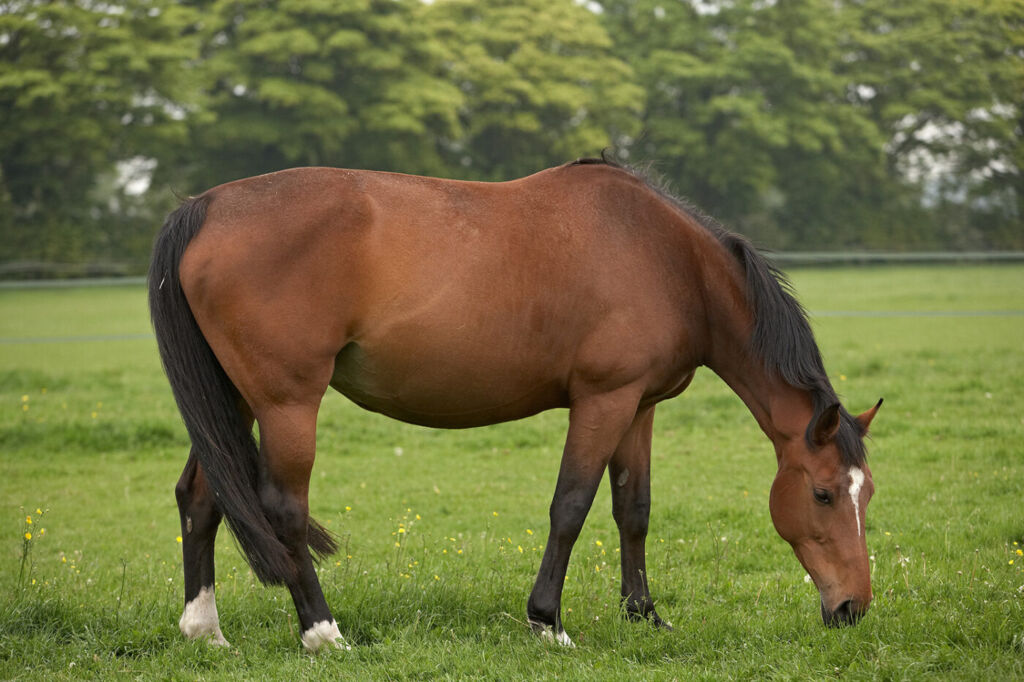
However it is important to monitor the pregnant mare’s body condition score to ensure she doesn’t become overweight, as some individuals will require fewer calories than others. Throughout pregnancy, the broodmare’s bodyweight will typically increase by approximately 15%. To put this into perspective, a 500kg mare, for example, would increase in bodyweight by up to 75kg. However, most of this should be attributed to the growing foetus rather than to extra body fat which is why regularly carrying out a body fat assessment is key.
Pregnant mares naturally have an element of insulin resistance compared to the non-pregnant mare, to enable higher levels of glucose in the blood to reach the placenta and nourish the growing foetus. However, if she is overweight too there is an increased risk of laminitis. Furthermore, obesity in pregnant mares has also been shown to increase the risk of low grade inflammation and osteochondrosis in foals (Robles et al., 2018).
For breeds that are naturally good doers, managing their body condition can be more difficult especially when exercise is reduced during pregnancy. Consulting with an equine nutritionist can be helpful to determine the best way to manage the broodmare’s energy intake whilst also ensuring she is getting the nutrients she needs to support both her and her unborn foal.
In the second half of pregnancy, protein requirements also increase to a greater extent. Good grazing will make a significant contribution but if grass quality is poor over the winter months, incorporating some alfalfa into the ration can be beneficial to help meet these increased needs. As the growing foetus continues to take up more space, it may reduce the mare’s appetite. Feeding little and often is a great way to ensure that your mare is not ‘over-faced’ by large amounts of feed.
Throughout the duration of pregnancy, forage quality is also important to consider. If good-quality forage supplies are proving difficult to source, a chopped fibre forage replacement feed can be really beneficial, such as Dengie Hi-Fi Senior. This feed is made from precision-dried grass, alfalfa with a light molasses coating, making it a palatable and nutritious choice.
Digestive supplements that contain ingredients like yeast and prebiotics have been shown to help promote efficient fibre digestion, helping the mare to get the most benefit from the fibre and therefore reduce the reliance on cereal-based feeds. In addition, such supplements for pregnant mares may also have positive effects for the digestive health of the foal too (Betsch et al., 2014).
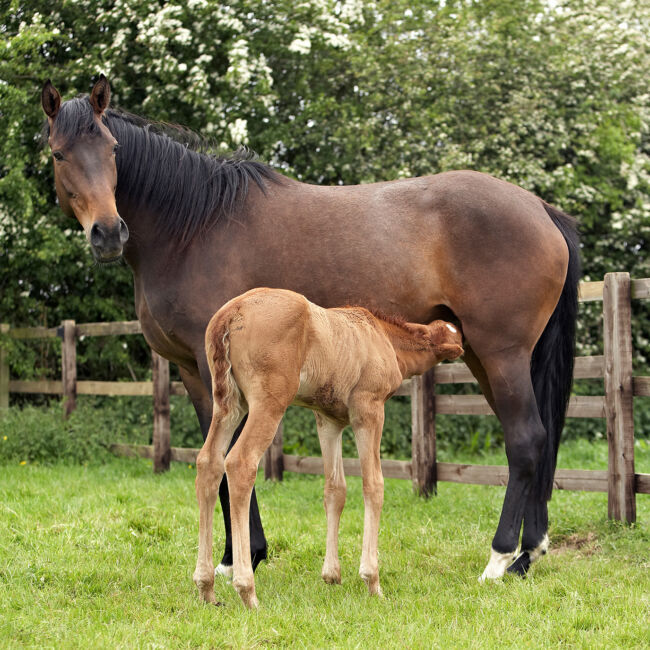
Lactation is the time when the mare’s energy requirement really increases significantly – in the first few months after the foal is born, the mare’s energy requirement increases by up to 90% compared to a barren mare, and her appetite should increase again too. A foal grows by about 1.7% of bodyweight per day which is over twice as much as a human baby at approximately 0.8%. This is why a lactating mare’s energy requirements increase to a greater extent than a woman’s. This faster rate of growth in foals requires more energy to fuel it and for the first three months the foal is really dependent on the mare’s milk. A 500kg mare could produce between 10 and 17.5kg of milk at this time. This volume is largely comprised of water, which is why the lactating mare will drink a lot and should always have access to plenty of water.
Ensuring the lactating mare has a sufficient energy and nutrient intake is key when it comes to the quality of milk she is producing. It may be tempting to cut back on the mare’s feed if the foal is growing too quickly, but it is important to remember that mares will generally produce milk to meet the demands of the foal. If her nutrient requirements aren’t being met then a large volume of milk may still be produced but it will be of a poorer quality, and this can increase the risk of growth problems in the foal. If the mare’s intake of energy and quality protein is not sufficient, she may “milk off her back”, breaking down her own energy and muscle stores to continue to produce milk, with the result that she may lose a significant amount of weight and top line.

Mares foaling in the spring or summer are likely to obtain a significant proportion of their increased energy requirement from the grazing. However, the grazing alone will not be sufficient to meet their requirements for nutrients and essential amino acids like lysine. For example, a 500kg mare one month into lactation requires 85g of lysine compared to 30g for a horse in light exercise. A stud mix or cube would provide good doers with more energy than they need and so the amount fed is reduced. This not only reduces the energy supplied but also means the mare will miss out on important vitamins and minerals such as copper and zinc, deficiencies of which can be harmful to the growth and development of the foal. Alternatives include stud balancers which provide essential nutrients but without the calories of traditional stud feeds. An alfalfa feed, such as Dengie Alfa-A Original, will naturally provide high levels of lysine compared to other forages and so is ideal to feed alongside a stud balancer for those maintaining their weight well.
On the other hand, Thoroughbreds foaling in January with little grazing available or poorer doers who struggle to maintain their weight and condition will probably need more supplementary feed, which may be provided by the full amount of a stud mix or cube. For these feed types, feeding rates for a 500kg mare are typically around 5kg per day, which would equate to about 4 Stubbs scoops of a stud mix or 3 Stubbs scoops of a stud cube. Using these high starch feeds is not without potential risks. A study from 2001 showed that high starch diets (such as traditional cereal-based stud mixes or oats) increased the insulin and glucose levels in the blood in lactating mares, which may increase the risk of digestive or metabolic disorders. There is also an increased risk of colic and laminitis and so these feeds should always be divided into as many small feeds as possible.
In contrast, a high fibre and oil diet produced much lower insulin and glucose responses so may be a more beneficial way to provide the calories needed (Williams et al., 2001). High quality fibre feeds like Dengie Alfa-A Oil, Alfa-A Molasses Free or Alfa-Beet may be fed alongside to further increase calorie intake for those who need greater support. As a lower starch and sugar option, a stud balancer can be combined with higher calorie fibre feeds such as Alfa-A Oil or Alfa-Beet. Feeding rates for a 500kg mare would be 2kg of a stud balancer with up to 3kg of Alfa-A Oil or more of Alfa-Beet per day. This combination would provide a very similar energy (calorie) content to the 5kg of stud mix or stud cubes but with significantly less starch.
It’s also useful to note that the amount of Alfa-A Oil or Alfa-Beet can be adjusted if needed depending on the mare’s weight and condition – as long as the amount of balancer is kept consistent alongside plenty of forage then her nutrient requirements should be being met.
Weaning is usually carried out at around six months of age which often means it occurs in the autumn months when grass quality is declining. This naturally helps to dry the mare off and gives her time to gain condition if she is due to have another foal in the spring. Some breeders may advocate removing all bucket feed from the mare at weaning to try and reduce milk production, however there is no research-based evidence to support this practice. If the mare is pregnant again, removing concentrate feed at weaning could result in nutrient deficiencies that could be detrimental to her next foal, so it is important to ensure that recommended quantities for pregnancy are still being met. Furthermore, any dietary changes should always be made gradually for any horse to reduce the risk of digestive disturbance, and so a sudden removal of feed should be avoided.

FAQ’s
Summary
- Correct management and diet for the broodmare during pregnancy and lactation can contribute significantly towards the health of the foal.
- It is important to maintain a healthy body condition score for the broodmare of 3-3.5 out of 5.
- Good quality forage should in most cases be the primary component in the broodmare’s diet.
- A balanced diet should be provided at all times – check feeding rates for maintenance, pregnancy and stage of lactation.
- Starch intakes should be kept low where possible to reduce the risk of digestive problems in the mare as well as growth problems in the foal.
- Alfalfa is a beneficial component of the ration to supply essential amino acids like lysine.
- Alfalfa feeds with added oil contents can be useful to provide additional calories if needed.
- Including digestive support such as yeast and prebiotics in broodmare diets can help to support digestive health in both the mare and the foal
References
- Betsch et al., (2014) Study of the kinetics of the installation of the flora of the foal and effects of live yeast administered to the mare and newborn foal. In: 40ème journée de la recherche équine. Actes de colloque, epidémiologie et pathologie, Paris, France, 18 March 2014 (pp. 16- 25). Institut Français du Cheval et de l’Équitation
- Morley and Murray (2014) Effects of body condition score on the reproductive physiology of the broodmare: a review. Journal of Equine Veterinary Science, 34(7), pp. 842-853.
- Pearce et al., (1998). Effect of copper supplementation on the evidence of developmental orthopaedic disease in pasture‐fed New Zealand Thoroughbreds. Equine Veterinary Journal, 30(3), pp. 211-218.
- Peugnet et al., (2015) Effects of moderate amounts of barley in late pregnancy on growth, glucose metabolism and osteoarticular status of pre-weaning horses. PLoS One, 10(4), p.e0122596.
- Robles et al., (2018) Maternal obesity increases insulin resistance, low-grade inflammation and osteochondrosis lesions in foals and yearlings until 18 months of age. PLoS One, 13(1), p.e0190309.
- Thorson et al., (2010) Effect of selenium supplementation and plane of nutrition on mares and their foals: Foaling data. Journal of Animal Science, 88(3), pp. 982-990.
- Van Niekerk, F.E. and Van Niekerk, C.H. (1997) The effect of dietary protein on reproduction in the mare. III. Ovarian and uterine changes during the anovulatory, transitional and ovulatory periods in the non-pregnant mare. Journal of the South African Veterinary Association, 68(3), pp. 86-92.
- Williams et al., (2001) Plasma glucose and insulin responses of Thoroughbred mares fed a meal high in starch and sugar or fat and fiber. Journal of Animal Science, 79(8), pp. 2196-2201



Expert advice at your fingertips
If you’re looking for advice on the best feed, speak to one of our highly experienced nutritionists on our feedline, or for a more in-depth plan, fill out our Feed Advice Form