

Horse Eating Behaviours
Horses in the wild
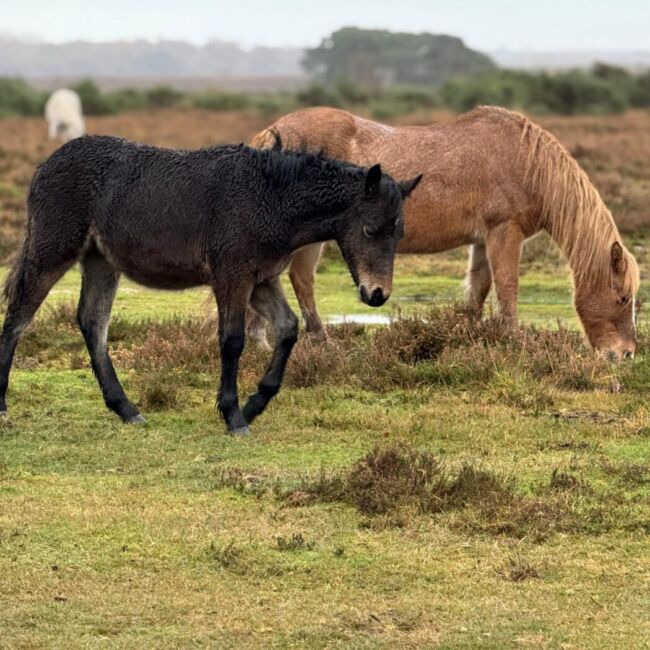
Horses evolved to eat for long periods and are believed to have a psychological and physiological need to chew, typically spending 16-18 hours per day eating in order to obtain enough nutrition from the poor quality grasses usually available. As a result, they would naturally consume a variety of plant species as well as browsing on coarser vegetation. Grazing itself would not have been a static activity either; it is likely that a horse would travel many miles during one day to select grazing areas and move away from areas of defecation.
The Domesticated Horse
Nowadays, horses often have limited access to grazing and may be stabled for long periods. Exercise is controlled by the type of work being done and usually for most horses is between ½-1 hour per day, travelling relatively short distances. Bucket feeds and haynets are usually given as meals two or three times a day, which is in stark contrast to the eating habits of the horse in the wild. Considering the horse’s natural feeding behaviours as part of their management is vital for promoting good health and welfare so should not be forgotten.
How much do horses eat?
The amount a horse chooses to eat is influenced by a wide range of factors, including:
- Type and quality of food or forage available
- Environment they are kept in
- Breed
- Size/bodyweight
- Health status
- Exercise
- Pregnancy or lactation
Studies looking at forage requirements
Multiple studies using different populations of horses have been conducted to further understand the horse’s natural appetite for forage, and a recent paper by Leishman and colleagues (2024) compared these results.
They identified that intakes ranged from 0.7 to 4.6% of bodyweight on a dry matter basis, with ponies typically consuming more forage per kilogram of bodyweight than horses. To put these figures into perspective, a 12hh 250kg pony could potentially consume up to 11.5kg of forage on a dry matter basis per day – if we work on the basis that an average hay has a dry matter content of around 85%, this could equate to 13.5kg as fed, or about ¾ of a rectangular bale!
Another study by Longland et al., (2016) found that ponies consumed 0.8% of their bodyweight in a three hour period – this works out to just under half their daily requirement in only an eighth of the day! This may be related in part to the reduced number of hours at grass, possibly resulting in the ponies feeling like they needed to eat more in a shorter time frame, but it is a good example of how significantly the horse’s appetite can vary between individuals.
Generally speaking, the minimum amount of forage that most nutritionists recommend a horse should consume is 1.5% of their bodyweight on a dry matter basis per day, with lesser quantities no longer considered acceptable for the horse’s long term health and welfare. Given the importance of forage for the horse’s digestive health, it is advisable in most cases to feed it to appetite, with restriction only advocated for good doers or those who are overweight.
Forage also has important benefits when it comes to the horse’s behaviour. A study looking at a large group of broodmares found that providing more forage resulted in horses showing more positive social interactions and bonding, with less aggressive behaviour, compared to when forage wasn’t as easily available (Benhajali et al., 2009). They also showed an increase in signs associated with stress when forage was restricted. It is relevant to note that stress is now widely accepted to be associated with health problems such as Equine Glandular Gastric Disease (EGGD), so this again emphasises the importance of forage in the overall management of the horse. In circumstances where good quality forage may be in short supply, offering a short chopped fibre in a separate bucket can be a good alternative to help extend the hay availability, and options such as Dengie Hi-Fi Senior or Meadow Lite with Herbs can work really well for this purpose.

FAQ’s
At any time when your horse is stabled for longer, it is really important to keep them chewing for as long as possible to support their behavioural and digestive health. For good doers, this can become somewhat challenging, as the goal should be to supply sufficient fibre to keep the period of time the gut is empty as short as possible, whilst also managing their calorie intake.
To do this, it can be helpful to supply small amounts of forage at frequent intervals – rather than giving one big hay net in the morning and one at night, try to provide three or four as evenly throughout the day as possible.
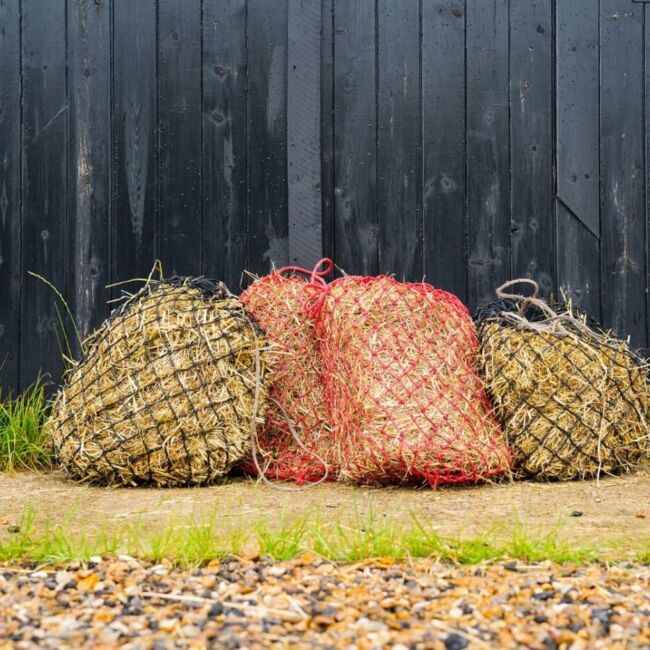
However, if you are not able to spread out your horse’s forage ration quite so easily, there are lots of tricks for making hay and haylage last longer, such as placing it in small-holed nets or putting several haynets inside one another. Dividing the total forage provision between multiple nets spread around the stable can also help to slow horses down as they have to move around between them. This was backed up by a study in 2015 which suggested that providing 6kg of hay split between three double layered nets overnight could potentially increase eating time by around 2 hours compared to feeding the same amount of hay all in one single layered net (Ellis et al., 2015). Layering the nets works by further reducing the size of the holes available for the hay to poke through. However, using nets with small holes is thought to be less helpful for ponies with smaller mouths, and there may also be concerns with double netting for individuals with dental problems or musculoskeletal issues in the head or neck. For these reasons a variety of slow-feeder devices are widely available and so could be useful alternatives.
Mixing some straw into the hay net can also help to slow down eating times – even if the horse doesn’t like the taste of straw, they will still spend longer sorting through it, so the straw won’t necessarily be wasted. Straw also tends to be lower in calories so is a nice choice for good doers. More information on feeding straw can be found here.
Providing multiple forage types is another good way of extending eating time as the horse may spend time going between the different choices. However, providing different forage options can also be of benefit from a behavioural perspective, as research suggests that multiple fibre types encourages horses to forage and display more natural grazing and browsing behaviours (Thorne et al., 2005). A study conducted by Goodwin and colleagues (2002) showed that horses with the greatest variety of forage types available spent the least time foraging in their straw bed. This suggests that horses will forage in their straw bed more when they have fewer types of forage available, as they are satisfying their natural behaviour to seek out different feed materials.
Interestingly, a similar effect was seen in a study on feral ponies living alongside cattle in a national park with a very diverse landscape. The researchers found that the horses consumed a much greater variety of different plants throughout the year compared to the cattle, including shrubs, herbs and trees as well as grasses (Thomassen et al., 2023). These results further indicate that the selection of multiple fibre types is a key component of a horse’s natural eating behaviour.
Whilst such a diverse grazing environment may be impractical on most yards, there are other ways in which we can provide a variety of forage types for the horse to mimic their natural eating choices. A simple option is to offer a combination of different long-stemmed conserved forages such as hay, haylage and straw, but we can also include separate buckets of chopped fibres to provide further variety or if other forages aren’t available. Dengie Meadow Lite with Herbs is a great low calorie option which is ideal for good doers, whereas Meadow Grass with Herbs & Oil makes a tasty choice for those who would benefit from additional calories in their ration. Stable toys such as treat balls can also be used to provide pelleted fibres at a slower intake than they would be consumed in the bucket, and Dengie’s Pure Grass Pellets or Alfalfa Pellets work really well for this purpose. Hedgerow haynets are another form of providing environmental enrichment which have become popular in recent years, and more information on these can be found here.

At first glance, adding chopped fibre to your horse’s bucket feed may seem a bit superfluous. To some it may even feel like the garnish to the main meal; for others it’s something they do because they’ve been told it’s important but without really understanding why. The addition of chopped fibre slows the rate at which your horse consumes their feed, also referred to as rate of intake. A study by Ellis et al., (2005) found that it took horses significantly longer to consume pelleted feeds if a chopped fibre is added and also increased the number of chews required. More chews results in more saliva which is a natural buffer to acidity in the digestive system. The more we can do to increase the number of chews the horse makes, the more we’re helping to maintain a healthy gut.
A slower rate of intake can help to modulate the horse’s insulinaemic response, which is the level of insulin the horse produces to manage the rise in blood glucose levels after eating feed. A study published in 2022 showed that horses with insulin dysregulation (ID), which is associated with problems like PPID and EMS, had a greater insulinaemic response to as little as 0.1g/kg bodyweight of non-structural carbohydrate (NSC) compared to horses without ID (Macon et al., 2022). NSC is the combined values of sugar and starch and a level of 0.1g/kg is very low – even lower than levels commonly found in a pelleted low calorie balancer.
A key point from this study is that all horses consumed the feeds being tested in around 10 minutes which is relatively typical for a bucket feed. A previous study by Jansson et al., (2021) found that forage is consumed more slowly when straw is added and that this also resulted in a lower insulinaemic response. In fact, in the evening when the rate of intake was slowest, there was no significant increase in insulin levels at all. This study was carried out in horses considered to have relatively normal insulin sensitivities, but this effect could be even more beneficial to horses and ponies with ID. These findings combined highlight the importance of not only using low NSC feeds but also slowing the rate of intake as much as possible when managing horses with ID.

It’s not unusual to be worried if you notice your horse eating something they shouldn’t, especially when it comes to things like wooden fences or tree bark (lignophagia), their own or other horses’ droppings (coprophagia), or mud in the field (geophagia). Often considered the most aberrant, consumption of droppings is actually quite common, especially amongst foals from within a few days of birth. This is thought to support the development of the microbial population within the foal’s gastrointestinal tract, serving as a natural probiotic and also providing a source of fibre (Pyles et al., 2023).
In the adult horse whose digestive tract is fully developed, such eating habits can instead be associated with an insufficient intake of fibre, so it’s important to ensure that plenty of forage is provided, as well as making sure your horse is consuming enough. However, these behaviours may also sometimes be seen in horses on spring pasture which is growing very rapidly and has a high water content. If the grass is not very mature, it won’t have built up much structure within its cell walls so the horse may possibly turn to wood chewing in an attempt to source more structural fibre within the ration. In this scenario, providing supplementary hay in the field or even a couple of kilograms of a short chop fibre in the bucket may be of benefit.
Alongside the forage, it’s also important to provide a balanced diet. Generally speaking, a horse will likely be receiving a balanced diet if they are being fed recommended quantities of a fortified feed or balancer which is suitable for their bodyweight and level of work. The only further addition could be some table salt in the bucket or a free-choice salt lick. If feeding the recommended amounts of a nutritionally-balanced feed provides too many calories (indicated by the horse gaining weight and/or having too much energy), an alternative option is to change to a feed with a lower digestible energy (DE) content, or to reduce the amount fed and top-up with a balancer in order to ensure vitamin, mineral and protein requirements are being met. Using a fibre feed in conjunction with a balancer can work really nicely, as the quantity of the fibre feed can be increased or decreased depending on whether the horse is losing or gaining weight, as long as the amount of balancer remains consistent. Contacting a nutritionist for advice is a great place to start if you are feeling unsure.
If the behaviour is persisting and you are concerned your horse is eating large amounts of something they shouldn’t then it may be advisable to speak to your vet.
For horses who can be aggressive around the time of eating, it is important to think about the potential causes of this behaviour. A simple explanation could be that they are hungry, so in this instance consider what they have available to eat in between their bucket feed meals. Ensure you are providing plenty of forage, ideally fed to appetite, and for good doer the use of straw can be beneficial to provide chew time and fibre without as many calories.
However, this behaviour could stem from historical feed restriction or stressful events earlier in life, or it could be a learned behaviour, so if your horse is continually demonstrating aggressive behaviour and they are consuming plenty of forage, it may be advisable to seek help from a qualified behaviour specialist, for example someone who is registered as either a certified Clinical Animal Behaviourist or with the Animal Behaviour & Training Council.
Top tips to support the horse’s natural eating behaviour
- Make the most of good-quality forage and feed a fibre-based ration.
- Feed forage to appetite unless restriction is needed for those who are overweight – in this instance ensure a minimum of 1.5% of the horse’s bodyweight on a dry matter basis is still being provided.
- Replace traditional cereal concentrates with fibre products of a similar energy level. For horses that struggle to hold weight, use more digestible fibre sources such as alfalfa and sugar beet pulp.
- Feed little and often – divide the total daily forage ration between three or four portions, rather than a big net at either end of the day.
- Consider using a slow feeder or double-net hay for greedy eaters to slow the rate of intake.
- Add chopped fibre feeds to increase the time spent eating.
- Use multiple forage sources to promote trickle feeding and provide environmental enrichment.
- For good doers, consider replacing up to 50% of the hay or haylage ration with straw to slow eating time and encourage sorting and foraging behaviour.
References
- Benhajali et al., (2009) Foraging opportunity: a crucial criterion for horse welfare?. Animal, 3(9), pp.1308-1312.
- Ellis et al., (2005) Adding chopped straw to concentrate feed: The effect of inclusion rate and particle length on intake behaviour of horses. Pferdeheilkunde, 21.
- Ellis et al., (2015) The effect of presenting forage in multi-layered haynets and at multiple sites on night time budgets of stabled horses. Applied Animal Behaviour Science, 171, pp.108-116.
- Goodwin et al., (2002) Foraging enrichment for stabled horses: effects on behaviour and selection. Equine Veterinary Journal, 34(7), pp. 686-691.
- Jansson et al (2021) Straw as an Alternative to Grass Forage in Horses—Effects on Post-Prandial Metabolic Profile, Energy Intake, Behaviour and Gastric Ulceration. Animals. 11.
- Leishman et al., (2024) What the hay: predicting equine voluntary forage intake using a meta-analysis approach. Animal, 18(9), p.101266.
- Longland et al., (2016) Effects of grazing muzzles on intakes of dry matter and water-soluble carbohydrates by ponies grazing spring, summer, and autumn swards, as well as autumn swards of different heights. Journal of Equine Veterinary Science, 40, pp.26-33.
- Macon et al (2022) Postprandial insulin responses to various feedstuffs differ in insulin dysregulated horses compared with non‐insulin dysregulated controls. Equine Veterinary Journal, 54(3), pp.574-583.
- Pyles et al., (2023) The establishment of fibrolytic bacteria in the foal gastrointestinal tract is related to the occurrence of coprophagy by Foals. Animals, 13(17), p.2718.
- Thomassen et al., (2023) Contrasting seasonal patterns in diet and dung‐associated invertebrates of feral cattle and horses in a rewilding area. Molecular Ecology, 32(8), pp.2071-2091.
- Thorne et al., (2005) Foraging enrichment for individually housed horses: Practicality and effects on behaviour. Applied Animal Behaviour Science, 94(1-2), pp.149-164.



Expert advice at your fingertips
If you’re looking for advice on the best feed, speak to one of our highly experienced nutritionists on our feedline, or for a more in-depth plan, fill out our Feed Advice Form