

Recovery & Boxrest
A wide variety of illnesses and injuries can afflict horses some of which are very serious and can be fatal. Prompt action is essential for increasing the chance of survival and making a full recovery, particularly in the case of issues such as colic and laminitis. Here we will explore the factors that need to be considered when nursing the sick or injured horse back to health.
The hospitalised horse
Horses are hospitalised for a variety of reasons ranging from emergencies, such as colic surgery, to elective diagnostic investigations. No publicly available data exists on the total number of horses that visit hospitals in the UK each year meaning it is impossible to quantify the proportion of hospitalisations due to different diseases or issues. An extensive review of the published literature also reveals very little in relation to dietary management of hospitalised horses too. This inevitably means that hospitals and clinicians have their own approach which they have may shaped and honed over many years. However, it is unlikely to have been compared with, or bench-marked against, other strategies and so little is known about the success or otherwise of different approaches.
The most comprehensive, recently published review of feeding management pre- and post-surgery is by Mair (2013) who states “The interaction between nutritional status and feeding practices with the stress response in horses undergoing surgery and anaesthesia has received little attention but is likely to be significant.” Mair (2013) also shares his personal experience and procedures for post-operative feeding which focus on offering forage-based feeds in small quantities and then gradually increasing the amount over time. Grain concentrate feeds are expressly avoided for the first 10-14 days post-surgery. This approach is not replicated in all hospitals in the UK and there are considerably different approaches in other countries around the world too.
Historically there has been a suggestion that feed should be withheld from the horse for longer periods after surgery than is currently recommended. In line with recommendations for human post-operative nutrition such as the Enhanced Recovery After Surgery (ERAS) scheme (Feldman et al., 2015) post-operative feeding practices have changed. Concerns about harmful effects of early feeding on the surgical join in the intestine (anastomosis) are no longer valid as there is evidence to suggest that healing is enhanced by food passing through the gut.
Very few studies have been conducted with different post-operative feed materials. Lawson et al. (2021) surveyed large animal vets in the USA and Europe to identify what feeds were used post-operatively. Grass was the most common for all lesions and issues apart from dorsal displacement where hay was most commonly introduced first. No explanation is given as to why a different feed is more commonly used for these issues specifically.
Bran was still used but only by between 5 and 10% of the respondents, demonstrating it has largely been disregarded. Only two other types of feed were reported to be used. One was a complete pelleted feed and one was a “low residue” feed but no details were given about their composition.
Hospitalised horses are stabled for most of the time and the impact of being sedentary on the motility of the digestive tract is important to consider. Williams et al. (2011) found that stabled horses had lower large intestinal motility when assessed using ultrasound compared to horses kept at pasture. The authors highlight that a number of factors related to being stabled may have resulted in this finding such as the composition of the diet or the act of meal feeding as well as reduced activity. In this study the stabled horses were fed hay and cereal based feeds twice a day whereas the pasture kept horses received no supplementary feed but were allowed to graze ad libitum. Whilst the authors acknowledge that it is not possible to conclude which element of being confined to a stable results in altered intestinal motility, they highlight that the net effect is an increased risk of colonic impaction.
Hospitalised horses receive some form of conserved forage either in addition to some time at grass or as an alternative to pasture access. Conserved forages tend to be mature at time of harvest and so contain much larger proportions of indigestible compounds such as lignin compared to fresh, immature pasture. Highly fibrous forages have been shown to be a risk factor for impaction colic (Little and Blikslager, 2002) and so should certainly be avoided in the hospitalised horse. Selecting highly digestible, early cut forages are a much better option for the hospitalised horse.
If the horse’s visit to the hospital is planned it is easier to minimise disruption to their diet by taking their usual forage and feed with them. This might seem like a lot of effort to go to but as any form of sedation or anaesthesia are risk factors for colic, a sudden change of diet which is also a risk factor, should be avoided if possible. In an emergency there is less time to plan and at a very basic level, it is unlikely that the change of diet is the biggest risk to the horse’s health. A very sick or poorly horse may well have a limited appetite and their usual ration may not be appropriate for them anyway. In these situations finding something they want to eat often becomes the main priority and then over time, the focus will be on changing to a feed suitable for their recovery.
Feeding horses in pain or with limited appetites
The hospitalised horse is very often in pain and receiving medication, both of which can affect appetite. Nursing staff in hospitals go to great lengths to tempt horses to eat by using succulents such as apples and carrots, using sweeter feeds and trying different flavours and textures. Other useful approaches include using concentrated feeds such as balancers so that the horse consumes more nutrients in a smaller volume of feed and offering a buffet selection of feeds for the horse to pick and choose from.
Short chopped dried grass which is highly digestible and naturally sweet is a good option for providing fibre but without too much indigestible material. Soaked feeds that include sugar beet pulp are also beneficial as they increase water intake and can help to counteract the effects of meal feeding which tends to cause a transient dehydration in the gut.
If the horse will eat it, micronized linseed and other high oil feed materials are useful for getting a lot of energy into the horse in a relatively small volume of feed. Unfortunately the higher oil feeds tend to be less palatable and so it can be more of a challenge to get the horse to eat them.
Caring for a horse in recovery at home
Some hospitals will give guidance on feeding and management at the point of discharge from hospital but many don’t. If the horse has been fed something different whilst in the hospital then finding out what it is and continuing with it at home avoids making another sudden change. There are some proactive things you can do to help your horse adjust back to being at home:
- Digestive support – digestive aids include live yeast, prebiotics and postbiotics. They help to restore a healthy population of micro-organisms in the digestive tract. The stress of hospitalisation, antibiotics and other medications all have a detrimental impact on the microbiome so now is the time for some additional support. For more information on these click here.
- Use highly digestible forage – your horse will get more from a forage that is easier to break down and digest. If your horse has lost weight whilst being in the hospital, source a good quality forage for when they return. If you are struggling to find a suitable forage, a grass based, chopped fibre feed can be a good alternative. Leave a trug or bucket full with your horse as an extension to their forage ration.
The most suitable ration for your horse will be determined by a number of factors not least how long they are likely to be on box rest and the nature of their illness or injury.
Severe malnutrition
Unfortunately some horses and ponies are not afforded the love and attention that most in the UK receive. Although neglect to the point where malnutrition occurs is relatively rare, it does happen and knowing how to rehabilitate the horse or pony safely is key.
One of the biggest dangers is ‘re-feeding syndrome’ which occurs if too much of the wrong type of feed is given to a severely malnourished horse. This results in a rapid rise in blood glucose and a subsequent surge in insulin to try and regulate the glucose level in the blood. The action of insulin is to drive glucose and potassium into cells to convert the glucose to its storage form of glycogen. There aren’t sufficient of the minerals and electrolytes needed for this process available in the malnourished horse and taking what is there means other tissues suffer as a result. This can cause cardiac, renal and respiratory failure which tends to occur 3 to 7 days after re-feeding starts.

Very little work has been done in this area but unsurprisingly, in a study where a feed containing around 20% starch was used, the level of insulin needed to manage the increase in glucose was sufficient to result in re-feeding syndrome (Witham and Stull, 1998). The researchers concluded that alfalfa was the ideal solution being naturally low in starch but abundant in natural minerals such as potassium and calcium too. Materials high in fibre release their energy slowly and so also help to produce a more moderate insulinaemic response compared to cereals. Although the researchers in this study didn’t include sugar beet pulp, it would also have similar benefits to alfalfa being low in starch and sugar but abundant in highly digestible fibre.
Using small amounts at frequent intervals throughout the day is also important in helping the horse to adjust to an increase in nutritional intake.
Feeding a horse on box rest
Unfortunately it is usually necessary to confine the horse to their stable to enable time for them to heal and recover from illness or injury. Often the need for box rest arises with very little notice and needs to take immediate effect which can have repercussions for the horse’s health in itself. This, combined with the increased demands of caring for the horse, can make it a particularly stressful time for you and your horse.
To ease this sudden change, using a digestive aid is recommended. These include prebiotics, live yeast and postbiotics and for more information on these please click here.
Immobility due to box rest is not good for digestive health or for the health of the lymphatic system. Moving around aids the removal of gas from the digestive system and encourages bowel movement and so the horse on box rest is at greater risk of reduced gut motility. This can ultimately result in an impaction colic or a build up of gas causing the horse considerable discomfort. Monitoring the number of droppings your horse does is key; any significant reduction should be reported to your vet especially if your horse is showing any signs of discomfort.
The lymphatic system filters waste material from cells and relies on muscle contraction, arterial pulse and peristalsis (movement of the gut) to achieve this. The horse has a high number of lymph nodes compared to humans for example, which slow the movement of lymph. Half of all the horse’s lymph nodes are found in the gut and work best when there is plenty of food trickling through the gut to stimulate peristalsis. A horse on box rest that is not eating very much can experience lymph accumulation which may be evident as filled legs or swelling around the sheath or udder.
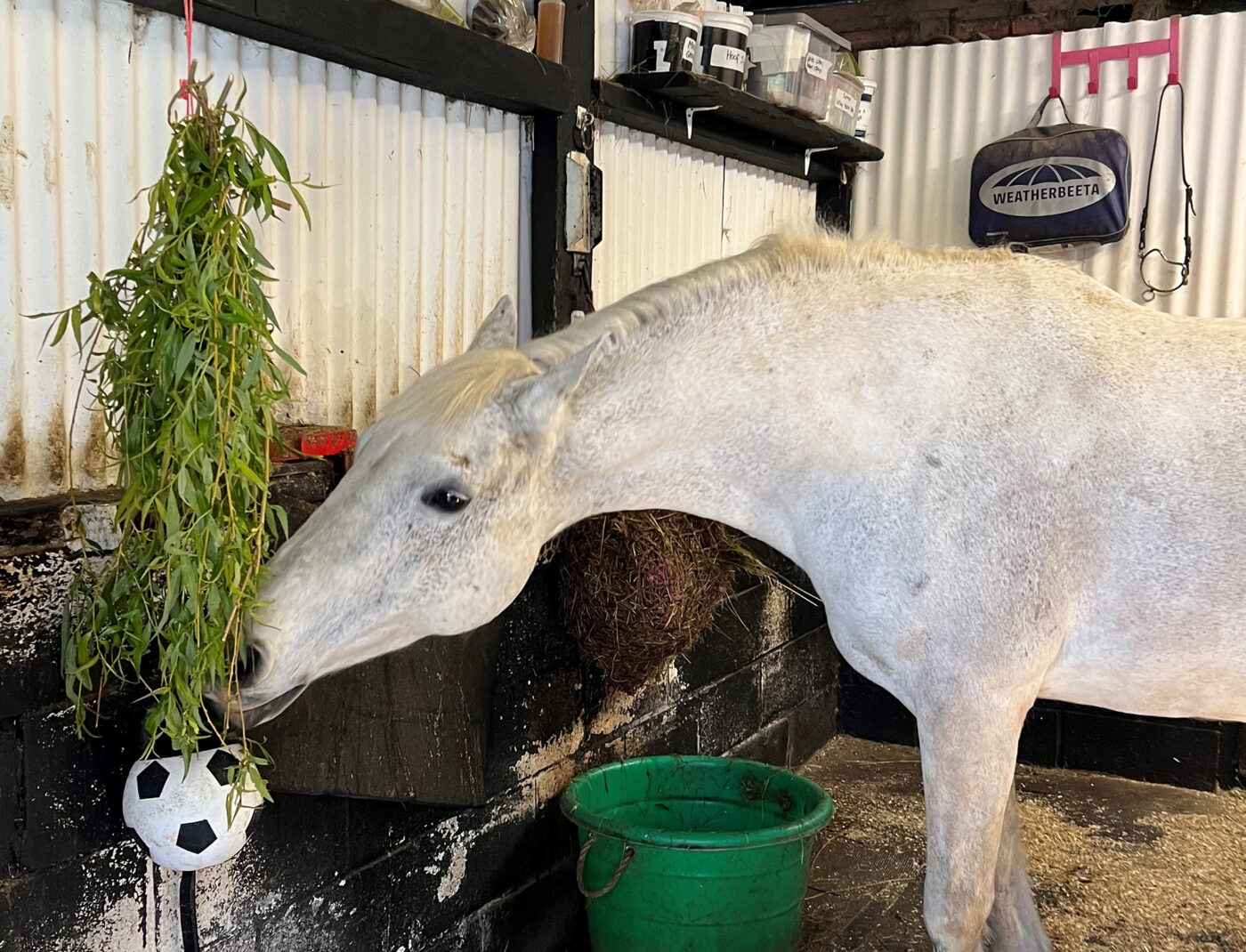
Any change to a horse’s usual routine can cause stress, but box rest can be particularly stressful for horses that are not used to being stabled. This can result in a lack of appetite which may cause weight loss and other problems such as colic. Providing lots of different types of fibre whilst the horse is at rest should encourage the horse to exhibit more of their natural browsing behaviour, thereby helping to ensure they consume enough fibre to keep the gut working normally. Hanging root vegetables like swedes and turnips around the stable, providing some hazel twigs and providing pellets in a snack ball are all ways to provide some additional stimulation. Floor toys and balls might be best avoided if your horse is recovering from a limb injury.
There are increasing numbers of studies exploring how best we can care for our horses when they are stabled. Straw is sometimes avoided through fear of the horse eating too much of it but several studies have shown that being able to browse on straw is valuable for equine welfare (Hall and Kay, 2024). A relatively large study carried out in Germany (Baumgartner et al, 2020), observed the behaviour of 104 horses on straw or non-edible bedding (shavings). In comparison to horses on straw, those on shavings consumed their evening forage meal much quicker which was largely due to the fact they didn’t stop eating to explore and browse their bedding. The authors conclude that the need of the horse to eat continuously is a high priority and if access to roughage such as straw bedding is limited, it alters behaviour to the detriment of their welfare.
Straw bedding has also been shown to encourage horses to lie down more which may encourage more sleep and/or sleep of a better quality which is known to be beneficial for recovery in humans. A deep bed of straw that the horse can browse on has many potential benefits but how do we guard against a horse or pony gorging on it? Firstly, ensure they have access to other forage – it is usually when horses and ponies are hungry that they eat other things that they shouldn’t! There are also straw bedding products that contain agents to help reduce eating but are not harmful if they are eaten – these might be good options if you know your horse or pony tends to eat their bedding. It is worth noting too that bedding on shavings doesn’t stop horses eating their bedding – some are accidentally ingested when the horse is picking forage up from the floor but if horses are really hungry they will eat their shavings intentionally.
Grass is much more digestible than conserved forages like hay and haylage. When a horse is taken off grass and suddenly given a conserved forage, which is common on box rest, the level of indigestible fibre they are consuming increases. In some cases, horses at rest don’t cope with this very well and lose weight as they simply can’t get as much nutrition from the hay/haylage as they can from grass. This is a common problem in older horses and poorer doers.
For these individuals consider using haylage as it tends to be harvested earlier than hay and so is more digestible. Alternatively, or in addition, consider using chopped fibre feeds based on dried grasses. The grass in these feeds is harvested when it is very young and so it is easier for the horse to digest and therefore helps to avoid problems such as weight loss and colic. They can be used as partial or complete forage replacers, either in the short term to aid the transition from pasture to conserved forages, or longer term for horses that can’t chew long length forages.
Soaked sugar beet pulp is a source of highly digestible fibre and so is ideal for poor doers, older horses and horses at rest. As it is fed soaked it carries additional water into the digestive tract – pasture is about 80% water whereas hay is only 20% water, so feeding soaked feeds can help to maintain water intake.
For poorer doers, box rest provides the challenge of how to supply “calories” without increasing the risk of digestive upsets. Avoiding cereals is recommended as they contain high levels of starch that is associated with muscle problems, colic and laminitis. The alternative is to use fibre-based feeds that contain oil – they provide as many calories as conditioning mixes but are at least 10 times lower in starch (2% compared to 20%+ in most conditioning mixes).
A balanced ration
Vitamins and minerals are important components of tissues, antioxidants and other parts of the immune system. They are therefore vital for effective repair and recovery whilst on box rest, and so it is worth looking for products that contain bio-available sources of these essential nutrients. Terms to look out for include ‘chelated minerals’ which simply means the mineral has been attached to another molecule to ensure it is absorbed efficiently from the gut.
For good doers, balancers and supplements are an efficient way of supplying a balanced diet without additional calories, making it an ideal feed for a horse at rest, too. They can be mixed with a handful of chopped fibre feeds alongside forage and that’s all the horse needs for a balanced diet. For poor doers, the balancer or supplement can be fed alongside a higher calorie fibre feed.
References
- Baumgartner et al (2020) Common Feeding Practices Pose A Risk to the Welfare of Horses When Kept on Non-Edible Bedding. Animals, 10.
- Hall and Kay (2024). Living the good life? A systematic review of behavioural signs of affective state in the domestic horse (Equus caballus) and factors relating to quality of life. Part I: Fulfilment of species-specific needs. Animal Welfare, 33, e40,1–20. https://doi.org/10.1017/awf.2024.38
- Feldman, L.S., Delaney, C.P., Ljungqvist, O. and Carli, F. (2015) (Editors) The SAGES/ ERAS® Society Manual of Enhanced Recovery Programs for Gastrointestinal Surgery. Switzerland, Springer International Publishing.
- Lawson, A.L., Sherlock, C.E., Ireland, J.L. and Mair, T.S. (2021) Equine Nutrition in the postoperative colic: Survey of Diplomates of the American Colleges of Veterinary Internal Medicine and Veterinary Surgeons, and European Colleges of Equine Internal Medicine and Veterinary Surgeons. Equine Veterinary Journal. 53 (5), 1015-1024.
- Little, D. and Blikslager, A. T. (2002) Factors associated with development of ileal impaction in horses with surgical colic: 78 cases (1986-2000). Equine Veterinary Journal. 34 (5), 464-468.
- Mair, T. (2013). In: Geor, R.J., Harris, P.A. and Coenen, M. (Eds.) Feeding management pre- and post-surgery. Equine Applied and Clinical Nutrition, Elsevier Ltd.
- Williams, S., Tucker, C.A., Green, M.J. and Freeman, S.L. (2011) Investigation of the effect of pasture and stable management on large intestinal motility in the horse, measured using transcutaneous ultrasonography. Equine Veterinary Journal. 43 (S39), 93-97. doi: 10.1111/j.2042-3306.2011.00399
- Witham and Stull (1998) Metabolic responses of chronically starved horses to refeeding with three isoenergetic diets. J Am Vet Med Assoc, 212:691-696.



Expert advice at your fingertips
If you’re looking for advice on the best feed, speak to one of our highly experienced nutritionists on our feedline, or for a more in-depth plan, fill out our Feed Advice Form