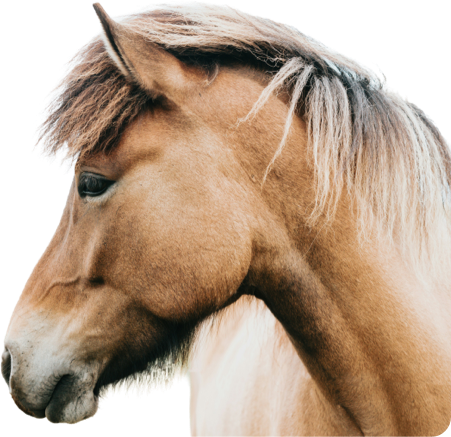


Feeding the Veteran or Older Horse
Ageing can alter any animal’s nutritional requirements and this needs to be taken into account when choosing the best senior horse feed plan for older horses and ponies. To promote general good health, a suitable parasite control programme is important and teeth should be checked regularly too by a vet or equine dental technician.

At what age is a horse or pony classed a veteran?
Horses age at different rates, but as a general rule, old age is considered to be the point at which there is only 25% of the population still alive. A study in 2011 identified that around 30% of the UK horse population were 15 years old or older, with only 11% between the ages of 20 and 30 years (Ireland et al., 2011). As veterinary and nutritional science is continuing to improve, horses are living longer and so these figures have likely since increased. This was reflected in the 2023 BETA National Equestrian Survey results which suggested that 37% of the UK horse population were over the age of 15 years in 2023, compared to only 23% in 2006 (BETA, 2023). Similar results have been seen in other countries too; for example the United States Department of Agriculture (USDA) identified that the percentage of horses in the US who were 20 years or older more than doubled between 1998 and 2015, further demonstrating that we have an ‘ageing population’ of horses (USDA, 2018).

When considering if a horse is ‘old’, individual variation also needs to be taken into account. For example, while some horses will be struggling with their weight and have dental problems in their mid-late teens, others will still be going strong into their mid-twenties and older! This demonstrates that the horse’s chronological age (the number of years they have been alive) is perhaps less relevant than their ‘physiological age’, i.e., their functional capacity, which could represent how well their body has coped with life’s challenges and environmental stressors. This means it’s hard to determine exactly when a horse should be regarded a veteran, so it’s important to treat them as an individual, with management decisions around feeding the veteran horse and treatment being based on their individual needs rather than just because they are ‘old’.
Senior-Specific Nutrition Problems
Older horses and ponies may be more likely to experience certain problems which can influence how we approach their feeding and management. These can include:
- PPID (formerly known as Cushing’s disease), which is one of the most common health problems associated with old age in horses.
- Poor dentition
- Digestive problems like loose droppings – these can often be associated with poor dentition and/or an insufficient fibre intake.
- Weight loss – again this can commonly be associated with a reduced chewing ability affecting forage intake
- They may also become more fussy with their feeds, particularly if any medications are also being used alongside the senior horse feed.
It was previously thought that older horses and ponies have a reduced digestive efficiency compared to younger animals, but a study in 2014 suggested that this was not necessarily the case. The researchers analysed the faeces from healthy adult horses aged 5-12 years and healthy older horses aged 19-28 years and found no differences in the digestibility of different nutrients between the two groups (Elzinga et al., 2014).
However, digestive health in the older horse may be influenced by their feed and management throughout their life. For example, those who have been well-managed with appropriate parasite control measures, good dental care and no other health problems may be able to cope better physiologically with their increasing age compared to an individual who may have experienced periods of illness, previous worm burdens or inappropriate management when they were younger.
If their fibre intake is reduced at any stage (perhaps due to poor teeth), this can potentially alter the microbial population in the gut and have an impact on digestive health. The horse’s hindgut functions like a large fermenting tank, full of a dynamic population of bacteria that digest fibre. They produce energy and other nutrients which can then be utilised by the horse. For this relationship to work efficiently, the hindgut needs to be kept ‘hospitable’ for the beneficial bacteria. The end products of fibre fermentation act as the energy source for the cells lining the gut (colonocytes), and so ensuring enough fibre is being fermented is important to keep the colonocytes healthy. If insufficient fibre is consumed then the colonocytes can become less efficient. This can result in the gut becoming ‘leaky’ whereby pathogens and other substances are able to escape from the gut into the body and increase the risk of disease or colic. More information on digestive health and intestinal issues can be found here. We therefore need to ensure that we are providing the senior horse or pony with sufficient fibre. Monitoring their forage intake as they get older can be helpful as it will make it easier to notice any reductions in intake more quickly and adjust their feed and management accordingly.
High fibre diets are also thought to be preferable for supporting digestive health in the older horse or pony compared to feeds which are high in sugar and starch. A study by a French research group, which was discussed at the European Workshop on Equine Nutrition in 2024, suggested that diets high in easily digestible fibres like alfalfa and sugar beet pulp were preferable for supporting the integrity of the large intestine mucosa and nutrient absorption in older horses, compared to cereal-based feeds that are high in starch (Baraille et al., 2024). High starch diets can result in a more acidic environment within the digestive tract and can affect the size of the villi which line the horse’s small intestine and are the site of nutrient absorption (Colombino et al., 2022). If the villi are smaller then there will be less surface area available to absorb nutrients and so the horse will not be able to obtain as much benefit from their feeds. This can potentially result in a vicious cycle if their feed or forage intake is also reduced due to poor dentition. Keeping starch intakes low is therefore recommended for the older horse or pony, with calories or energy instead being supplied by fibre and oil. This is even more relevant for those with PPID due to their increased risk of laminitis.
Digestive Aids for Older Horses and Ponies
There are several types of digestive enhancers available including yeast cultures and prebiotics which are designed to promote a healthy environment in the horse’s digestive system. Yeast cultures have been shown to improve the activity of hind-gut bacteria making fibre digestion more efficient and helping the older horse or pony to get more out of the forage they eat.
For horses who have a specific digestive problem such as loose droppings or for those who consistently struggle to maintain their weight, the best digestive aid supplements will be more comprehensive and are likely to contain ingredients such as fructo-oligosaccharides (FOS) prebiotics which provide an exclusive food source for the beneficial microflora in the hindgut.
Some feeds also contain added digestive aids within their formulation and so can be a nice choice for older horses and ponies. For those that struggle to maintain weight, Dengie Healthy Tummy is not only a high calorie, balanced feed, but also contains live yeast and prebiotics for extra digestive support. Healthy Tummy is also a low sugar and starch feed, making it an ideal veteran horse feed for those with PPID who struggle to maintain their weight. For good doers, Ulser Lite is a great alternative.
More information on digestive aids can be found here.
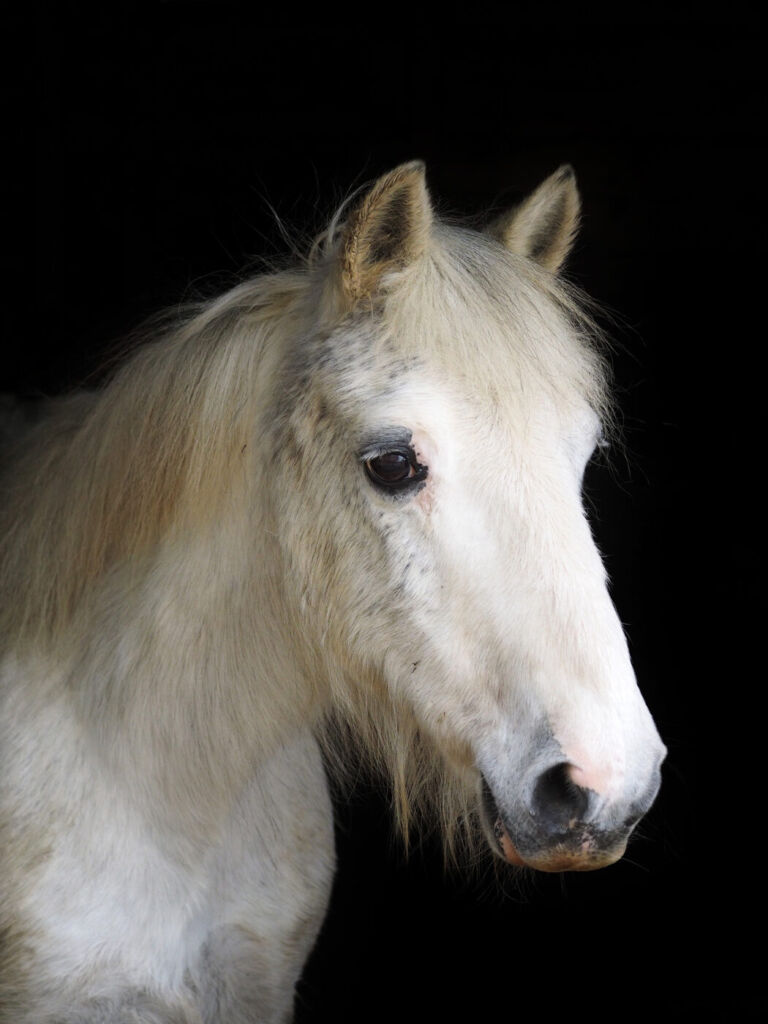
As horses age, their teeth can become worn and loose, a problem that is usually first noticed when a horse drops partially chewed feed or forage from their mouth which is termed ‘quidding’. Horses who quid long stem forage like hay or haylage can be problematic as their fibre intake will be reduced and so further complications can ensue such as colic. Other signs which can indicate poor dentition include reduced appetite, loose droppings, weight loss, repeated episodes of choke, or longer pieces of fibre in the droppings. If your horse is showing any of these signs but their teeth appear to be in good health, it may be worth investigating if they instead have any discomfort in their mouth or jaw which could be affecting their chewing. Veteran horse feed should take account of these problems and should contain softer and easier to chew sources of fibre to help reduce the risk of further problems.
Horses and ponies with poor teeth may manage to chew fresh pasture for longer, so providing plenty of turnout over the summer months, where appropriate, can be a simple solution. However, the winter can be more challenging as the reliance on conserved long stem forage increases. For example, a 500kg horse can typically eat around 6-8kg or more of forage in the winter months alongside grazing. It is not surprising that as soon as they start to struggle with forage, older horses may lose weight. In these instances, the best option for weight gain may simply be to make sure that the usual forage ration is replaced with something that the older horse can chew. Short chop fibre feeds like Dengie Hi-Fi Senior can be a great option for feeding the veteran horse, or if a fully soaked feed is required then products like Dengie Alfa-Beet and Pure Grass Pellets are ideal. More information on feeding forage replacers can be found here.
Just because a horse is old it does not necessarily mean that they are going to be thin. However, if your veteran does start to lose weight, it is essential to try and ascertain the reason why and not just to put it down to ‘old age’. Firstly, ensure that good quality forage is provided to appetite. Run through a checklist including a dental check, vet check and worm diagnostic tests (such as faecal egg counts) to identify any problems. Also check your horse’s diet; in particular, are they eating as much hay or haylage as they used to? If not, incorporating a forage replacement feed into their ration may be the best solution. It may also be time to consider moving onto a more senior specific or higher energy/calorie feed, though it can be advisable to have a conversation with a nutritionist who will be able to provide guidance if you are unsure.
When selecting a weight gain feed, proceed with caution as the best choice for your horse may not actually be senior mixes and cubes, especially for older horses that have problems like laminitis or PPID. Both of these conditions require a low sugar and starch diet, so traditional coarse mixes or cubes that contain high levels of cereals will not be appropriate. Alfa-A Oil is Dengie’s highest calorie fibre feed and has a calorie level equivalent to a conditioning mix or cube but without the high starch levels. This makes Alfa-A Oil a suitable feed for older horses that need to gain weight but that require a low sugar/starch ration. It can also be fed alongside Alfa-Beet if extra condition is needed.
Protein is one nutrient that receives lots of attention when it comes to maintaining top line and muscle mass in the older horse or pony. It’s important to note that the quality of the protein is just as significant as the quantity. Ingredients such as alfalfa are rich in lysine and methionine – these are essential amino acids (the building blocks of protein), which have to be supplied in the diet to help maintain top-line in conjunction with exercise.
When supporting weight gain, meal sizes should also be considered. The horse’s stomach is relatively small for the size of their body and so feeding large meals in one go can lead to the feeds being pushed through the digestive system much more quickly, with the result that they are not able to absorb the full benefits of the feed. It is particularly important with cereal-based feeds that meal sizes do not become too large, as otherwise this can increase the risk of undigested starch passing into the hindgut which can subsequently increase the risk of problems such as colic and laminitis. Fibre feeds are digested in the same way as hay so are less of a concern, but if they are being used as a partial or total forage replacer it is preferable to divide them between as many small meals across the day as possible, to promote trickle feeding and ensure a steady passage of fibre through the digestive system.
The dietary management of a horse or pony with Pituitary Pars Intermedia Dysfunction (PPID, formerly known as Cushing’s Disease) should be based on a low sugar and starch diet, just as for horses prone to laminitis. Unfortunately, one of the main problems associated with PPID is that horses tend to be more prone to laminitis as a result of the hormonal changes. This may mean that unfortunately you may be doing everything right with regard to their diet and yet laminitis still occurs.
Feeding according to weight and dental condition is also an additional consideration for horses and ponies with PPID and laminitis. For those that maintain weight easily, a low calorie, low sugar and starch product, like Dengie Hi-Fi Lite, Hi-Fi Molasses Free or Meadow Lite with Herbs will be a suitable choice. For those who struggle to maintain weight, Dengie Alfa-A Oil, Alfa-A Molasses Free and Alfa-Beet are all appropriate veteran horse feeds. These should be fed in addition to a balancer or broad spectrum vitamin and mineral supplement to provide a nutritionally balanced ration.
Joint Supplements
Degenerative issues in the joints such as arthritis are one of the most common causes of lameness in the horse, particularly older individuals. Medications prescribed by the vet usually help to address inflammation and pain. In addition, many horse owners use a nutritional joint supplement for horses as a way of helping to manage existing issues but also to try and reduce the potential for problems later in the horse’s life.
Healthy Joints in Horses
In a healthy joint, the ends of the bones are coated with a thin layer of articular cartilage and a synovial membrane which surrounds the joint. The synovial membrane secretes synovial fluid that nourishes the articular cartilage, allows passage of nutrients from the bloodstream and provides lubrication for the joint. The synovial fluid also acts as a shock absorber as does the articular cartilage. The main components of both articular cartilage and synovial fluid are glycosaminoglycans or GAGS, which are very large protein molecules such as chondroitin and hyaluronic acid (hyaluronate). These form a coiled structure that creates the ‘shock absorber’ affect. In order to maintain healthy joints, it is important to maximise the quantity of these within the joint.
Common Ingredients in Horse Supplements for Joints
A Horse and Hound Survey conducted in 2017 found that joint supplements for horses were the most popular type of supplement used which indicates it is a common problem for horse owners. There are a range of ingredients used in horse supplements for joints with varying efficacy. The following are those that are most commonly used.
Chondroitin is a structural component of cartilage, which is the tissue that cushions joints. Chondroitin sulphate is a very large molecule and there is some question as to whether the molecule is too large to pass across the intestinal wall. When it is broken down in the gut the smaller molecules can cross the intestinal wall but in this form it is suggested that it is not going to protect the joint in the same way as it would when it is in the form of a GAG. As the effects of the small molecular weight molecules of chondroitin sulphate are questionable it is fairly unusual to find a chondroitin sulphate as a single supplement and more often it is found in conjunction with other ingredients such as glucosamine.
Like chondroitin, glucosamine is also a structural component of cartilage. It is either found as glucosamine sulphate or glucosamine-HCL in supplements. Glucosamine is a much smaller molecule than chondroitin sulphate and passes through the intestinal wall intact. Glucosamine is the rate-limiting factor in the production of GAGs. This means that in order for sufficient GAGs to be present in the joint there must be enough glucosamine to facilitate their production.
Methyl sulfonyl methane for horses, frequently referred to as MSM, is also commonly fed to promote joint health and is a bio-available form of sulphur. The sulphur that MSM supplies is a key component of collagen and keratin. Collagen is found in tissues such as muscle, tendons and ligaments as well as being the major component in bone and cartilage.
Like most minerals, supplying sufficient sulphur in the diet is important for good general health. There is however, no evidence that providing above what is required, will have a beneficial effect – some is good but more isn’t necessarily better! MSM for horses is therefore useful for maintaining healthy joints due to its structural role in collagen. MSM horse supplements or MSM added to feeds is therefore about supplying sulphur which can also have benefits for horse hoof support too.
Feeding Management Tips for the Senior Equine
- Older horses and ponies may be more likely to suffer from musculoskeletal problems such as arthritis. Such issues should always be discussed with the vet but if there is any soreness in the neck it can sometimes be beneficial to adjust the position of feed buckets, forage and water provision to your horse’s head height to make it easier for them to manage.
- Even if they are still able to chew and digest their feed well, forage intake may be reduced if the older horse is being bullied by their field companions by not allowing them access to supplementary hay or haylage provided in the paddock over the winter months. If possible, turn out with sensible companions and ensure there are multiple feeding stations around the field.
- For older horses who may drop their bucket feed while eating, it can be helpful to use a wide, shallow feed bowl. Another technique is to place a washable plastic tablecloth or wipeable surface under the feed bucket (it might need be weighted down in each corner with large smooth rocks or weights). This enables any dropped feed to be eaten again without any problems. Nervous individuals may need to be introduced to this idea slowly though!
- Monitoring bodyweight and condition by regular use of a weigh tape and body condition scoring is good practice for any horse owner, but it is especially important for those with older horses. Just because a horse is old, it doesn’t mean that weight loss is inevitable and monitoring their condition regularly will provide plenty of opportunity to alter the feed or forage for older horses before any weight changes progress too far.
- For the older horse or pony with underlying health problems or who simply needs more support, it can be beneficial to speak to a nutritionist for more detailed advice.
Summary
- Older horses or ponies should still be treated as individuals and using a specific senior feed might not be the best option for them.
- Look out for signs that they may be struggling with their dental health and look to introduce a forage replacement feed if their fibre intake is reduced.
- Choose an equine senior feed that’s low in sugar and starch, especially for those individuals with health problems such as PPID.
- For those needing additional calories to maintain weight and condition, choose highly digestible fibre feeds such as those containing alfalfa and sugar beet pulp.
- Feed little and often to help keep meal sizes manageable.
- Contact a nutritionist for more specific help and advice on feeding the older horse or pony.
References
- Baraille et al., (2024) ‘Dietary effects on large intestine mucosal integrity and inflammation in elderly healthy horses’, 11th European Workshop on Equine Nutrition, Oslo, Norway. 1st-4th July 2024, p.40.
- BETA (2023) The National Equestrian Survey 2023: 01 Overview Report, Wetherby, West Yorkshire, UK.
- Colombino et al., (2022) Gut health of horses: effects of high fibre vs high starch diet on histological and morphometrical parameters. BMC Veterinary Research, 18(1), p.338.
- Elzinga et al., (2014) Comparison of nutrient digestibility between adult and aged horses. Journal of Equine Veterinary Science, 34(10), pp.1164-1169.
- Ireland et al., (2011) A cross‐sectional study of geriatric horses in the United Kingdom. Part 1: Demographics and management practices. Equine Veterinary Journal, 43(1), pp.30-36.
- USDA (2018) Animal and Plant Health Inspection Service (APHIS) Info Sheet: Age-related Trends in Demographics of Equids in the United States. Fort Collins, CO. National Animal Health Monitoring System, July 201



Expert advice at your fingertips
If you’re looking for advice on the best feed, speak to one of our highly experienced nutritionists on our feedline, or for a more in-depth plan, fill out our Feed Advice Form