

Feeding the Stallion
If you’ve made the decision to breed from your stallion, your success will largely be determined by his fertility. Because diet is thought to have an impact on fertility and reproductive performance, paying careful attention to what your stallion is consuming could pay dividends.
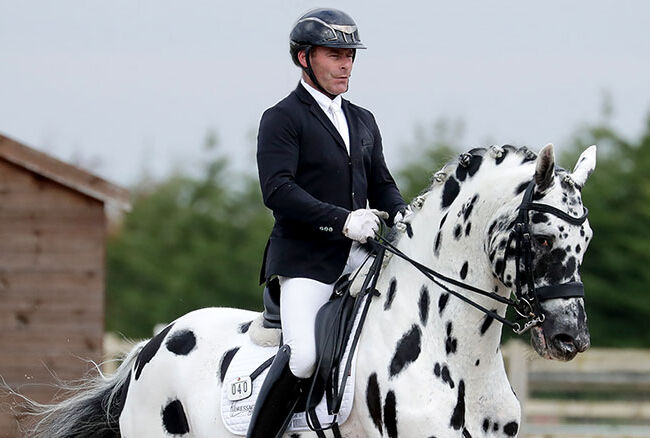
As for any horse, the individual stallion’s energy (calorie) requirements will vary according to a number of factors, including breed and temperament. It is suggested that stallions generally have a greater energy requirement than mares or geldings with the same characteristics – probably about 10% more for maintenance in the non-breeding season.
Once the stallion starts covering, his energy requirements will largely be determined by how many covers he carries out, whether naturally or for collection for artificial insemination. Since assisted reproductive technologies are not permitted in the Thoroughbred industry, these stallions often have a more intense covering schedule than sports horse stallions as their collections can’t be split up and divided between multiple mares – popular Thoroughbred stallions may cover more than 150 mares over the course of a season. As a guide, covering around 12 times a week would be considered as hard work and such horses would have an increased energy requirement of about 20-25% over maintenance requirements. This greatly contrasts to other stallions who may only cover a couple of mares throughout the whole season and so their energy requirements will be much lower, although some stallions might also have a full ridden and competition schedule alongside collections. For this reason, it’s really important to consider the demands being placed upon your stallion when putting together his feeding plan.
Other factors such as whether they are undergoing any form of ridden exercise, temperament, breed and voluntary activity (i.e., when turned out) can also influence a stallion’s energy requirements, which is another reason why they should be considered as individuals. Good quality forage should be the foundation of the ration, and for breeds who are naturally good doers, this may be sufficient to meet their energy or calorie needs, whereas other horses may require significantly more calories to come from their feed.
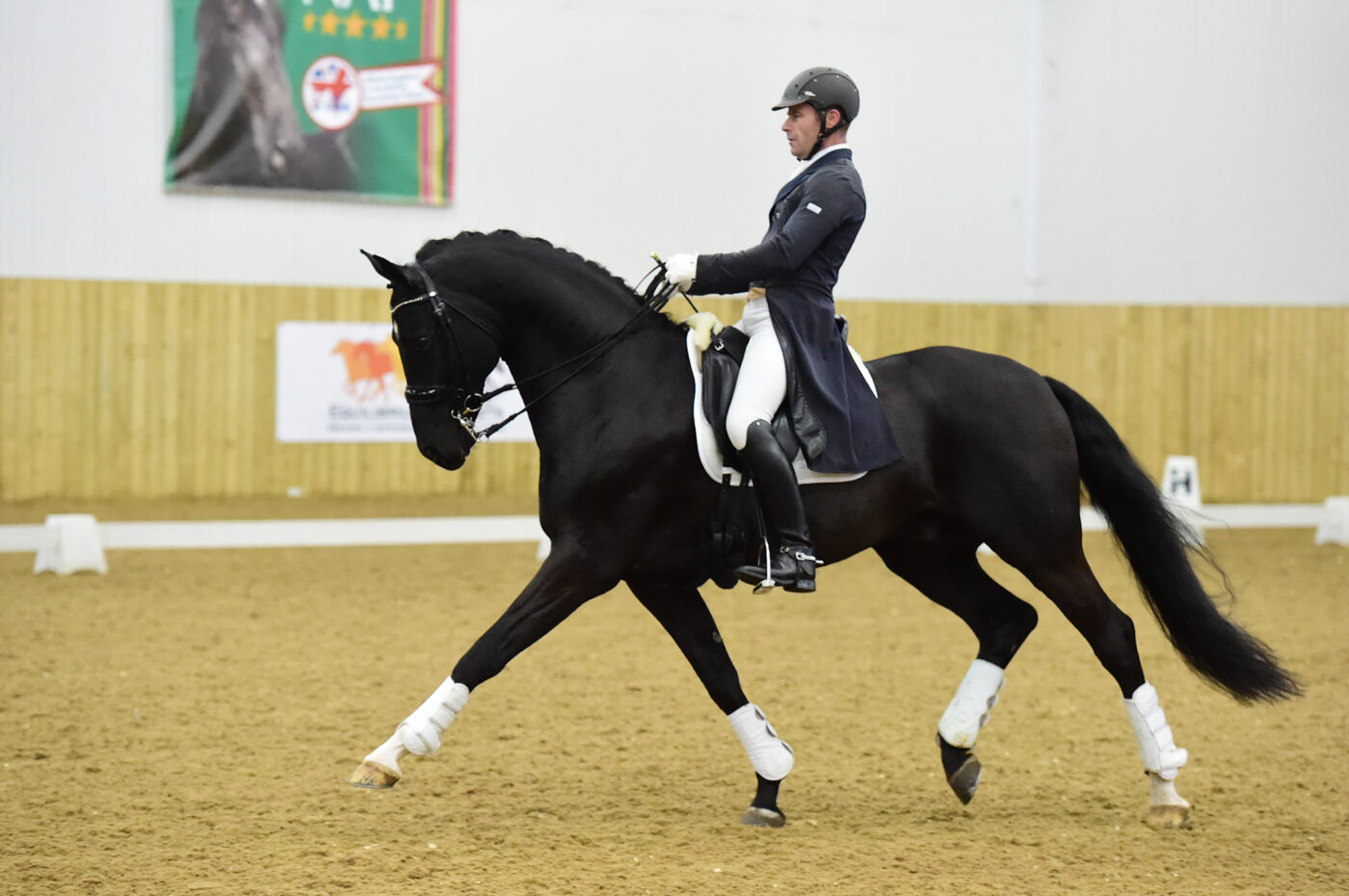
Assessing your stallion’s body condition score is a good way to identify if their energy needs are being met, and this should be done regularly through the breeding season so that any adjustments can be made to their diet or management to help maintain an optimum condition. Their bodyweight should also be monitored in conjunction with this, as changes by the kilogram may be noticed sooner than changes in condition score.
If a weighbridge is available then this is the ideal way to measure bodyweight. Whilst weigh tapes should not be relied upon to give a completely accurate reading of the horse’s bodyweight, they can be a useful alternative and a relatively simple way of monitoring changes. As a minimum, it is advisable to take a measurement every 1-2 weeks but for stallions with more intense covering schedules, or for those who have recently moved to a new stud, more frequent measurements may be useful, since changes in routine and environment can impact on weight maintenance.
Obesity in stallions can cause problems as in any horse, such as an increased risk of insulin dysregulation and laminitis. Overweight individuals may also be more difficult to get fit and have an increased risk of injury. There is limited research specifically in horses on the direct impact of fat coverage on fertility, however studies in other species including humans strongly indicate that obesity has a negative effect on fertility and semen quality (Fernandez et al., 2011; Chambers and Anderson, 2015). It may also influence libido, and so it is therefore advisable to maintain a healthy body condition score in the stallion of 3 out of 5. For stallions with a busier breeding season ahead of them or those who tend to lose weight easily, a higher condition score of 3.5 out of 5 may be more appropriate to aim for at the start of the season.
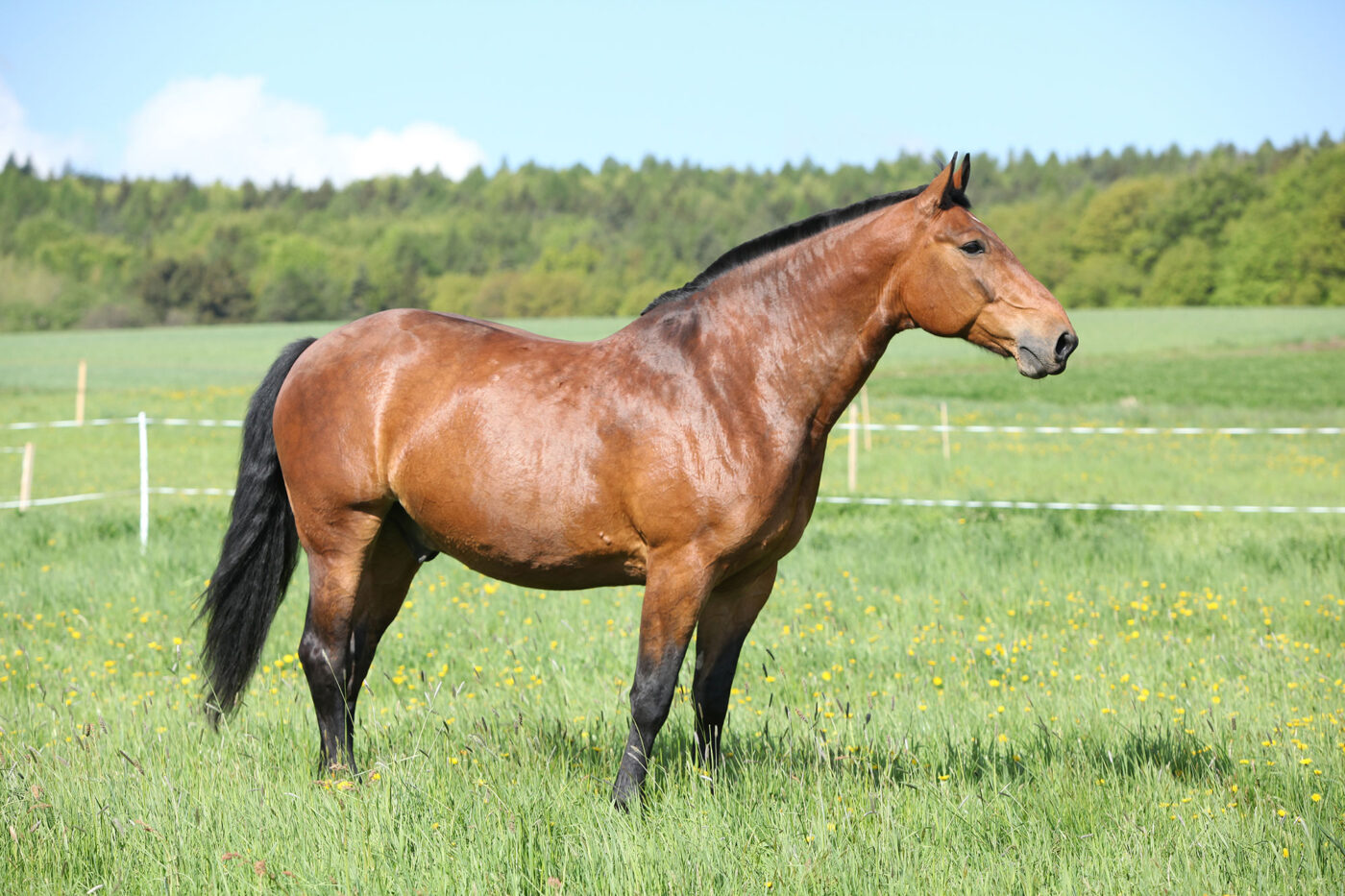
A common misconception is that an excessive build up of fat along the horse’s neck (a “cresty neck”) is acceptable for stallions. Although they may have a more prominent crest compared to mares or geldings, this natural characteristic in stallions should refer to an increased size of the muscle sitting below the nuchal ligament, a large elastic structure which runs along the top of the horse’s neck, rather than an excessive accumulation of fat above it. Whilst stallions may naturally store more fat over their necks, an enlarged crest, particularly one which has wrinkles or creases and can no longer be easily bent from side to side or permanently droops to one side, should be viewed as a sign of obesity and managed as such. A higher build up of fat across the horse’s crest is associated with an increased risk of insulin dysregulation which is linked to equine metabolic syndrome (Fitzgerald et al., 2019) and so should not be considered a desirable trait.
A balanced diet is essential for good health in any horse but may also help to support fertility. Some stallions begin covering when they are still relatively young themselves so it is particularly important that sufficient nutrients are provided for correct skeletal development, especially minerals such as calcium, phosphorus, copper and zinc.
Zinc is a trace mineral that’s also commonly recognised as being important for fertility because it is a key constituent of testosterone. Interestingly, stallions’ requirements for zinc are no different whether covering or not, which suggests that, as with most nutrients, providing enough is crucial, but feeding extra probably doesn’t have any beneficial effect.
Antioxidants are also important for the breeding stallion. A high concentration of long chain polyunsaturated fatty acids is found in sperm cell membranes, which increases their susceptibility to oxidative damage. If the body has insufficient antioxidant reserves then oxidative damage may occur during sperm cell maturation, with the result that sperm motility may be reduced. A study in 2021 on human males showed that increasing levels of the antioxidant beta carotene resulted in higher sperm numbers (De Cosmi et al., 2021). Beta carotene is a pre-cursor of vitamin A but is now known to be beneficial in its own right. There have been many studies in dairy cattle looking at the effect of beta carotene on female fertility, but less work done in equines either male or female. The main sources of beta carotene in a horse’s diet are green, leafy plants, so the horse at grass should be consuming plenty of beta carotene. The stabled stallion however, who may be fed older or poorer-quality forage, might be consuming considerably less. Adding alfalfa to the ration would provide lots of beta carotene, as illustrated by its dark green colour.
Vitamin E is another antioxidant which is regularly included in feeds, supplements and balancers by manufacturers, especially in products targeted at horses in higher levels of work, so using the recommended amount of one of these should be sufficient for most stallions. However, vitamin C is not routinely added and, because the horse’s requirements tend to increase at times of stress, sourcing a feed that does contain supplementary vitamin C might prove beneficial in relation to fertility.
Selenium is also an significant antioxidant for the stallion as it can impact on testicular function and testosterone production. Selenium has a relatively narrow range between requirements and toxic levels so providing a balanced ration which includes good levels of selenium is advisable, as opposed to supplementing with selenium as a single nutrient.
Fatty acids are found in cell membranes and studies have shown that essential fatty acids are present in semen in much larger quantities than other mammalian tissues. In other species, it is commonplace to feed additional omega-3 fatty acids to try to improve fertility, particularly where semen is being chilled or frozen, because more robust cell membranes enable the sperm to better withstand the rigours of chilling, freezing and thawing.
Although the horse wouldn’t consume high levels of oil naturally because grass is very low in oil, the oil it does contain has higher levels of omega-3 than 6 – this means the horse’s overall diet would have a higher omega-3 content than omega-6. As omega-6 effectively competes with omega-3, higher omega-6 ratios within the diet as a whole may be detrimental to the horse. Cereals are higher in omega-6 than 3, so the more cereals that are used in the ration, the greater the importance of omega-3 within the diet.
The best source of omega-3 is fish oil because this contains EPA (eicosapentaenoic acid) and DHA (docosahexaenoic acid), which are in the form that the horse needs them. For those who prefer not to feed fish oil, plant based sources are available. Hemp oil contains stearidonic acid, which requires fewer steps to convert it to EPA than omega-3 from other sources, such as linseed and soya. Hemp oil should however be avoided for stallions who are competing due to the risk of it containing cannabinoids which are prohibited substances (NOPS). More recently, another plant based option has become more widely available. Ahiflower is a source of SDA and also GLA – the omega 6 equivalent of SDA.
The quality of the protein within the stallion’s diet is also important. Protein quality is often measured by the levels of essential amino acids it contains. Amino acids are the building blocks of protein, and certain amino acids need to be supplied in the diet because the horse’s body cannot make sufficient quantities to meet requirements. These are termed essential amino acids and include lysine and methionine. Lysine is the only amino acid, essential or otherwise, for which the requirement has been determined for the horse, and breeding stallions have increased requirements for lysine due to the greater demands being placed on their body. Alfalfa is a great way to provide good levels of quality protein and lysine as part of the stallion’s ration. For example, feeding 2.5kg a day of Dengie Alfa-A Original would provide a 500kg breeding stallion with over half of their daily lysine requirement.
How can I make sure the correct balance of nutrients is provided?
- Start with good quality forage as this should be the foundation of any horse’s ration – for stallions with no access to pasture, a minimum of 1.5% of their bodyweight on a dry matter basis should be provided per day.
- For good doers, a balancer pellet or broad-spectrum supplement targeted at horses in work or breeding is the ideal choice, such as a performance or stud balancer.
- This can simply be combined with a good quality chopped fibre feed such as Dengie Alfa-A Original to increase chew time and supply additional nutrients like beta carotene, lysine and calcium.
- For stallions needing more help with their weight and condition, alternative fibre feeds providing greater levels of slow-release energy can be used, such as Dengie Alfa-A Oil or Performance Fibre. These can provide a similar calorie contribution to a conditioning mix or cube but with around 10 times less starch.
- These fibres can also be fed in conjunction with a conditioning or stud mix or cube to increase chew time and provide further calories. If cereal-based feeds are used, ensure they are divided between smaller meals across the day in order to reduce the risk of digestive upset.
- A variety of supplements aimed at boosting fertility are available and may be of benefit, but it is important to ensure the base diet is balanced as the first port of call.
- A forage analysis can be helpful to ascertain what the forage is supplying so that the full diet can be properly assessed.
- If you are worried about your stallion’s fertility then it is advisable to speak to a nutritionist for further guidance. Although a wide range of factors can affect a stallion’s fertility, making some adjustments to the ration and ensuring the diet is supplying what they need could make all the difference.
Maintaining a stallion’s stress levels at a minimum during the breeding season is vital due to the significant impact stress may have on their libido. Additionally, stress has more recently been linked to digestive problems such as Equine Glandular Gastric Disease (EGGD). A variety of factors may increase a stallion’s stress levels, such as exercise, travel, housing, companions, changes to their management, number of handlers and even the stress levels of their handlers, but their diet should also be considered.
The horse has evolved to be eating for up to 16-18 hours a day. Providing forage to appetite is not only important for their digestive health but also their mental health, so it’s important to make sure they always have plenty available. For stallions who are stabled for longer, providing different forage options can also be of benefit as research suggests that multiple fibre types encourages horses to forage and display more natural grazing and browsing behaviours (Thorne et al., 2005). This could be supplied with a combination of different long-stemmed forages such as hay, haylage and straw, but could also include separate buckets of chopped fibres to provide further variety or if other forages aren’t available. Dengie Meadow Lite with Herbs is a great low calorie option which is ideal for good doers, whereas Dengie Meadow Grass with Herbs & Oil makes a tasty choice for those who would benefit from additional calories in their ration. Once the breeding season is over, the most appropriate ration for the stallion over the winter months will really depend on how they will be managed during this time. Stallions who are still being ridden and competing will have different needs to those who will be having some time off to rest and recuperate before next year. In the sports horse world, some stallions may be collected from over the winter for the semen to be frozen, so that he may maintain a fuller competition schedule over the summer. Whatever your stallion is doing, the key is to provide a healthy balanced ration with sufficient good quality forage and an appropriate balancer or bucket feed to support their level of work or maintenance requirements. It’s important to continue to monitor their condition so that adjustments can be made and they can approach the following season looking and feeling fit and well.
Once the breeding season is over, the most appropriate ration for the stallion over the winter months will really depend on how they will be managed during this time. Stallions who are still being ridden and competing will have different needs to those who will be having some time off to rest and recuperate before next year. In the sports horse world, some stallions may be collected from over the winter for the semen to be frozen, so that he may maintain a fuller competition schedule over the summer. Whatever your stallion is doing, the key is to provide a healthy balanced ration with sufficient good quality forage and an appropriate balancer or bucket feed to support their level of work or maintenance requirements. It’s important to continue to monitor their condition so that adjustments can be made and they can approach the following season looking and feeling fit and well.
Practical Considerations
An intensive covering programme can have many effects on a stallion’s behaviour, and a fairly common reaction is for them to go off their feed. This can obviously have an impact on the weight of the stallion but, over a prolonged period, could potentially affect fertility because essential nutrients are missing from the diet. Sperm take around 60 days to develop, so the effects on fertility might only become apparent much later.
In these situations, very concentrated feeds such as balancers might be useful because they supply the essential nutrients needed for health in a small volume of feed. Tempting stallions with tasty feeds such as Dengie Performance Fibre, Alfa-A Molasses Free or Healthy Tummy might encourage them to eat up, and feeding little and often can help to avoid over-facing them with large volumes. If they are not consuming sufficient forage, soft and palatable chopped fibres such as Dengie Hi-Fi Senior can be implemented as partial forage replacers. More information on tempting fussy feeders can be found here.
Summary
- Not all stallions are the same – their condition, frequency of covering and behaviour all need to be taken into consideration when formulating their rations
- Plenty of good quality forage should form the basis of the ration and is important for both digestive health and mental health
- A balanced diet is important for supporting all-round health as well as fertility
- Changes in condition and bodyweight need to be monitored through the breeding season so that any losses or gains can be noted and adjustments to the diet made if necessary
- Providing multiple forage options in the stable may help to relieve stress
- Feeds low in starch and sugar can be preferable to encourage a calm temperament
- Feeds high in fibre and oil are ideal choices for stallions who are dropping weight to provide the calories without the excitability
References
- Bulmer et al., (2015) The effects of a high-starch or high-fibre diet on equine reactivity and handling behaviour. Applied Animal Behaviour Science, 165, pp. 95-102.
- Chambers and Anderson (2015) The impact of obesity on male fertility. Hormones, 14(4), pp. 563-568.
- De Cosmi et al. (2021) Antioxidant vitamins and carotenoids intake and the association with poor semen quality: a cross-sectional analysis of men referring to an Italian fertility clinic. Frontiers in Nutrition, 8, p.737077.
- Destrez et al. (2019) Dietary-induced modulation of the hindgut microbiota is related to behavioral responses during stressful events in horses. Physiology & Behavior, 202, pp.94-100.
- Fernandez et al. (2011) Diet-induced obesity in rats leads to a decrease in sperm motility. Reproductive Biology and Endocrinology, 9, pp. 1-10.
- Fitzgerald et al. (2019) The cresty neck score is an independent predictor of insulin dysregulation in ponies. PLoS One, 14(7), p.e0220203



Expert advice at your fingertips
If you’re looking for advice on the best feed, speak to one of our highly experienced nutritionists on our feedline, or for a more in-depth plan, fill out our Feed Advice Form