

Seasonal Feeding FAQ’s
In the UK, the weather is renowned for its unpredictability, and as climate change continues to alter seasonal patterns, more significant fluctuations in temperature and rainfall are impacting grass growth. Whether it’s the cold spells in winter or extreme heat in the summer, the weather conditions at different times of year can have a significant impact on the management and feeding decisions we make for our horses. Below are some of the most frequently asked questions when it comes to feeding horses at different times of the year.
Spring & Summer
Feeding horses in the spring and summer can be tricky to get right as the longer days mean more riding time and potentially also more competitions but also more grazing time, and so finding a balance between energy supply and workload for our horses can be a challenge.
Native horse breeds are particularly good at putting on weight over the spring and summer as this is when they would recover from winter in their natural environment. Domesticated horses and ponies are less likely to lose weight over the winter and so enter spring carrying plenty of weight. This can lead to obesity and increase the likelihood of conditions such as laminitis when they encounter more abundant pasture in the spring. More information on managing the good doer can be found here.
It’s important to think carefully about what you are feeding your horse in relation to the work they are doing. You might be getting out and about a bit more over the spring and summer, but that doesn’t necessarily mean your horse needs any extra feed. Always increase workload before you increase energy intake – if your horse continues to hold their weight well then you know they don’t need any extra food. More information on feeding horses in different levels of work can be found in our leisure horse and performance horse articles.
There are a number of reasons why loose droppings may occur. Sudden changes to the diet (including a change in forage) can be a major contributing factor, especially in the spring when grass growth gets going again after winter. Fresh pasture contains a lot more moisture than hay – about 80% compared to 20% – and so more moisture in can mean more moisture out!
The bacteria in the horse’s digestive system thrive in a consistent environment and so sudden changes to the diet can cause bacteria to die off as their environment becomes less hospitable. This dysbiosis can lead to problems such as colic or other digestive disturbance. It is important therefore to remember that changes to the forage and diet should be made gradually wherever possible, such as changing onto a new batch of hay or haylage, or moving to a different field with more grass. The use of a digestive aid supplement at this time can be beneficial, such as one containing live yeast and prebiotics.
However, there are a number of other problems that could also result in loose droppings, such as poor dentition or an underlying illness, so if the problem persists it is always advisable to speak to your vet. More information on other intestinal issues that may occur in horses can be found here.
Fizzy or excitable behaviour is not always associated with the diet but may be exacerbated by higher intakes of sugar and starch. Sugar and starch are sources of quick-release energy, which means they are rapidly broken down in the horse’s digestive system, releasing energy quickly. The main source of starch in horses’ diets tends to be cereal grains. Starch is rapidly broken down to glucose, which passes from the digestive system into the bloodstream. The resulting peak in blood glucose is thought to be why fizzy behaviour follows, so keeping starch intake to a minimum by avoiding the use of cereals is essential for horses who can be excitable.
It might surprise you to learn that the most abundant source of sugar in the horse’s diet is grass, so an excessive intake of sugar, such as when the horse consumes a lot of fresh spring grass, can result in more over-exuberant behaviour at this time of year. As with any dietary changes, spring grass should be introduced slowly by gradually increasing time spent on fields that have been rested over the winter. If grass access is reduced, ensure that plenty of supplementary hay or haylage is still being provided.

It’s likely that your horse is granted more grazing time over the spring and summer, so you may decide to reduce their hard feed or cut it out altogether. However, this is not without its problems. Your horse or pony may look like they are coping well without any supplementary feed, but UK soil is generally short of certain minerals that our horses need to be healthy. These include selenium, which boosts the immune system; copper, which aids the development of bone and cartilage; and zinc, which is important for bone development and healthy hooves and coat. Therefore, a vitamin and mineral supplement should be supplied to your horse either in powder form or as a concentrated balancer pellet to provide a balanced diet.
The benefit of powdered supplements is that they don’t add any additional calories to the ration. These can be fed alongside a low-calorie chopped fibre, such as Dengie Hi-Fi Lite, Hi-Fi Molasses Free or Meadow Lite with Herbs. Alternatively, balancers come in a pelleted form and are generally fed in small quantities (usually at 100g per 100kg of bodyweight), so the total daily calorie intake from a balancer will still usually be very low. Pelleted balancers also tend to provide a better level of protein and often include some extra benefits such as herbs, making them a preferable option for fussier horses. Balancers can also be combined with a low calorie chopped fibre to help increase chew time to better support digestive health. More information on the benefits of adding a chopped fibre feed can be found here.
Hay can be fed post-harvest as long as there is no heating in the bales and the forage is sufficiently dry. The important point here though is that introducing the new hay will constitute a large change in diet and if this is done rapidly it could result in digestive upset. Any dietary change should be made gradually and so ideally, old and new hay should be mixed together over a period of at least a couple of weeks. Feeding hay in small holed nets or slow feeders will also help to slow the rate of intake and prevent sorting or selection of purely the new hay.
In contrast, haylage needs to be stored for at least 6 weeks or longer post-baling prior to feeding. This is because it takes time for the fermentation process that preserves the forage to take place. For the haylage to be stable the oxygen will be used up in those first 6 weeks and as long as the bales remain airtight, the forage is stabilised. It is important to note that wrapped forages with a high dry matter are not likely to have fermented and so it is purely the removal of air that is stabilising them. As soon as they are opened, microbial activity will start and so the forage should be used quickly. Again, the same rules regarding dietary change apply when introducing new haylage.
If forage is in short supply then forage replacers can be used to extend or replace the forage ration. Whatever forage source you use, make sure it is appropriate to the individual horse and particularly their body fat status. A nutritionist can advise on a suitable option for your horse or pony if you are unsure.
Coping with Bare Paddocks
A hot, dry spell will potentially lead to a limited amount of grazing for horses, as grass growth slows due to the pasture becoming stressed due to a lack of water. Horses that are turned out will continue to consume what’s available, cropping close to the ground and leaving a bald, patchy paddock.

One of the first consequences of this is that any horses grazing continually on the same paddock will eventually have less grass available to eat. It is important to remember that horses are herbivores that have evolved to eat on a little and often basis and fibre is pivotal to their digestive and behavioural health. Problems such as loose droppings and colic can all be indicative of low fibre diets. Owners of horses grazing sandy soil will need to be particularly aware of the risks of sand colic as the horse picks up sand more easily when grazing shorter, sparser grass.
All horses and ponies should have at least 1.5% of their bodyweight on a dry matter basis of forage or fibre feeds daily. For a 500kg horse, this would equate to 7.5kg per day. Unfortunately though it is really difficult to judge how much grass a horse is eating, and under practical conditions it is impossible to determine intake. One way to ascertain if your grass is actually still growing is to fence off a small area within the paddock that your horse is grazing and to monitor it. If the grass in this patch greens up and grows then it suggests the grass in the rest of the paddock is growing, but that your horse is eating it before you see it! Another good tip is to monitor the amount of droppings your horse does. A reduction in the number of droppings will generally mean that there has been a reduction in intake.
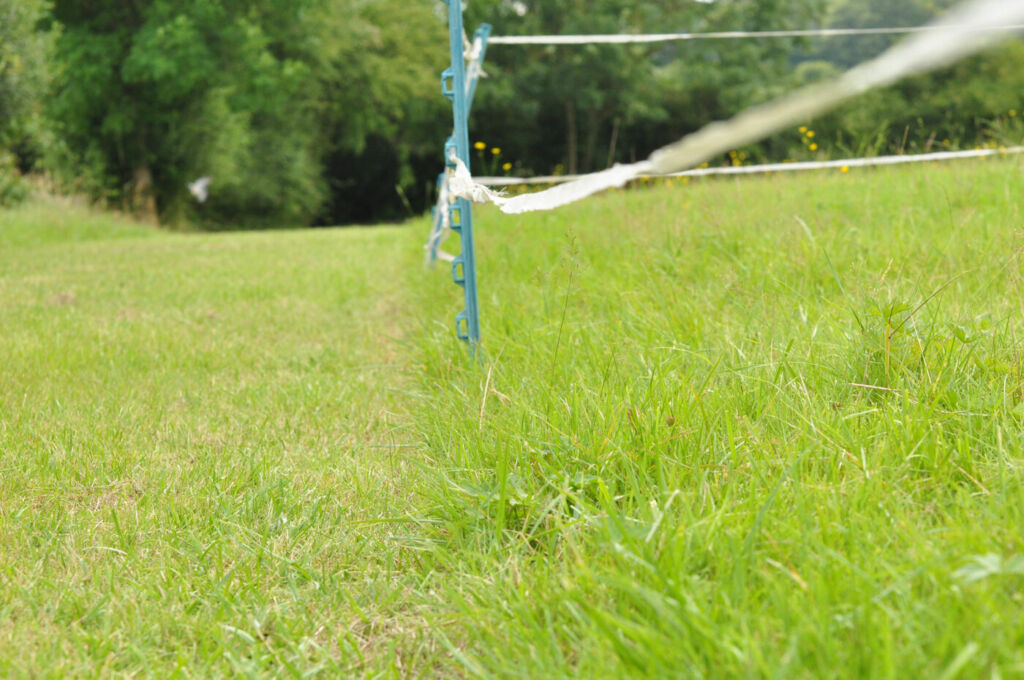
If your paddock is really bare and the grass isn’t growing then you may ask yourself ‘does my horse need hay?’. The answer is usually yes, as your horse should have access to additional forage to maintain their digestive and behavioural health. A bare paddock can very quickly lead to paddock hopping or electric fence destruction if the grass is greener on the other side! However the quantity and type of forage given depends on the individual horse.
Even on very brown or bald paddocks, some horses still seem to be very good at holding on to excess body fat and don’t appear to lose weight. If you have established that the grass really isn’t growing then it is still important to provide an appropriate fibre source even for horses that need to lose weight. For good doers, a later cut, more fibrous hay would be the best option. Later cut forages are likely to be less easily digestible for the horse and will therefore supply fewer calories. Straw is also a useful low calorie fibre source that can be used to replace up to 50% of the hay ration to reduce the overall calorie intake. More information on feeding the good doer can be found here.
Whilst some horses hold their weights very well all year round, there will be others who can drop weight quite rapidly when the grass disappears. Forage provided at appetite is advised for all horses that don’t hold their weight easily. Haylage and earlier cut hays will generally be more nutritious and energy dense for these horses. Before reaching for traditional mixes and cubes to provide additional calories, it’s important to remember that good quality fibre feeds such as alfalfa and unmolassed sugar beet pulp can also be useful options for poor doers and have the added benefit of being naturally low in sugar and starch. For example, Dengie Alfa-Beet combines alfalfa and unmolassed sugar beet pulp and can make a great choice for the poor doer. Since Alfa-Beet is fed soaked, it is also useful for helping to maintain hydration and to mask the taste of added electrolytes as well.
Any of the Dengie Alfa-A range of chopped fibre feeds which are based on pure alfalfa can be used as a means of topping up or extending poor quality hay for individuals who need extra support in maintaining their weight and condition. Up to 500g per 100kg of bodyweight can be fed daily, which equates to 2.5kg for a 500kg horse. Feeds containing dried grasses such as Dengie Meadow Grass with Herbs & Oil and Pure Grass Pellets can also be used as partial forage replacers. More information on feeding the poor doer can be found here.
Even when the grass looks mostly brown and dead, it does not mean that it is low in sugar. In fact, when grass is experiencing stressful conditions, it actually accumulates more sugar because the plant is still photosynthesising but the sugar is stored rather than being used for growth. Fructan is the storage sugar in grass and is mostly stored at the base of the plant, which is the part that the horse is mostly consuming when grazing on short grass close to the ground.
Whilst the reduced amount of grass available to eat on a barer paddock does potentially limit the amount of sugar consumed, care should be taken with individuals who have underlying insulin dysregulation who may be particularly prone to laminitis. Those with insulin dysregulation don’t have a normal response to the intake of non-structural carbohydrate (NSC) which is the sum of sugar, fructan and starch added together. Insulin dysregulation results in higher than normal levels of insulin circulating in the blood and a higher risk of laminitis.
The problem increases when we do eventually get rain and the grass greens up and starts to grow again. Fructans are converted back into simple sugars to allow the grass to grow, and so grass at this time contains a higher level of NSC. Even though the amount of grass available initially to eat is still sparse, this could still be enough to trigger laminitis in susceptible individuals. As such, for laminitis-prone horses and ponies, it may be best to remove them from pasture at this time and feed an appropriate forage based ration. More information on feeding horses prone to laminitis can be found here.
Autumn & Winter
Dietary change is one of the biggest risk factors associated with colic, which is why the risk of certain types of colic appears to be increased at times of change such as in the spring and autumn (Archer et al., 2006). When making any changes, including to the grazing and forage, it should be done gradually over a period of a couple of weeks. In situations of adverse weather conditions, this may not always be possible and so if your horse normally lives out and you know bad weather is on the way, try to supplement the grazing with the forage you would feed if your horse might have to be stabled suddenly – then at least they will have been used to having some in their diet. At times of diet change or stress, it is also worth considering the use of a digestive supplement.
If your horse is not overweight, then forage can be provided to appetite as this can help to reduce the risk of problems such as gastric ulcers and colic. For good doers or those who are overweight, the amount of forage may need to be restricted to keep calorie intake down. However it’s important to make sure that no less than 1.5% of the horse’s bodyweight (on a dry matter basis) is provided in forage per day to support digestive health. In situations when only a higher nutritional value forage is available, such as an earlier cut hay or haylage, using a low calorie chopped fibre feed such as Dengie Meadow Lite with Herbs in place of 1-2kg (or more) of hay or haylage can be a convenient way to reduce calorie intake. Don’t forget that fibre feeds are generally much lighter than cereal-based feeds, so the volume always seems like a lot. For example, one Stubbs scoop of chopped fibre might only weigh between 250-500g, whereas one Stubbs scoop of cubes could weigh up to seven times as much! The extra volume of a chopped fibre is really beneficial for providing more chew time for stabled horses. Soaking the hay or replacing up to 50% of the forage ration with straw are other useful options to help limit calorie intake from the forage. More information on forage for the good doer can be found here.
In the winter, soaking your horse’s hay can be a real challenge as taps and water-filled buckets may freeze over. Steaming is one alternative to help reduce dust and respirable particle content. A commercial steamer uses much less water than soaking hay, and also produces a much cleaner forage, which is very important for those with respiratory issues. A commercial steamer isn’t always viable and so an alternative option is to consider using a chopped fibre feed that can be used as a complete or partial forage replacer. For those soaking hay to reduce sugar intake, steaming isn’t effective due to the smaller volume of water used, so incorporating some straw in replacement of up to 50% of the forage ration can be a good alternative.
Yes! Fibre is primarily digested through microbial fermentation in the horse’s hindgut. Heat is produced as part of this process, so ensuring plenty of fibre is consumed can play a big role in helping to keep your horse warm. More information about feeding fibre to your horse can be found here.

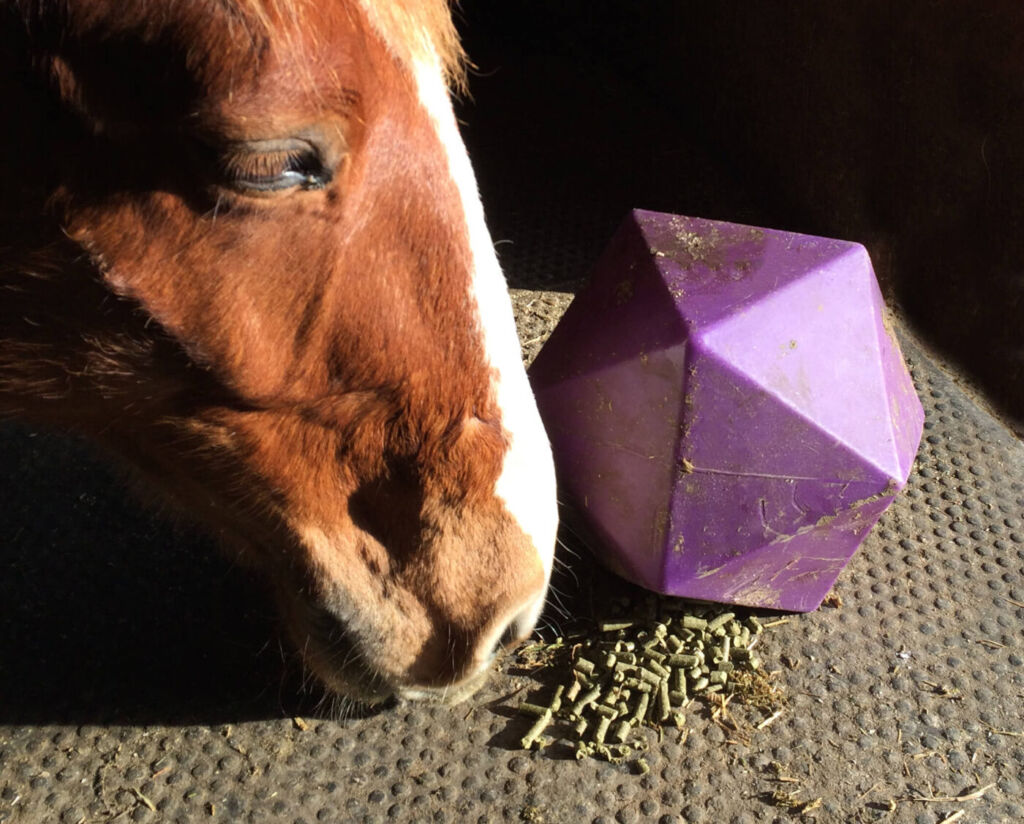
Research has shown that offering a variety of forages and fibrous material to horses not only provides a more stimulating environment, but it allows them to demonstrate more natural foraging behaviour (Thorne et al., 2005). Try using a selection of fibres such as Dengie Hi-Fi Senior or Meadow Grass with Herbs & Oil alongside your horse’s usual provision of hay and/or haylage. Pelleted fibre feeds such as Alfalfa Pellets or Pure Grass Pellets could be offered in a treat ball to provide further entertainment.
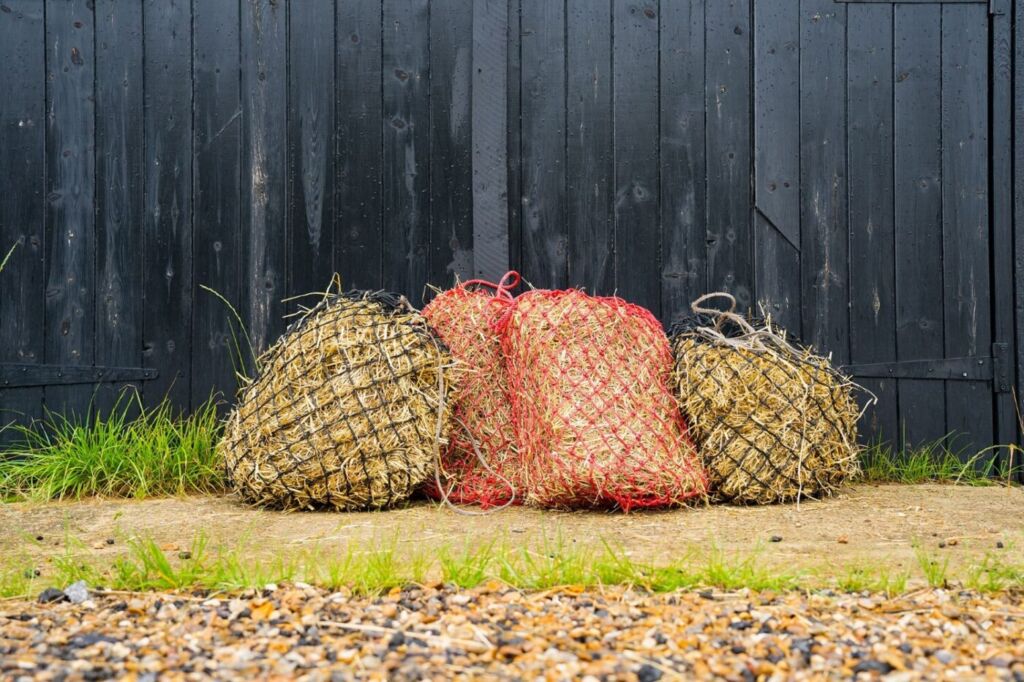
There are lots of tricks for making hay and haylage last longer, such as using small-holed nets or placing hay nets inside one another. When feeding a chopped fibre, offer it in several rubber trug buckets spread around the stable to encourage foraging activity. For good doers, the use of straw mixed in with the hay net can also help to slow horses down (Jansson et al., 2021).
Yes! As winter progresses, grass is generally less energy dense as it is more mature. Colder weather slows grass growth and as it is continually grazed, there is less to eat. This, combined with your horse having to use more energy to keep warm in colder conditions, means that it should be an easier time of year for your horse to lose weight. Weighing your horse’s forage and incorporating lower energy forages such as straw in replacement of up to 50% of your horse’s forage ration can be a good way to encourage weight loss over the winter.
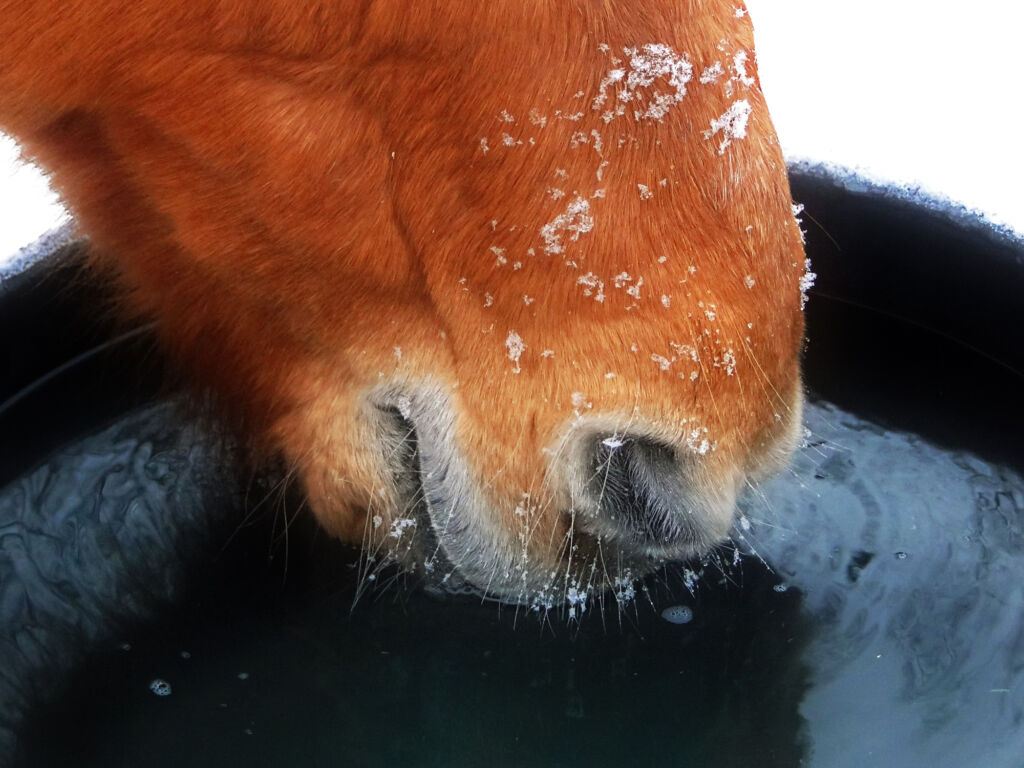
It’s really important to check your horse’s water regularly over the winter months to break and remove any ice. Floating a tennis ball in the trough or buckets can help to reduce ice formation and allow your horse to still access their water supply as the bucket shouldn’t become totally iced over. It’s also worth getting prepared by investing in some large water containers that could be used to transport water to the yard from home at short notice in case the outside taps become frozen. If water consumption is not sufficient then the risk of problems like dehydration and colic can be increased.
A previous study found that horses drank about 40% more when heated water was provided compared to ambient near-freezing water (Kristula and McDonnell, 1994), so adding hot water to make the bucket or trough water lukewarm or tepid may also help to encourage drinking. Additionally, using a soaked fibre feed, such as Dengie Alfa-Beet, is a great way to provide an additional source of moisture to aid hydration in the winter, and can be made up with hot water to produce a tasty warm mash.
In bright, frosty conditions, the concentration of non-structural carbohydrates (NSCs; the sum of water-soluble carbohydrate, which is sugar and fructan, plus starch added together) within grass may be increased and so this can be a higher risk time for laminitis. This is because grass is unable to grow when temperatures are below 5°C, but if the weather conditions are bright, the plant will still be photosynthesising and so producing sugar which will accumulate. It is therefore advisable to avoid grazing conditions where it is cold but there is lots of light, such as bright, frosty winter mornings. More information on feeding horses prone to laminitis can be found here.
References
- Archer et al., (2006) Is equine colic seasonal? Novel application of a model based approach. BMC Veterinary Research, 2, pp.1-11.
- Jansson et al., (2021) Straw as an Alternative to Grass Forage in Horses—Effects on Post-Prandial Metabolic Profile, Energy Intake, Behaviour and Gastric Ulceration. Animals. 11.
- Kristula and McDonnell (1994) Drinking water temperature affects consumption of water during cold weather in ponies. Applied Animal Behaviour Science, 41(3-4), pp.155-160.
- Thorne et al., (2005) Foraging enrichment for individually housed horses: Practicality and effects on behaviour. Applied Animal Behaviour Science, 94(1-2), pp.149-164.



Expert advice at your fingertips
If you’re looking for advice on the best feed, speak to one of our highly experienced nutritionists on our feedline, or for a more in-depth plan, fill out our Feed Advice Form