


Feeding the Veteran Horse
Read the following information and then complete the quiz questions at the end of the page to test your knowledge and earn AMTRA points.
This resource will introduce you to the following topics:
- Weight loss in the older horse and how to avoid it
- How to manage horses with poor dentition
- PPID in the older horse
- Fussy feeders

Feeding the veteran horse
- Consider their physiological age as opposed to their chronological age – different horses will ‘age’ at different rates, depending on how they have been cared for through their lives, genetics, breed and any health problems.
- Old age has been defined as the point at which you only have 25% of the population still alive.
- In the late 1990s, one study found this to be around 15 years – however nowadays horses are generally living longer, so 20+ years is more likely to be the age at which a horse may be considered old.
- However, all horses are individuals, so just because a horse is older, it doesn’t automatically mean they need a specific senior feed.
- Physiological ageing – the digestive system may become less efficient as a result of cumulative effects of life, particularly if the horse was not well cared for when they were younger.
- Poor dentition – conserved forage makes up at least 50% of most horses’ rations, so if they can’t chew and digest it, it is unsurprising that weight loss can occur. In a Dengie funded study, horses with poor dentition consumed around two-thirds less hay than horses with normal dentition and, on 44% of occasions, horses with poor teeth refused hay completely.
- Reduced fibre intake – over time, this can alter the microbial population in the gut and have an impact on gut health. Fibre fermentation in the gut provides energy for the cells in the gut wall (colonocytes). If these aren’t getting the fibre that they need to stay healthy, they can become less efficient and problems such as ‘leaky gut’ may occur which can also cause weight loss as pathogens or germs may get through the gut wall.

Key considerations for the bucket feed
- For general health in all horses, keeping starch to a minimum is key – no more than 1g per kilogram of bodyweight per meal and 2g per kilogram of bodyweight per day.
- The Dengie website has a handy Starch Calculator to help work this out.
- High quality fibres should be used for the older horse, like alfalfa and grass chops, which are harvested when they are young so are more digestible.
- Sugar beet is a highly digestible fibre with a prebiotic effect in that it can help to improve the digestibility of other fibre types when they are combined.
- High oil feeds such as micronised linseed can also be added.
- If straight feeds, such as Dengie Alfa-A Oil and Alfa-Beet, are used, then add a balancer or broad-spectrum supplement to help ensure nutrient requirements are being met.
- A balanced diet is particularly important for the older horse to supply nutrients like antioxidants which are beneficial for immune function, as well as other vitamins and minerals for overall health and well-being.
- A digestive aid supplement containing ingredients such as yeast and prebiotics will help to support fibre digestion in the hindgut.
What if my horse needs more?
- Chopped fibres may require too much chewing for some horses, so pelleted versions can be used instead, as these can be dampened or soaked.
- It may be necessary to use feeds with more cereals in for more energy density, rather than those that are very high fibre.
- Small, frequent meals are essential to support optimum digestion and utilisation of the ration.
- Specific advice for individuals may be sought from an equine nutritionist who will be able to advise on suitable feeds and quantities.
Poor dentition
Signs that might indicate that the horse is struggling to chew their forage could include:
- Taking longer to eat
- Reduced appetite
- Repeated episodes of choke
- Longer pieces of fibre in the droppings
- Weight loss
- Quidding (where forage is partially chewed and balled up and then dropped on the floor)
- Recurrent colic episodes
- Loose droppings
- Free faecal water
- Find a form of forage they can eat.
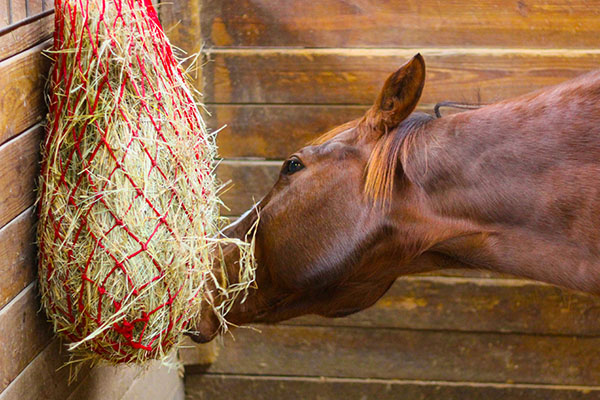
- Weight loss often occurs when moving from pasture to hay, because grass is highly digestible whereas hay is much less digestible and more difficult to chew.
- If they can still manage longer length forage like hay and haylage, we need to look for the most digestible possible – usually this would be one which is earlier cut, soft and leafy.
- For horses who can still manage some chewing, a short-chopped fibre can be used.
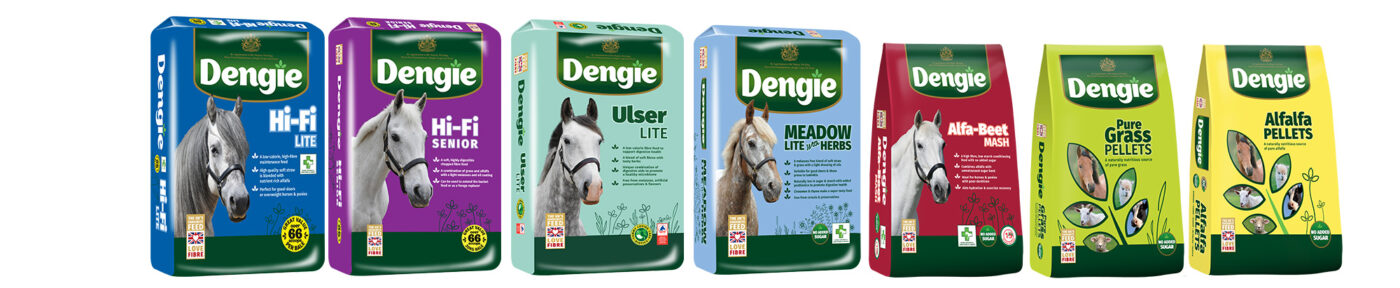
- Chopped alfalfa, grass and straw blends can often be used as a complete forage replacer, like Dengie Hi-Fi Senior or Meadow Lite with Herbs.
- Some horses will struggle even with this, so for them a soaked fibre will be even easier to manage.
- Grass, alfalfa and sugar beet pellets can be soaked to make a mash which is easy to eat. Dengie Alfa-Beet, which combines alfalfa with unmolassed sugar beet, is a great option.
Suggested forage replacement feeds from the Dengie range:
More information can be found in the ‘Forage Replacers for Horses: Elementary Level’ training.
Weights and measures
All horses regardless of their current level of activity should have at minimum 1.5% of their bodyweight of forage/fibre feeds on a dry matter basis daily.
Remember that different products will weigh differently in a scoop, so always weigh out your horse’s forage replacers to check you are feeding enough.
Which of these images shows approximately 2kg of forage or fibre feeds?

PPID, which was historically known as Cushing’s, is a degenerative endocrine disorder that disrupts the control of hormones produced in the pituitary gland, and commonly affects older horses and ponies. Horses with PPID have an increased susceptibility to laminitis, and more information on this can be found in the ‘Feeding the Laminitis-Prone Horse or Pony: Elementary Level’ training.
Top tips for feeding the older horse with PPID:
- Monitor their weight and condition.
- Ensure their diet is balanced for vitamins, minerals and quality protein, which is of particular benefit for those with PPID in supporting the immune system and coat condition.
- Choose feeds which are low in starch and sugar, as high intakes of these may increase the risk of laminitis.
For those that are fussy or have limited appetites, there are a few steps we can take to encourage them to eat up:
- Offer multiple forage or forage replacer choices. Even horses who can still physically manage hay or haylage may benefit from the addition of an extra fibre feed in their stable to encourage grazing behaviour.
- Offer feeds cafeteria-style to establish preference and provide variety.
- Feeds with added molasses and herbs can help to aid palatability.
- Add succulents (e.g., carrots and apples) in moderation.
- Other flavours can also be added, such as mint, garlic, fenugreek or fruit cordials.
- Mixing the feed with some warm water can also help to enhance the aromas of the feed and aid palatability.
Summary
- Feed the older horse or pony according to their individual needs.
- Forage replacement feeds may be needed if they are struggling to chew their hay or haylage.
- Choose feeds which are low in starch and sugar, particularly for those with PPID.
- A variety of methods can be used to tempt fussy feeders and encourage them to eat more.
Test your Nutrition Knowledge!
It’s now time to put into practice what you have learnt about feeding the veteran horse. Answer all the questions below correctly to receive your Dengie Nutrition Certificate, plus you can earn TWO AMTRA Suitably Qualified Person (SQP) points. To ensure your points are awarded please make sure that you include your unique AMTRA number in the box provided with your details.
* Required